Smart Objects with THUAS
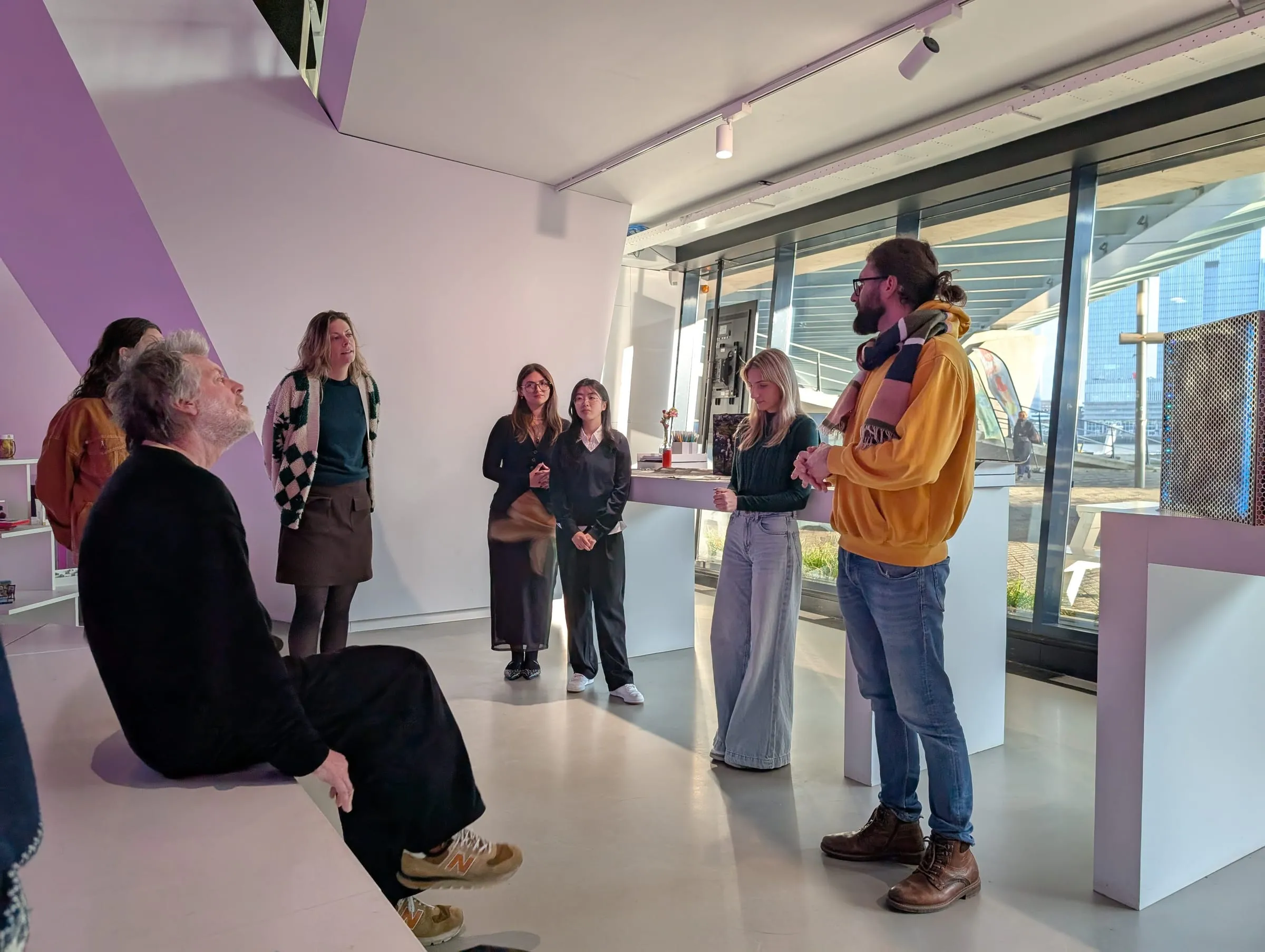
The client for design students at The Hague University of Applied Sciences in 2022, 2024 and 2025 — interactive installations for public space, a project for Remastered, the immersive art venue under the Erasmus Bridge, a sun lamp — and THUAS interns in the studio.
- Year
- 2025
- Status
- Sessions in 2022, 2024 and 2025
- Services
- Concept to market Hardware prototyping
- 3
- Years as the client: 2022, 2024 and 2025
- €5,000
- Material budget in the 2022 brief, for up to 30 units
Why we do this
The Hague University of Applied Sciences runs a Smart Objects semester in its Industrial Design Engineering programme, where student teams design and build a connected product for a real client. We were that client in 2022, 2024 and 2025.
It works both ways. Students get a brief with real constraints and someone who will push back on them. We get several teams exploring directions in parallel — research we would never have time to do ourselves — and some of it ends up in our own work.
2022: light sculptures for public space
The first brief came straight out of The Wave. Teams were asked to design a new interactive sculpture that gets people moving in public space — the beach, parks, playgrounds — with a focus on 10 to 20 year olds and their parents. A second track asked for a light that turns a dark public spot into somewhere people want to spend time, without being intrusive.
The constraints were the ones we face ourselves: outdoors, vandal-resistant, no phone required, anonymous usage data, made partly of recycled material, assembled within a day, scalable to 30 units, and a material budget of €5,000. The semester began with a visit to The Wave in Scheveningen and a workshop in our studio.
That line of research fed CityGems: THUAS students prototyped its LED and sensor core with us.
2024–25: Remastered
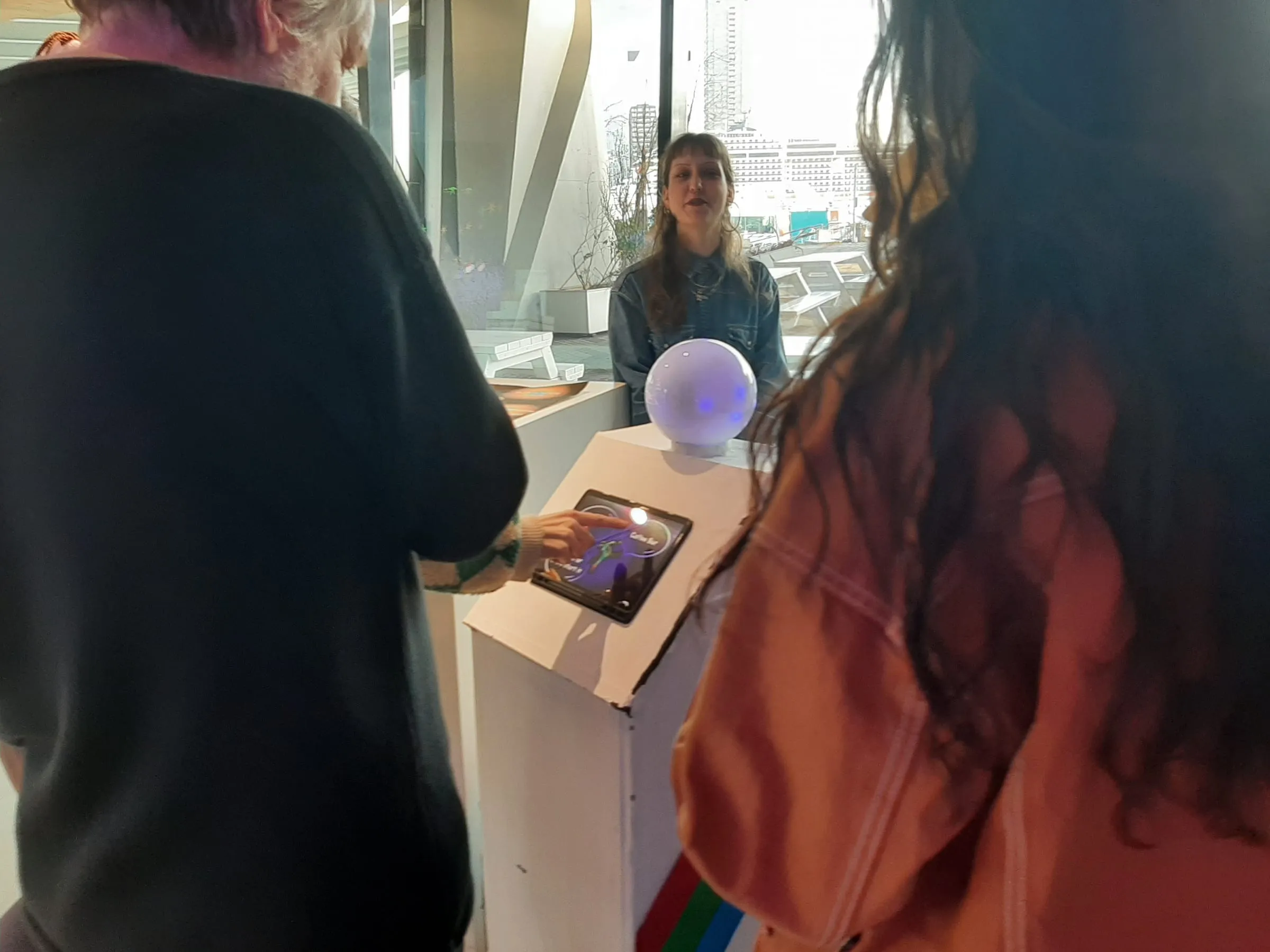
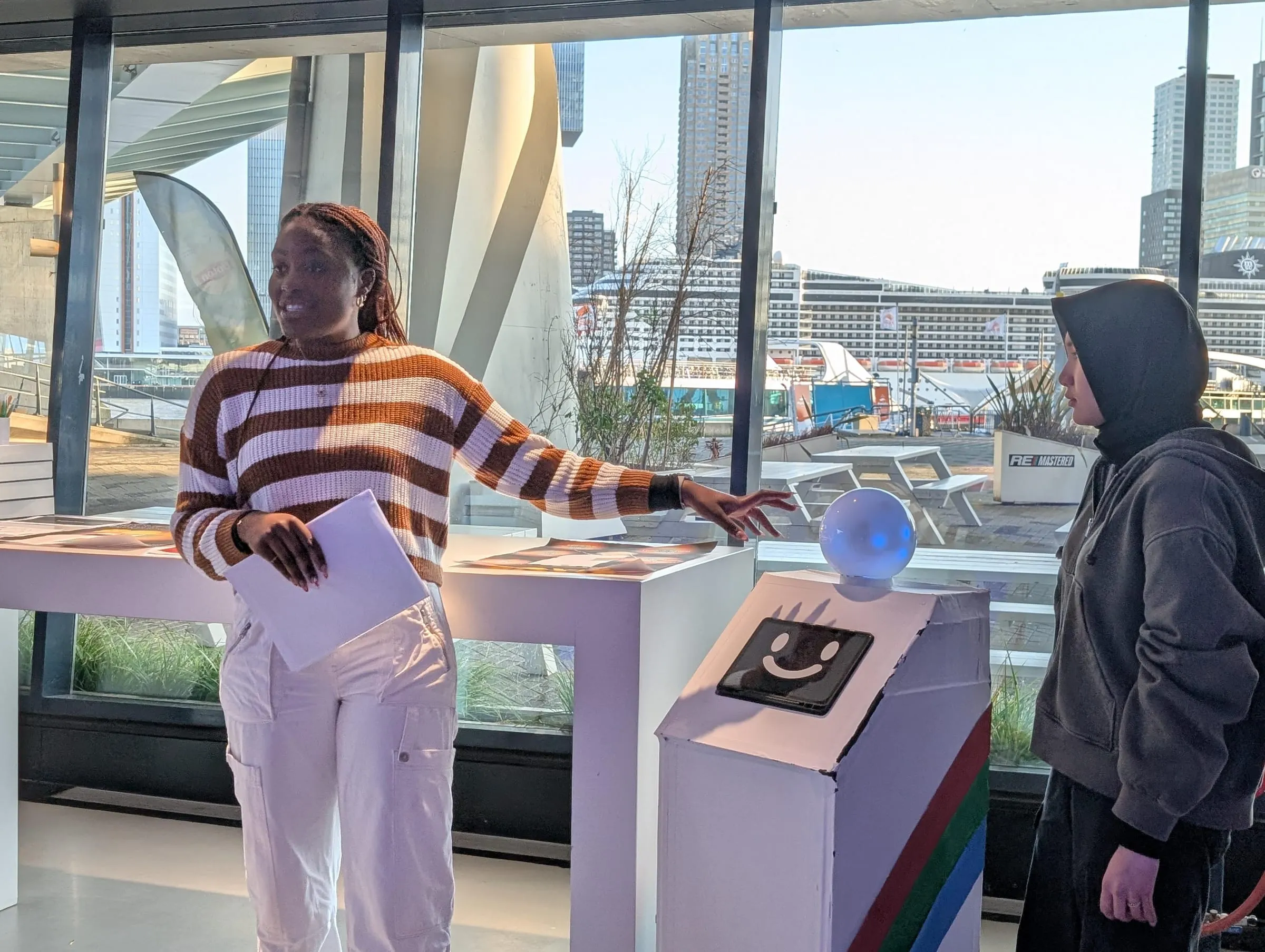
The Remastered project had three parties instead of two: the students, us as the client, and Remastered, the immersive digital art venue under the Erasmus Bridge. The question was how a conversation between people and machines could change a museum visit — and how a hidden gem of a venue gets noticed at all. Teams designed for a real venue with real visitors: an interactive cube to make the venue visible and recognisable, an AI-guided way through the exhibition, and more.
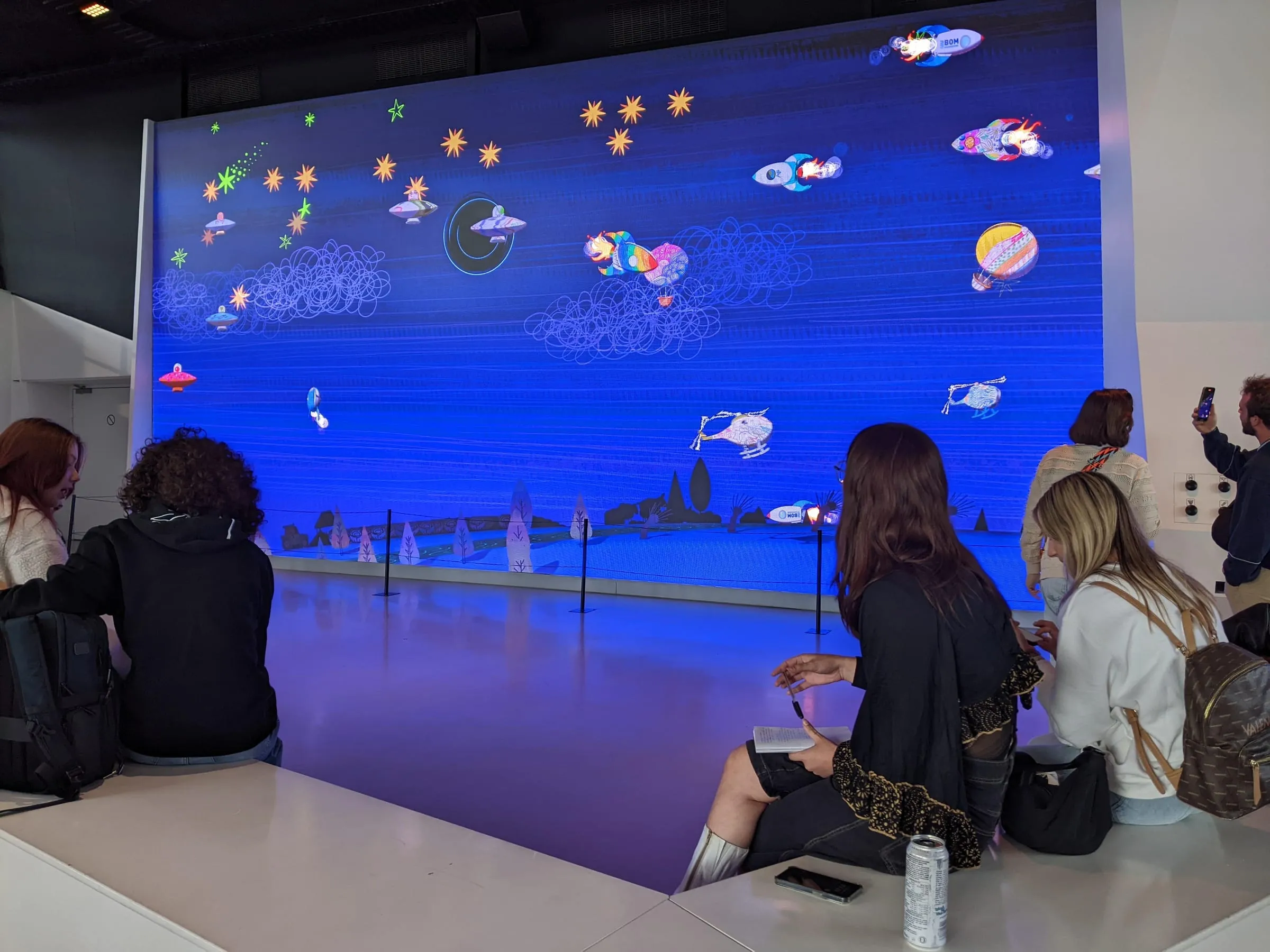
It started with a bootcamp — students coding interactive projections in the dark, testing them on the wall the same afternoon.
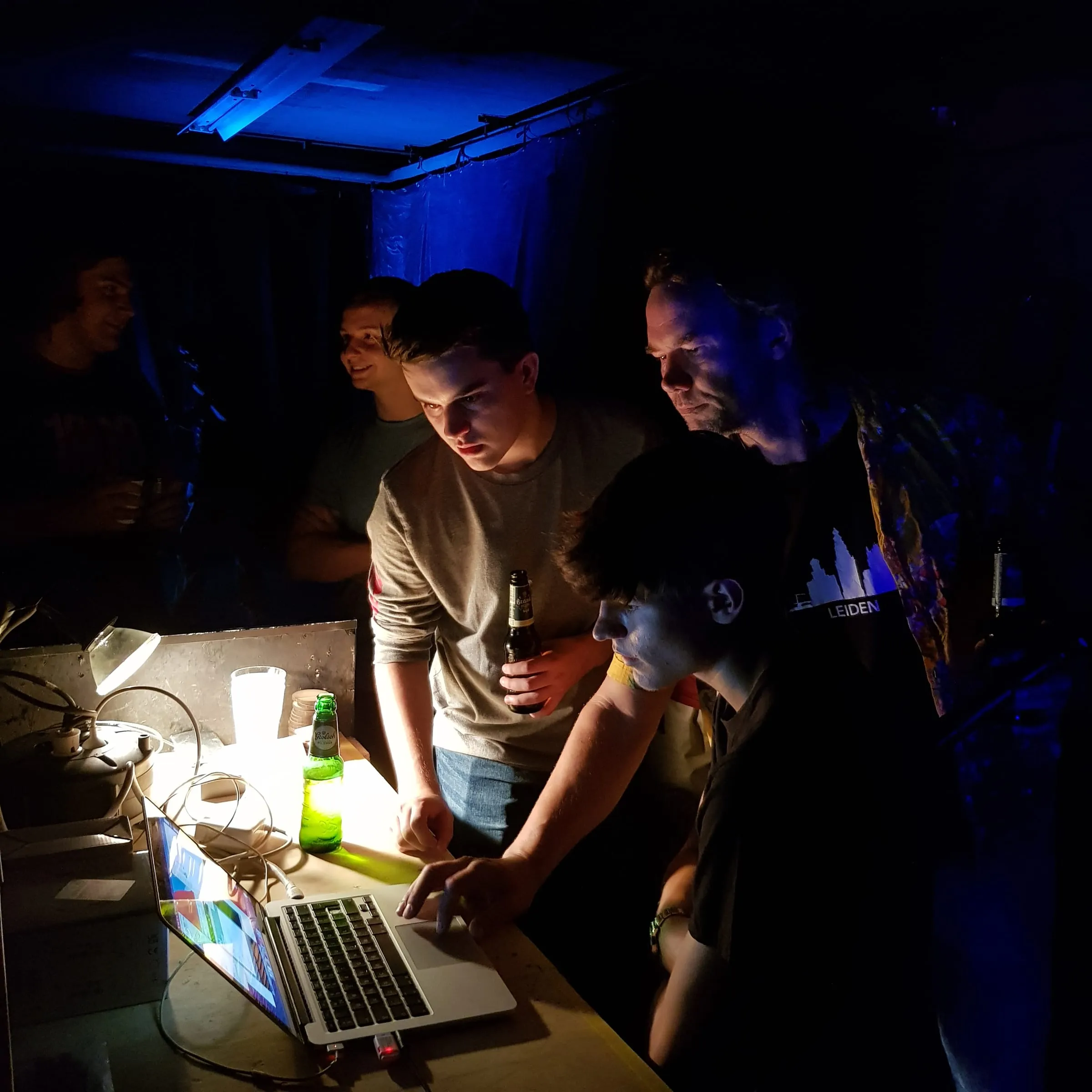
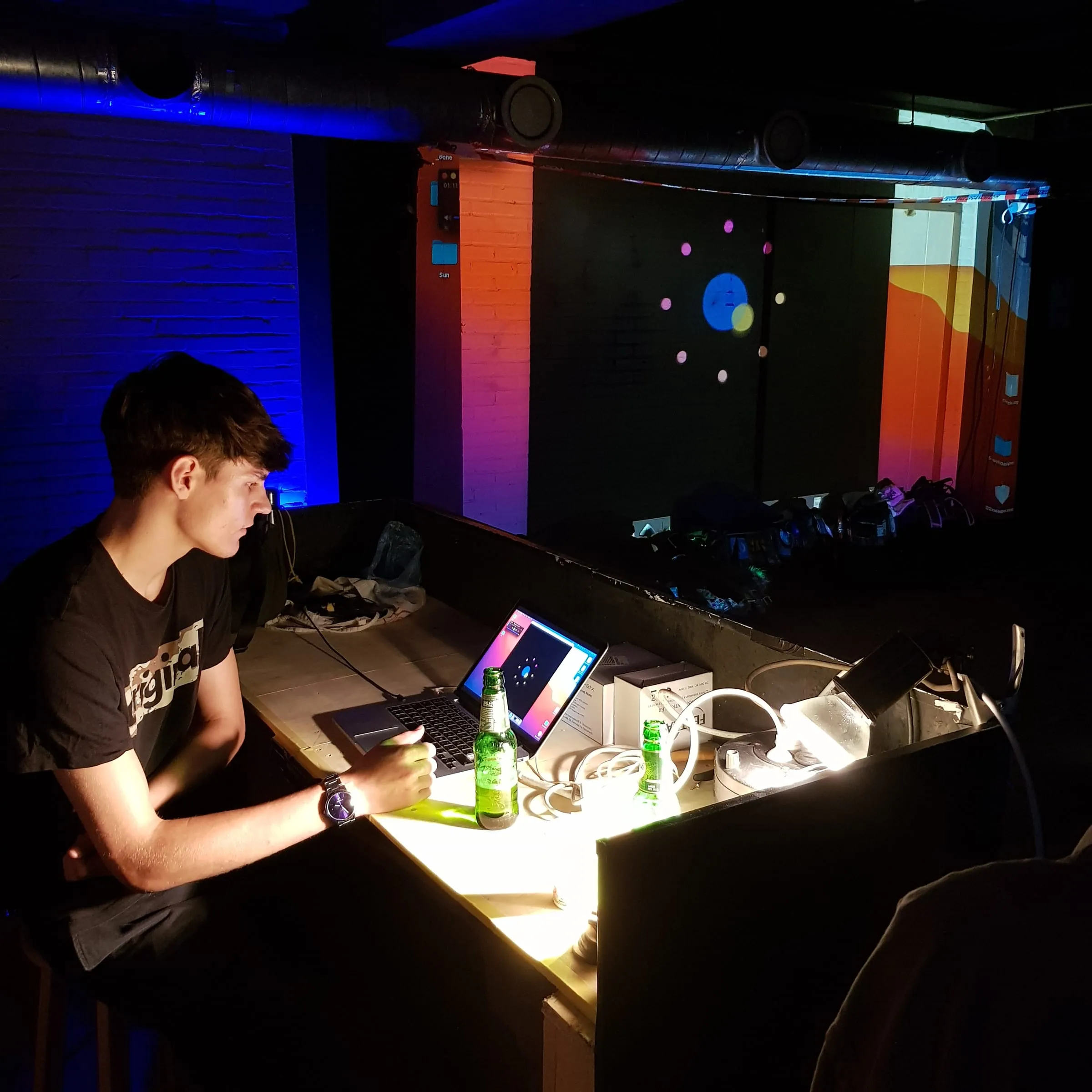
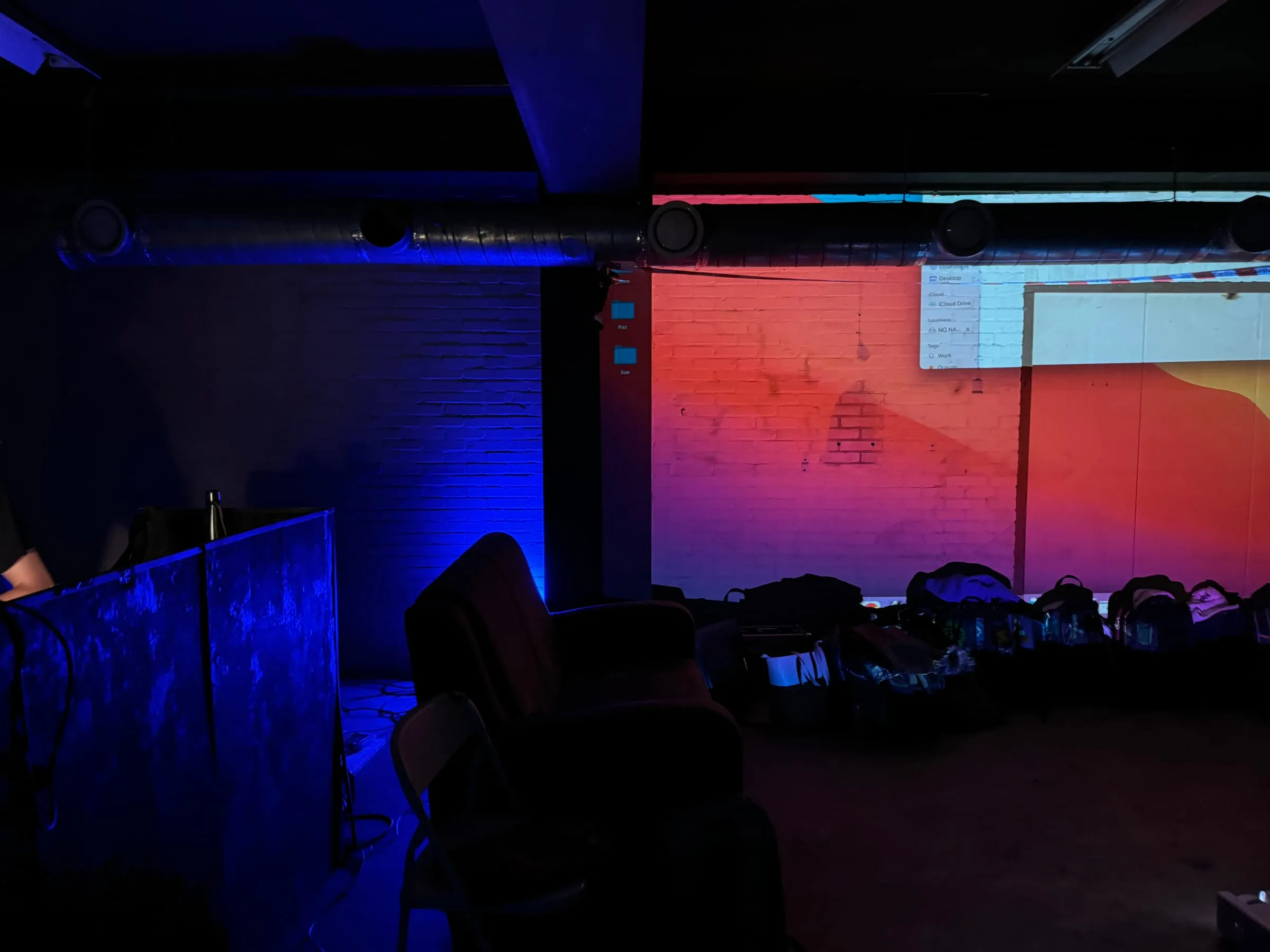
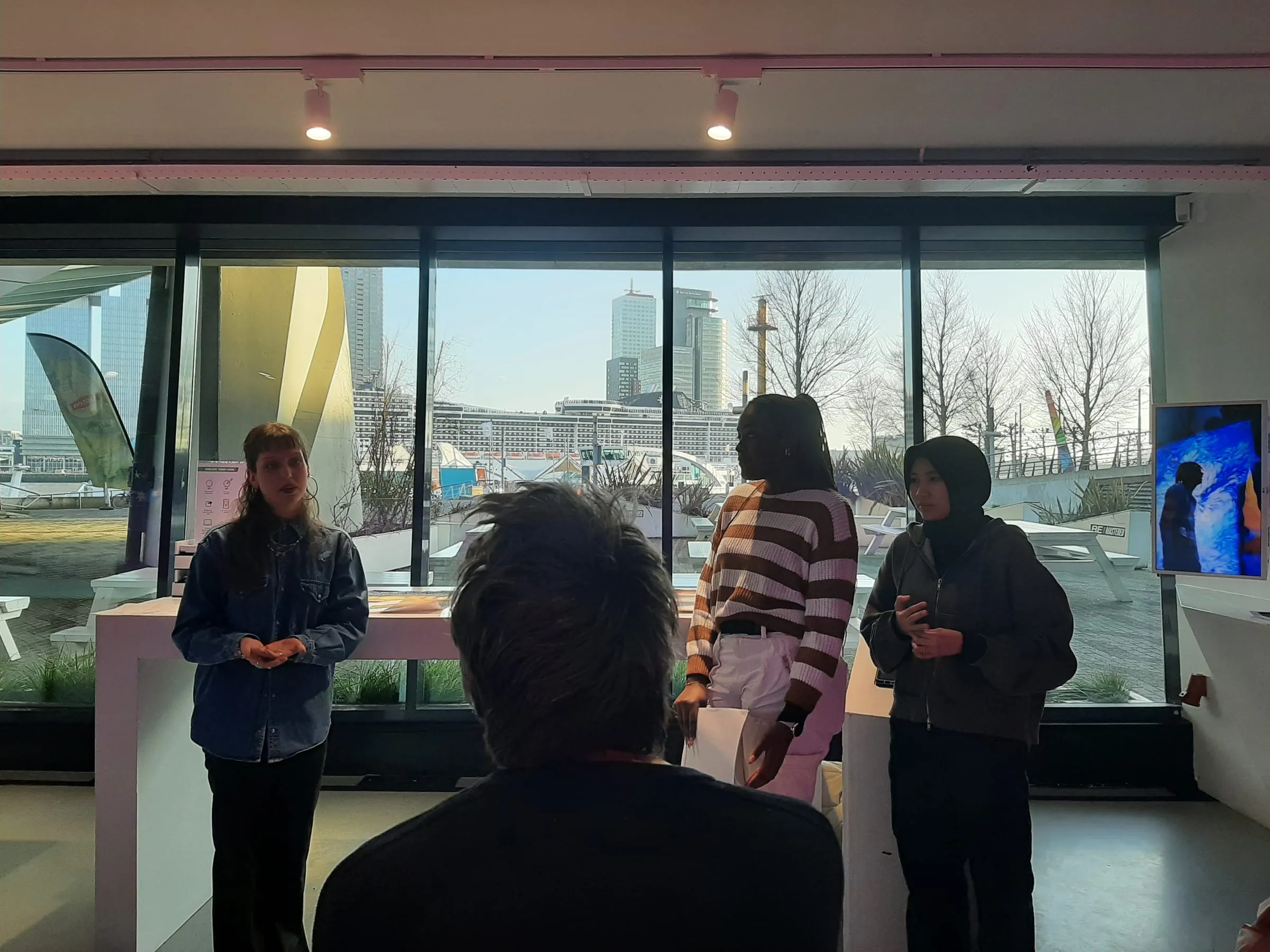
It ended with a demo day at Remastered in February 2025, where the teams showed working prototypes to the venue and to us.
The sun lamp
Alongside it, in 2025, ran a smaller assignment drawn from our Wake-Up Lamp research: a lamp that wakes you like the sun. One student designed a 3D-printed wake-up lamp that doubles as a desk lamp during the day.
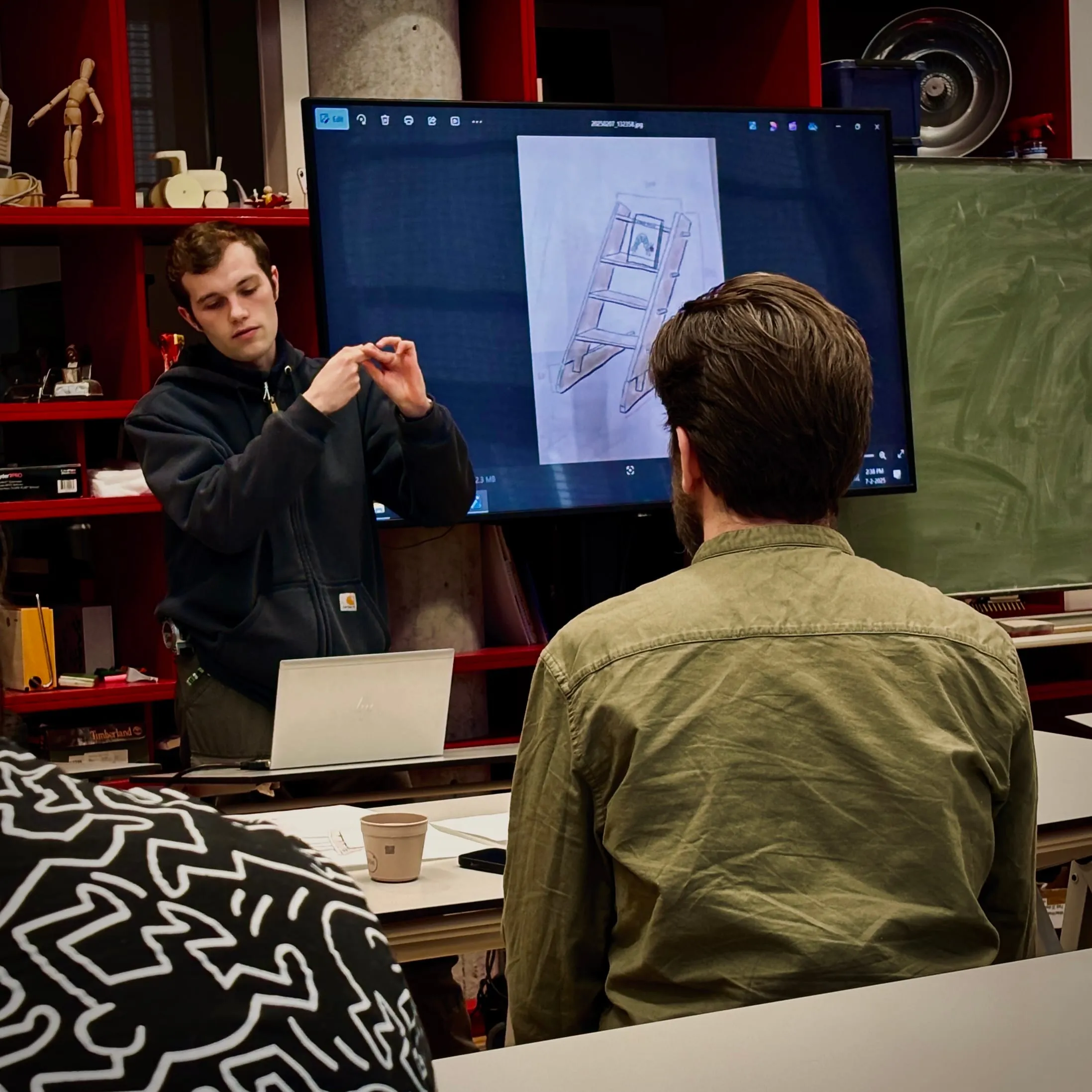
We also teach: a session for the students on design for manufacture and the business side of a product — what it costs to make, and who pays for it.
Interns from THUAS
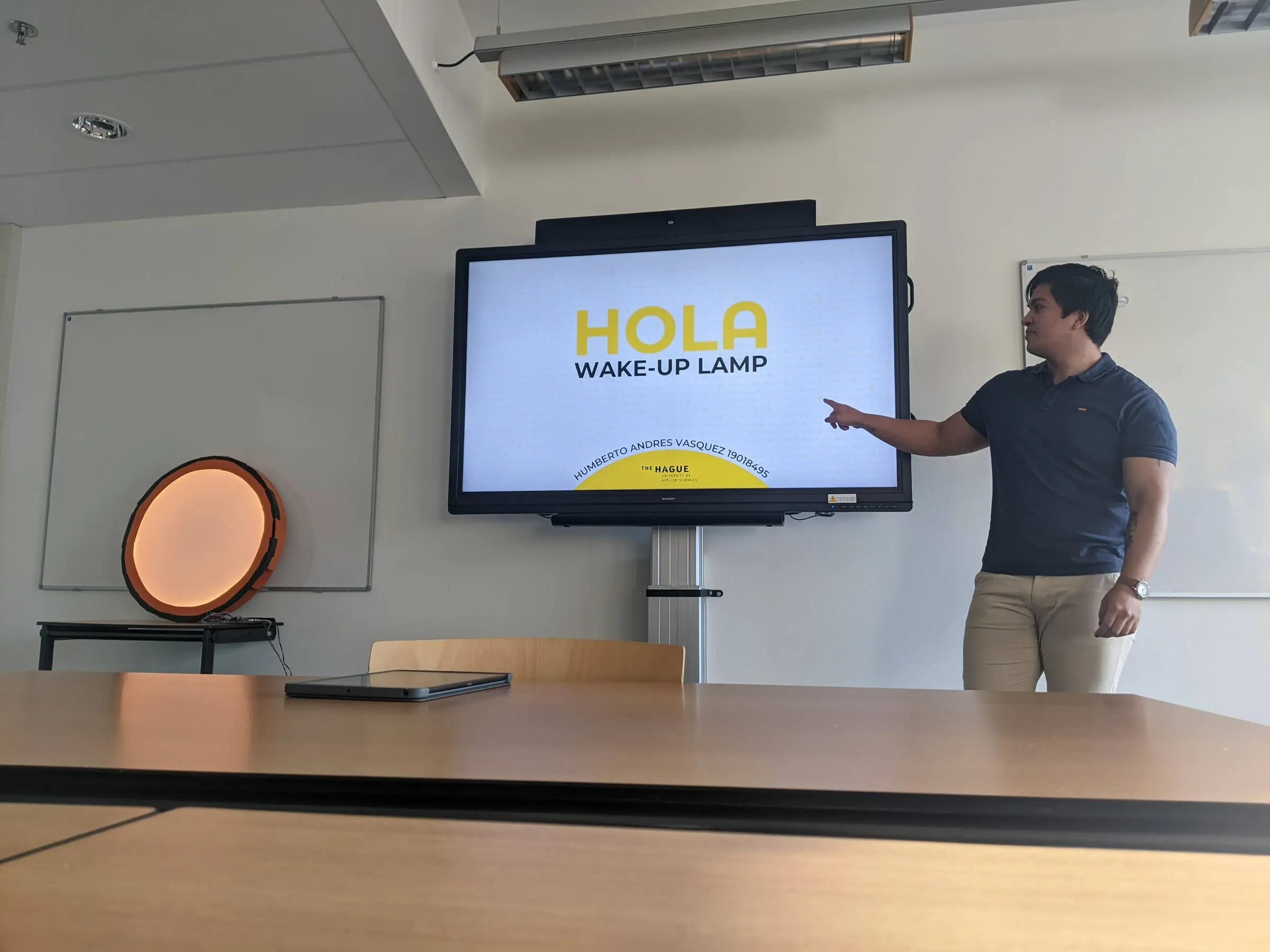
The collaboration also runs the other way: THUAS students join the studio as interns. They worked with us on the Wake-Up Lamp itself, and presented it.
Where it stands
A collaboration we keep coming back to, one session at a time. If you run a programme and want a client who will treat your students’ work as real, get in touch.
- Education
- Interactive installations
- Prototyping
- Research
Knowledge this took
- Writing design briefs with real constraints — budget, scale, vandalism
- Coaching student teams from research to working prototype
- Lecturing on design for manufacture and business
- Interactive projection and sensor prototypes
- Running a client side for a semester-long project
So we can also build
- Running a prototyping sprint or bootcamp for a team new to hardware
- Turning a research question into a brief a team can deliver against
- Exploring several directions in parallel before committing to one
Something close to this but not quite it?
Got something like this in mind?
Ask Ola how we'd approach it, or go straight to a person.