Simple Sockets
A modular light fitting — one universal base, a cover in any shape and colour that twists on, and any bulb — so a lamp, a wall light or a pendant cluster costs a fraction of a designer fitting.
- Client
- Hola Studio
- Year
- 2020
- Status
- Sold through our own shop and installed in homes; production ended in 2023
- Services
- Hardware prototyping Concept to market
- 8
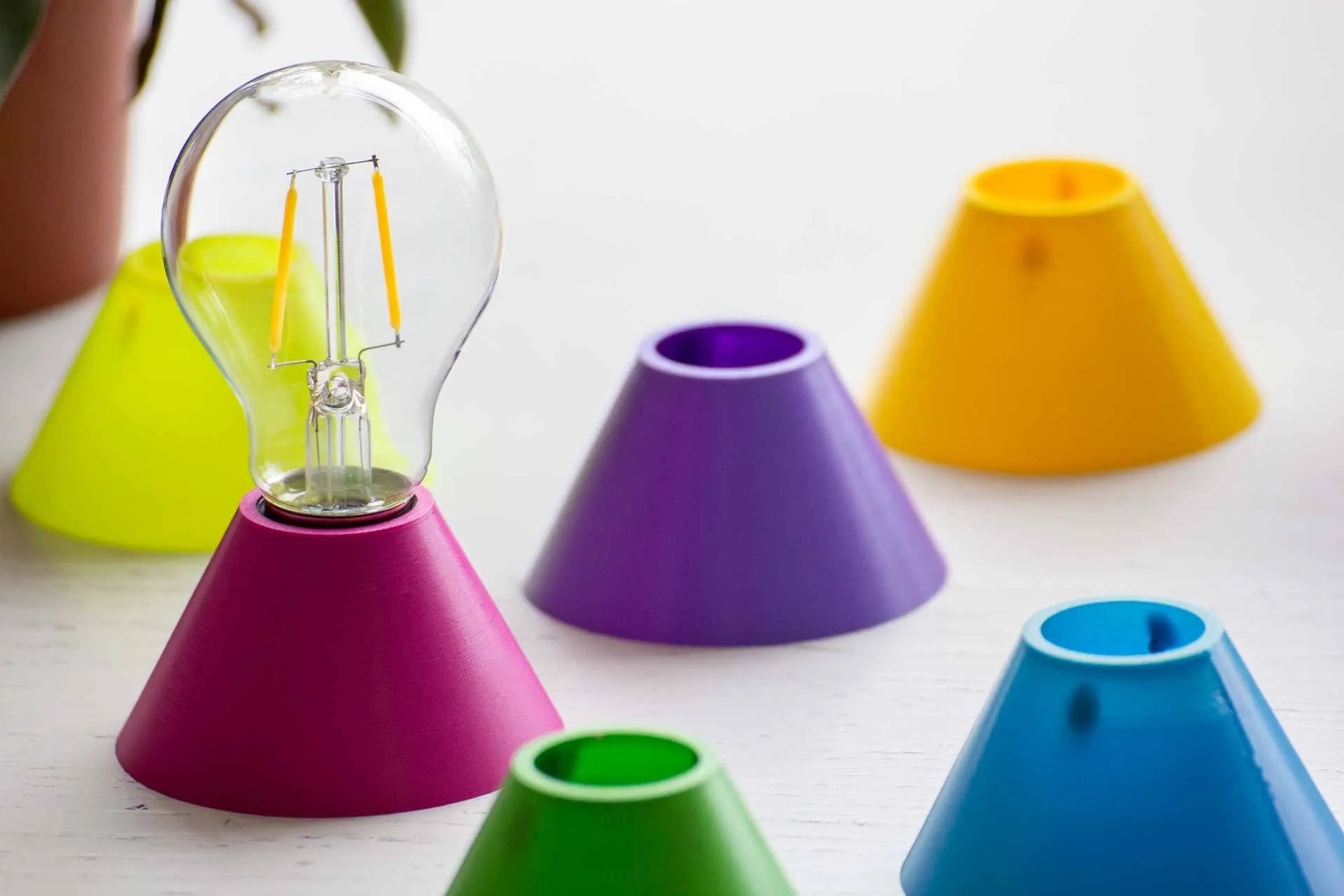
- Cover shapes on one base
- 4
- Ways to mount it: table, wall, ceiling, pendant
- ∞
- Combinations of shape, colour, bulb and mounting
The idea
Every lamp, underneath, is a base and a light source. Most of what you pay for in a fitting is everything layered on top of that — and most fittings lock you into one shape, one colour and one way of mounting it.
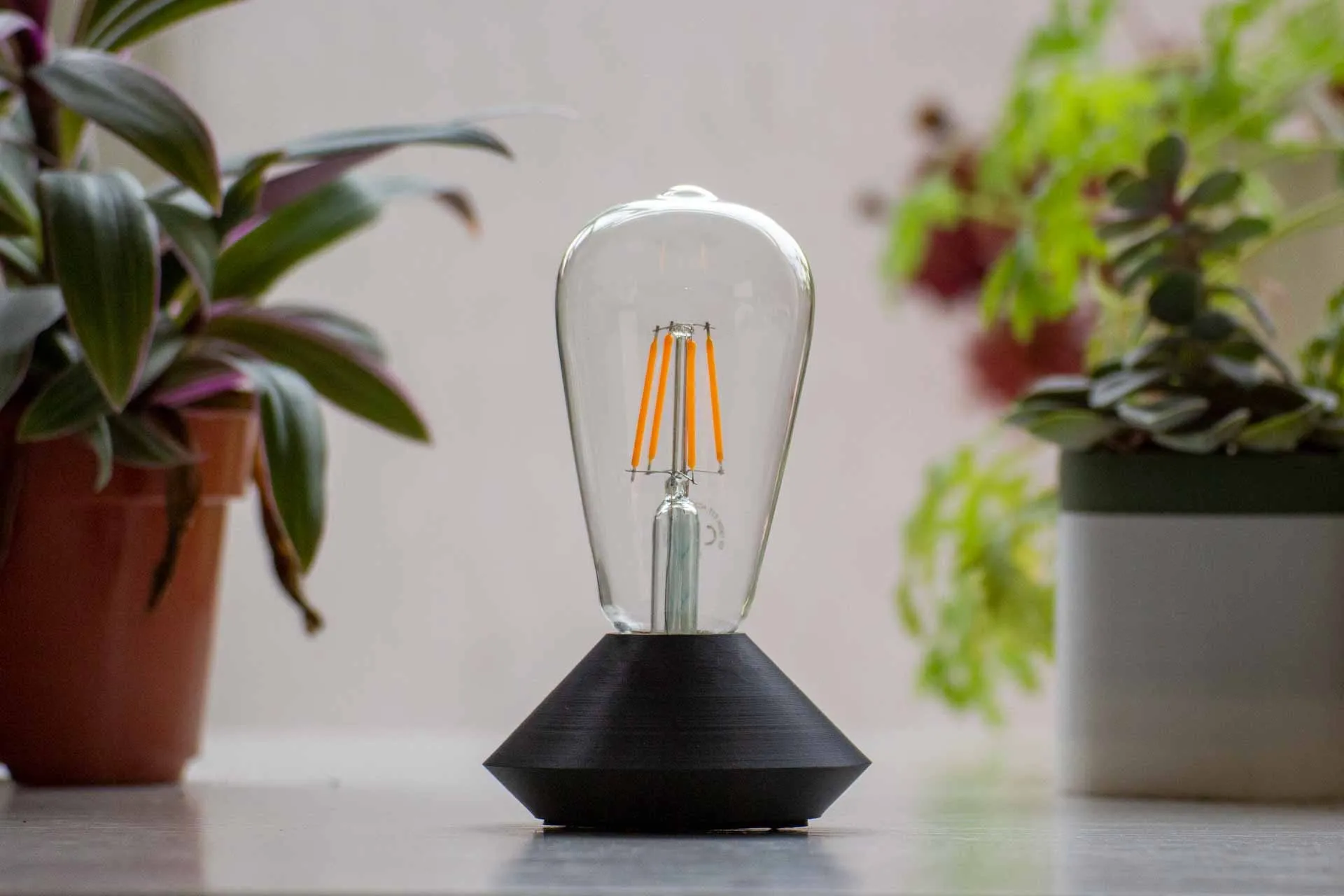
Simple Sockets took that to its extreme. A universal base holds a standard ceramic E27 lampholder. A cover in your choice of shape, colour and material twists onto it. Then you add whatever LED bulb you like. Same base on a table, on a wall, on the ceiling or hanging as a pendant.
It was the project we loved most, because it is the purest version of what the studio does: take a product category apart, find the one part that has to be engineered properly, and make everything else cheap to change.
What made it hard
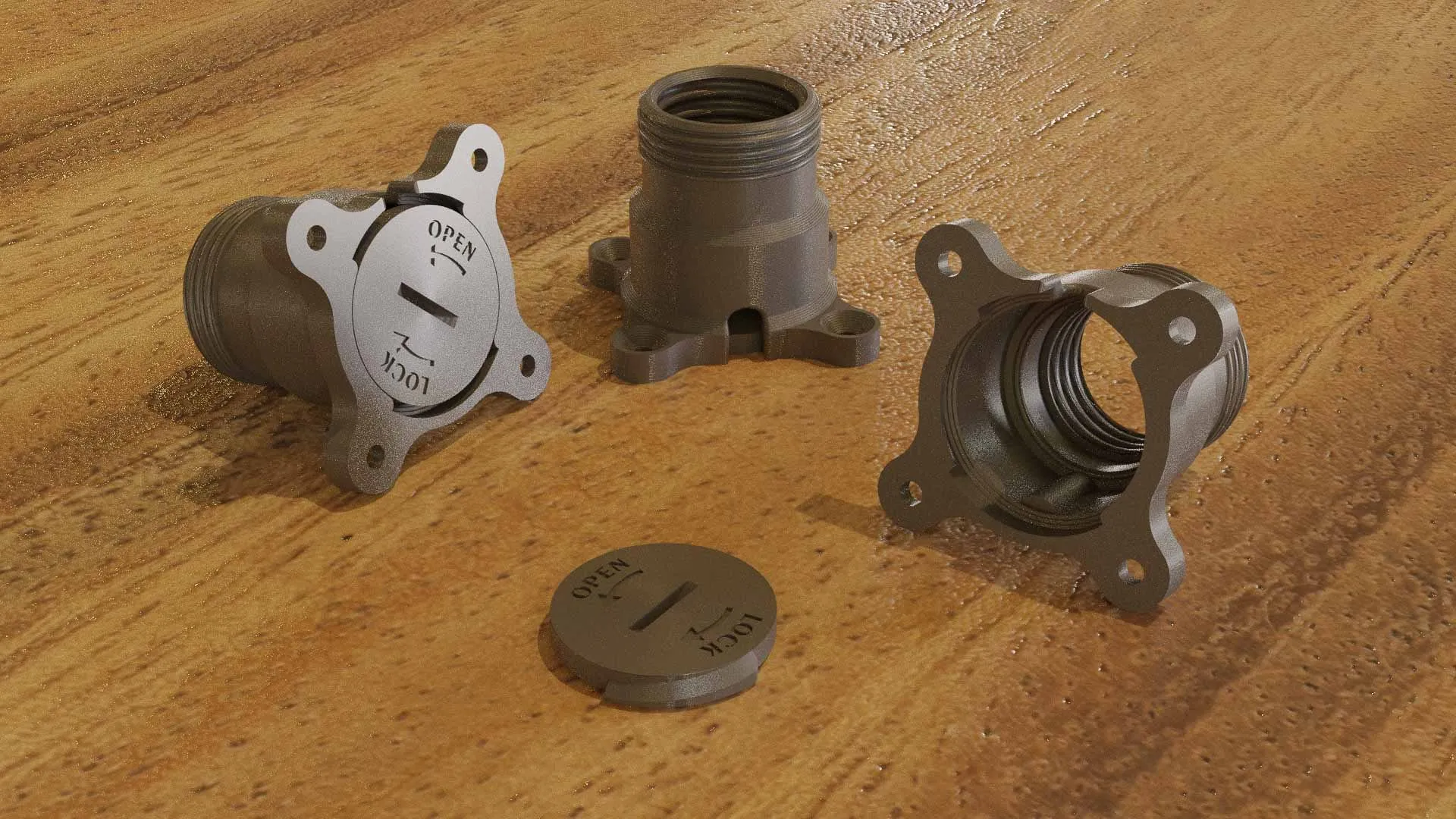
It runs on mains power. A lamp a customer wires themselves has to be hard to assemble wrong. The live parts stay inside a standard ceramic lampholder, and the base is built around that part rather than replacing it. Since it is AC, it does not matter which wire goes where — one less thing to get wrong.
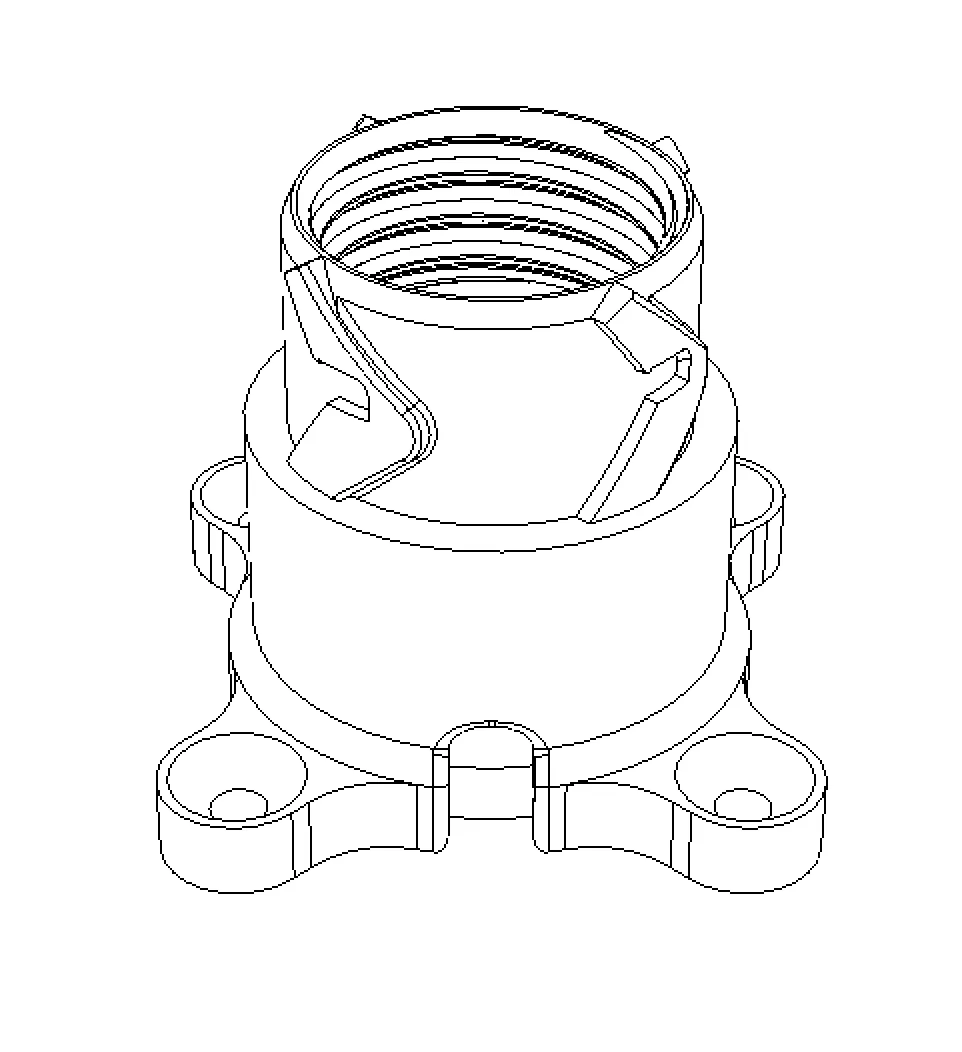
The cover has to lock, by hand, forever. It twists on, against arrows moulded into the base, and stays put through bulb changes and years of heat. The base lid that closes over the wiring locks with a coin. No screws, no tools, nothing to lose.
Printed parts have to look like a product. Layer lines, warping and colour drift between batches are fine on a prototype and fatal on a shelf. That is why the filaments mattered as much as the shapes.
What we built
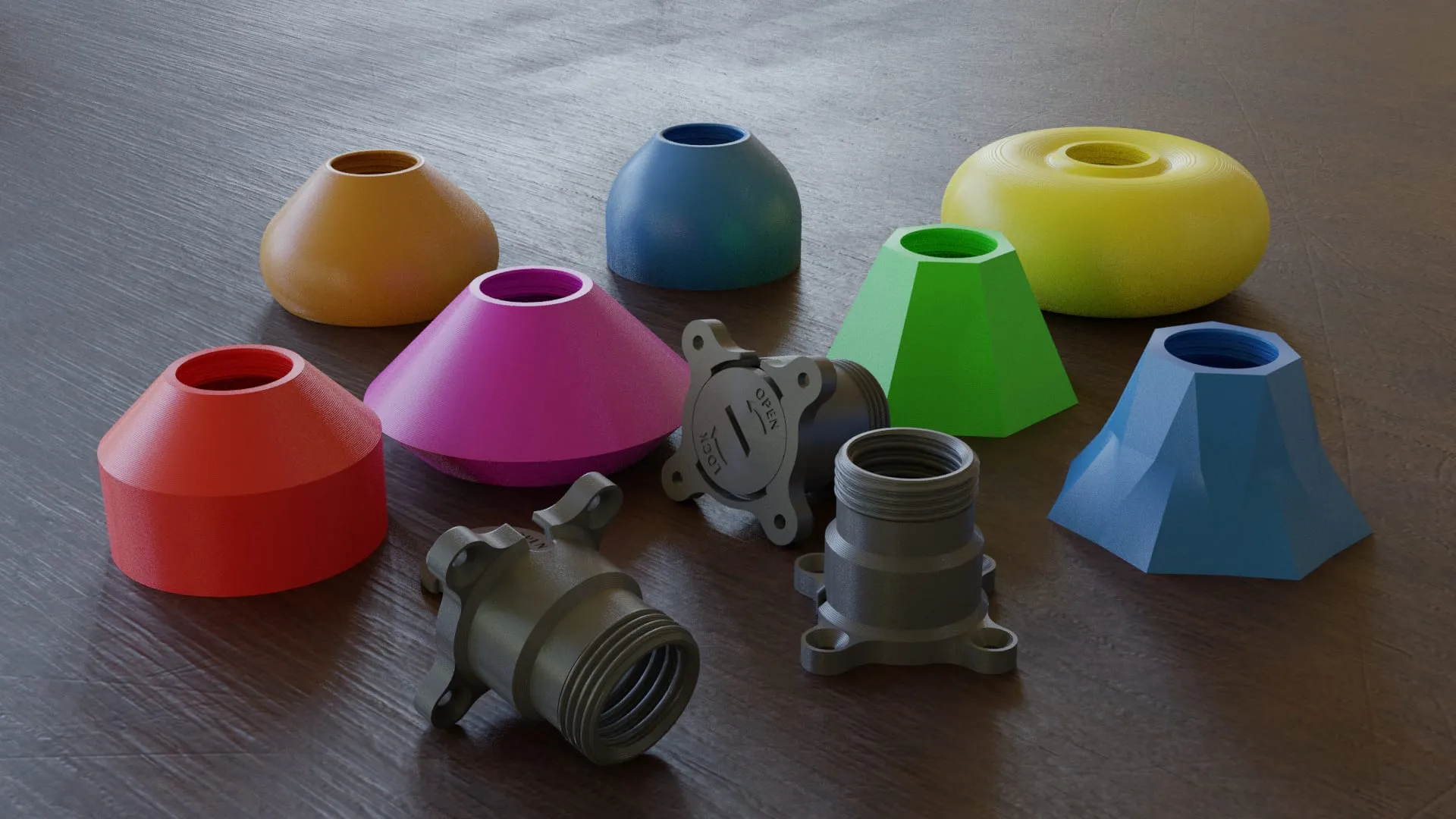
Eight cover shapes — the Bomb, Cone, Bottle, Mocca, SuperMocca and more — and a custom shape on request.
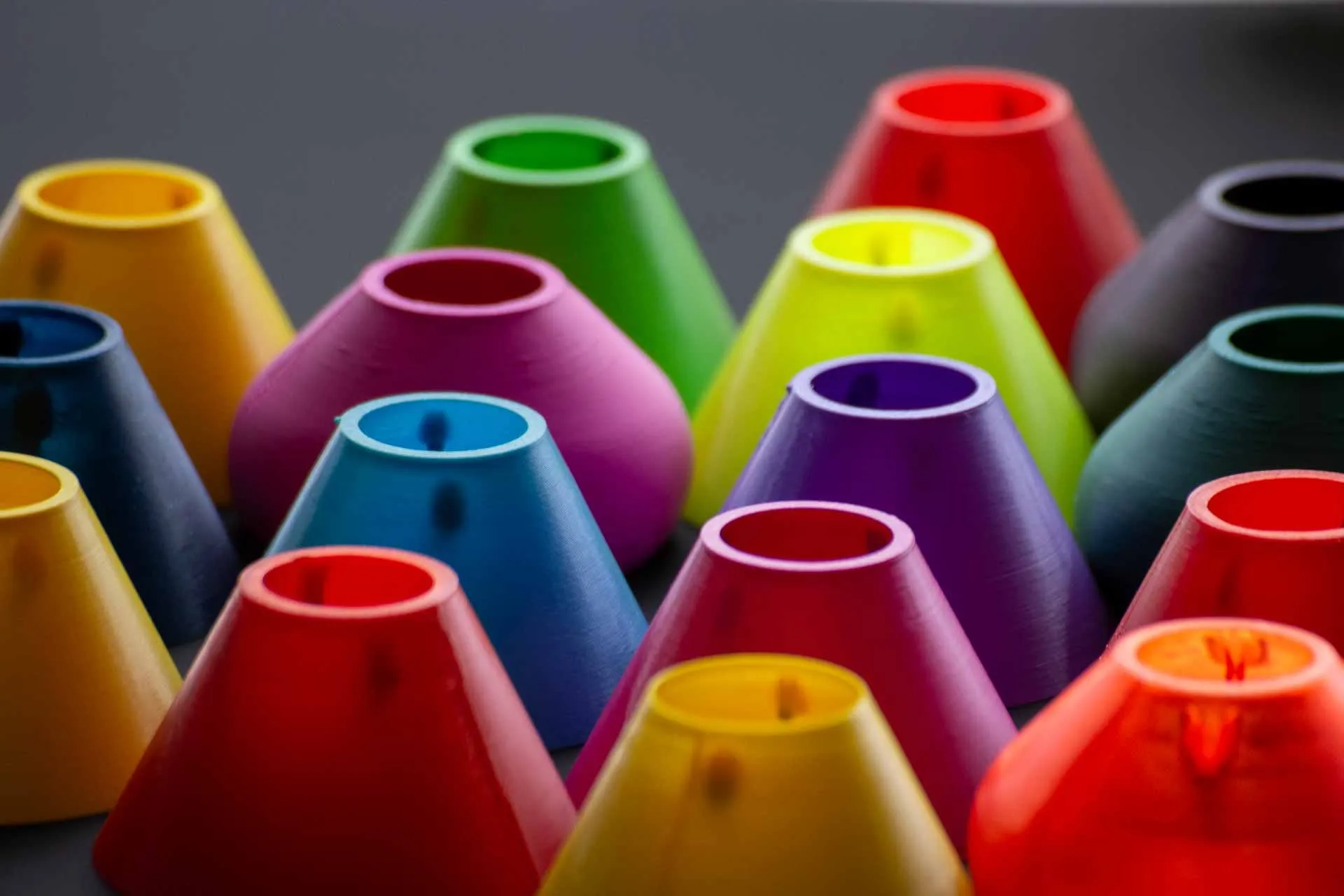
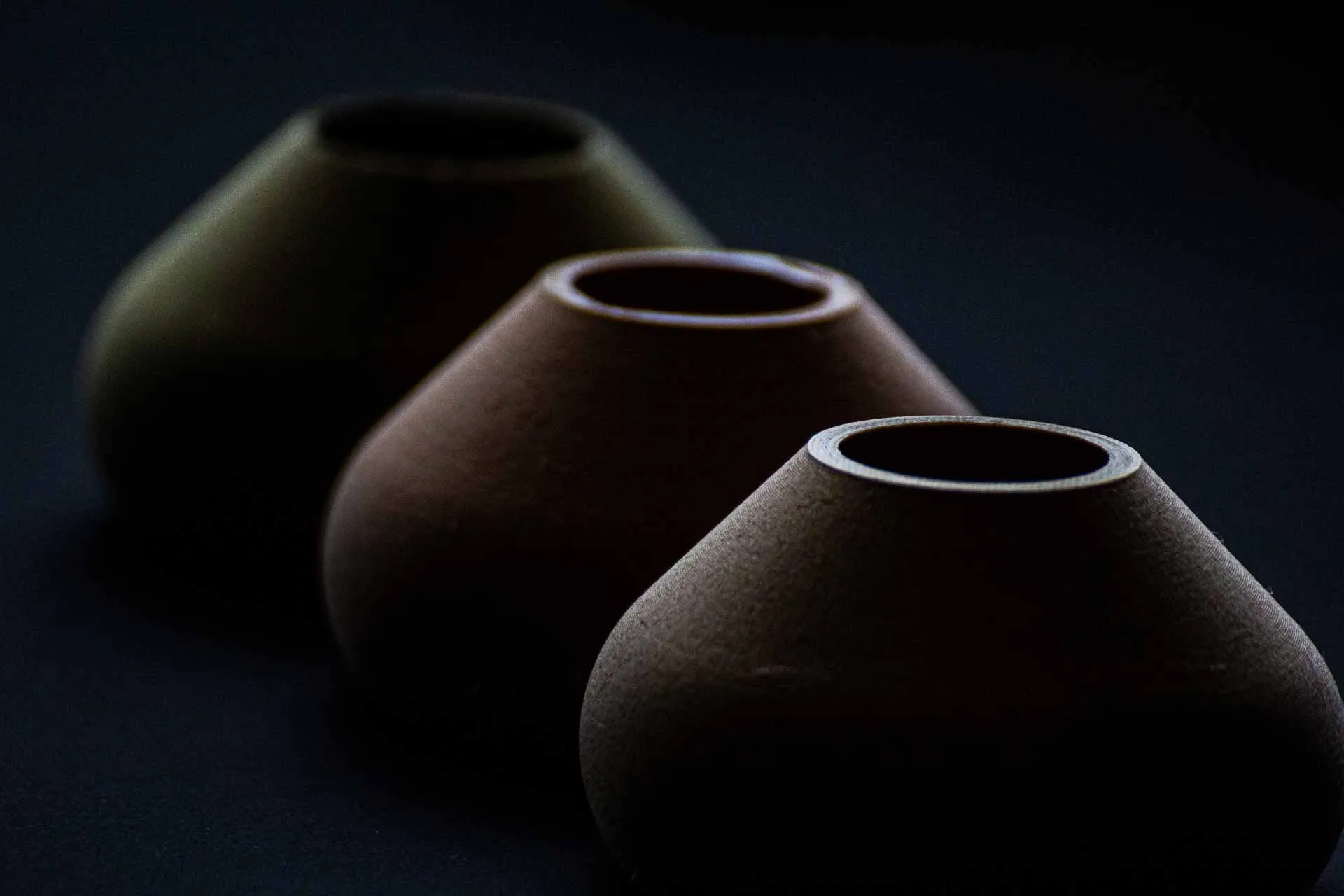
Colours and materials from fluorescent yellow to a sparkling violet, and filaments filled with wood, stone and metal — all on a biodegradable plastic base. Three families came out of it: wood, simple black and white, and “electric” colours.
The accessories that make it a system. A Simple Plug — a switched cable that turns a socket into a table or wall light. A long version and a Simple Pendant for ceilings. A small adaptor. And a Paint edition: a blank cover you finish yourself.
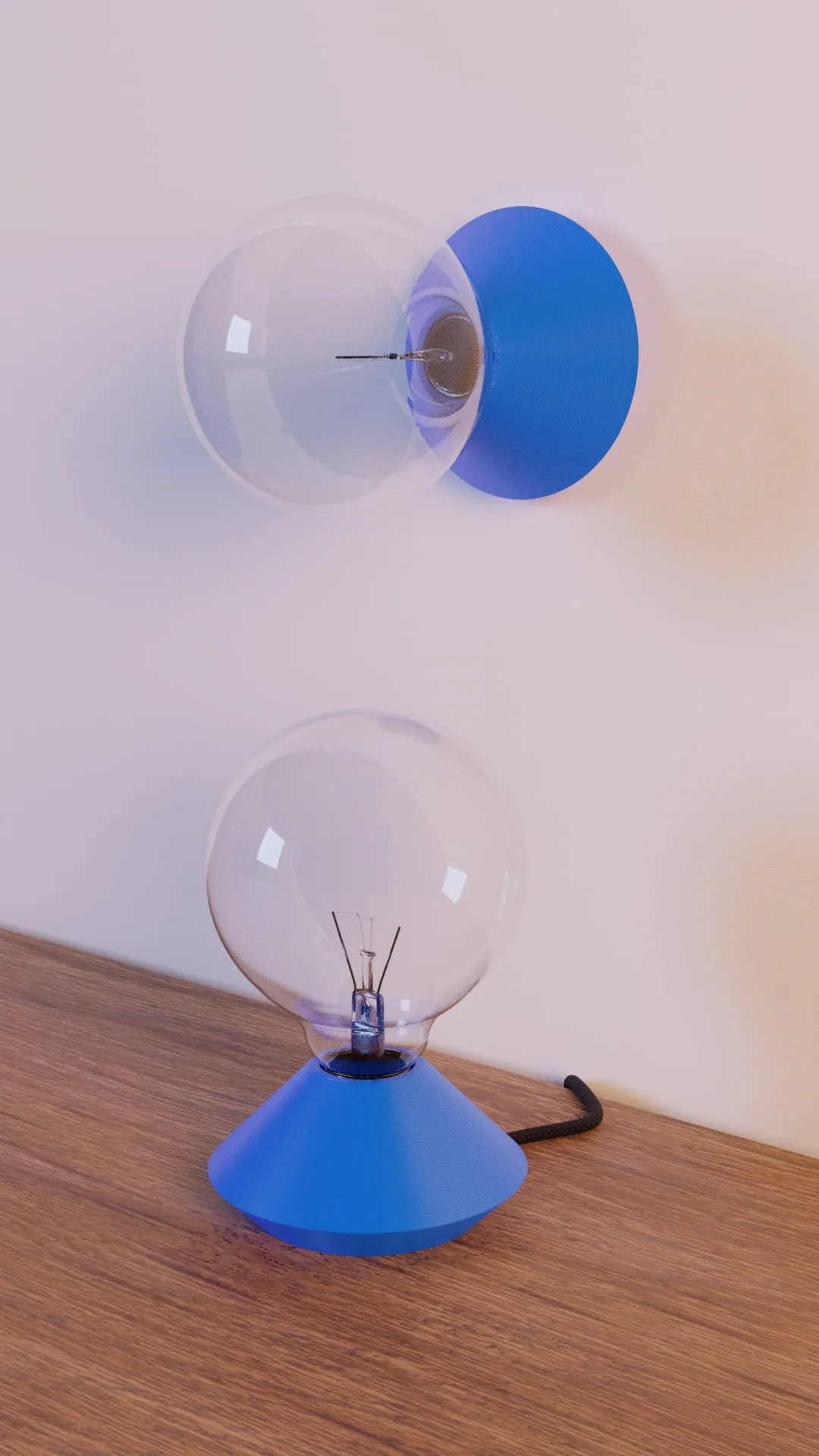
Packaging and instructions for someone at home: a box, the story of the product, the ceramic holder, the cover and the cables — plus step-by-step instructions and a video, because the assembly had to be understood without us in the room.
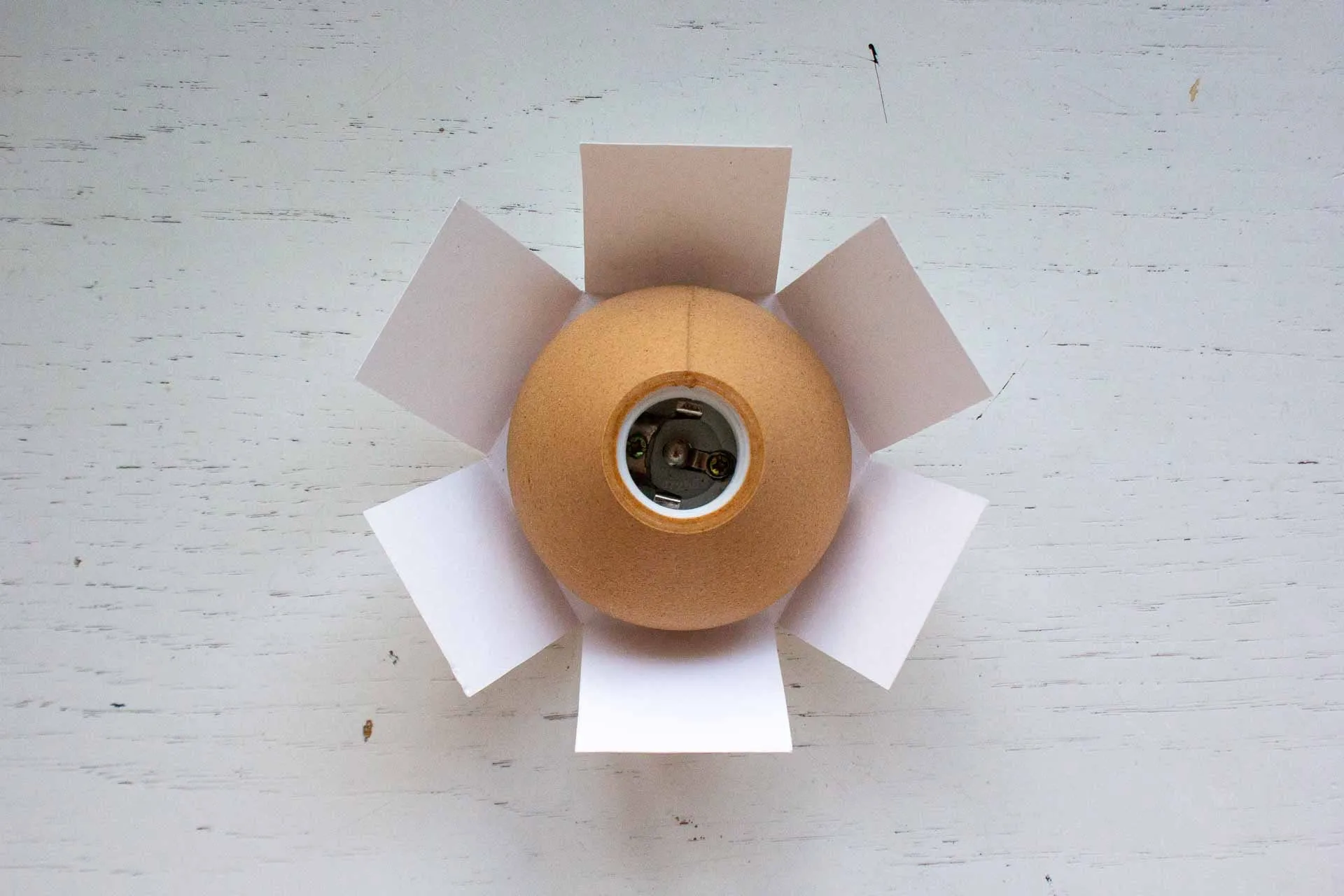
Everything was printed on demand. No moulds, no stock, no minimum order — so the range could grow a shape at a time without betting money on it.
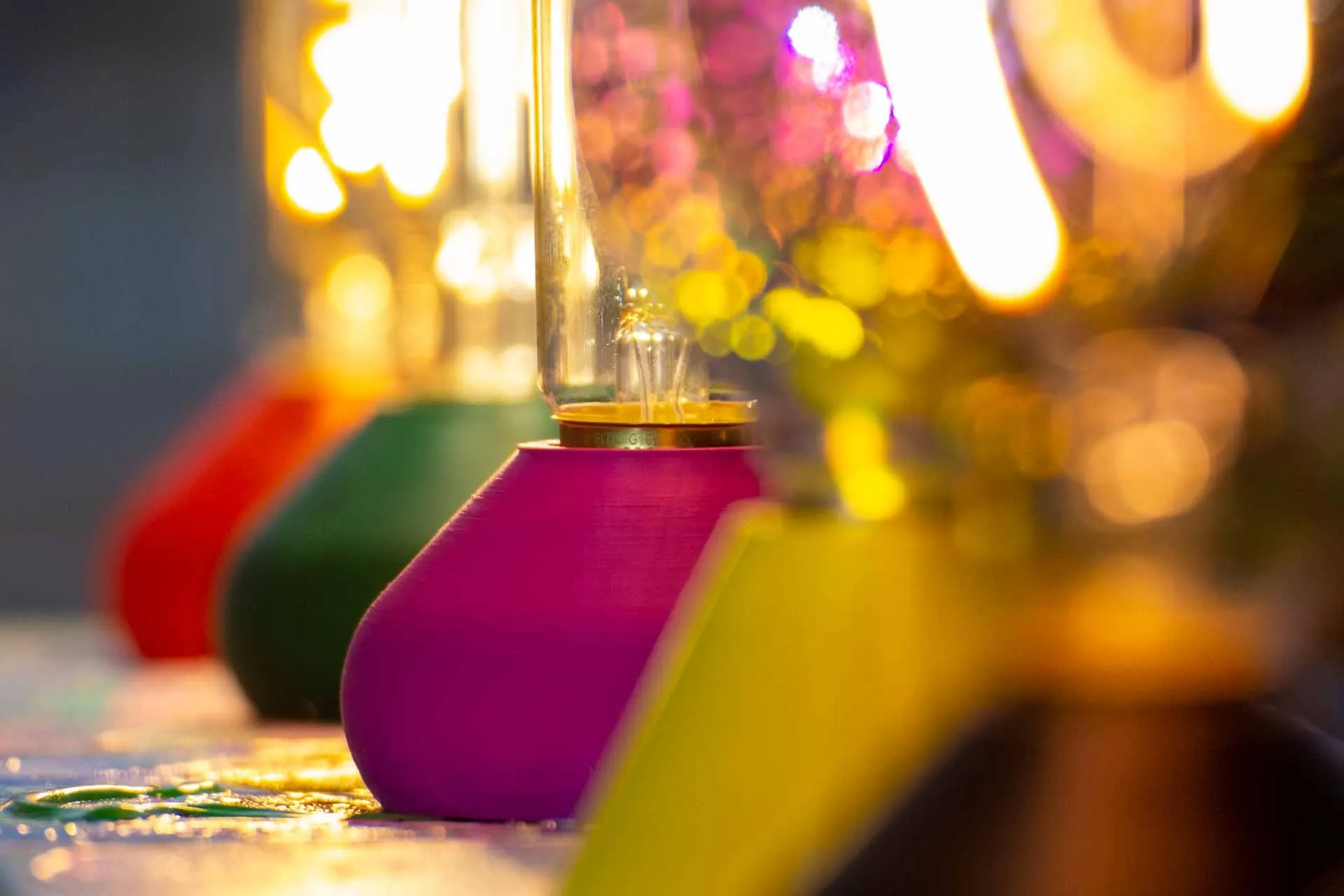
A real install: Peter’s dining table
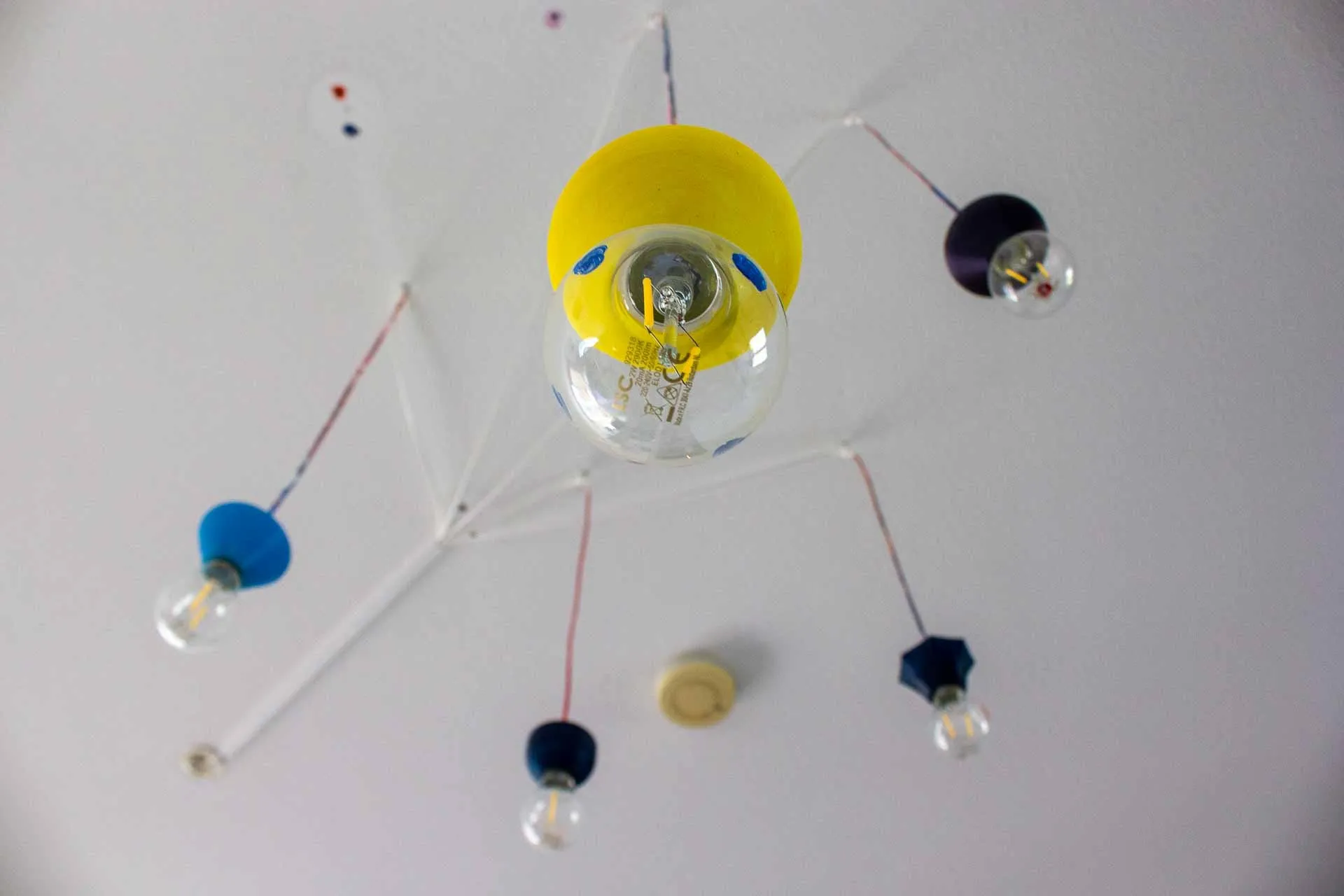
Peter had got into painting and wanted colour in the lights as well, and asked for something playful over the dining table.
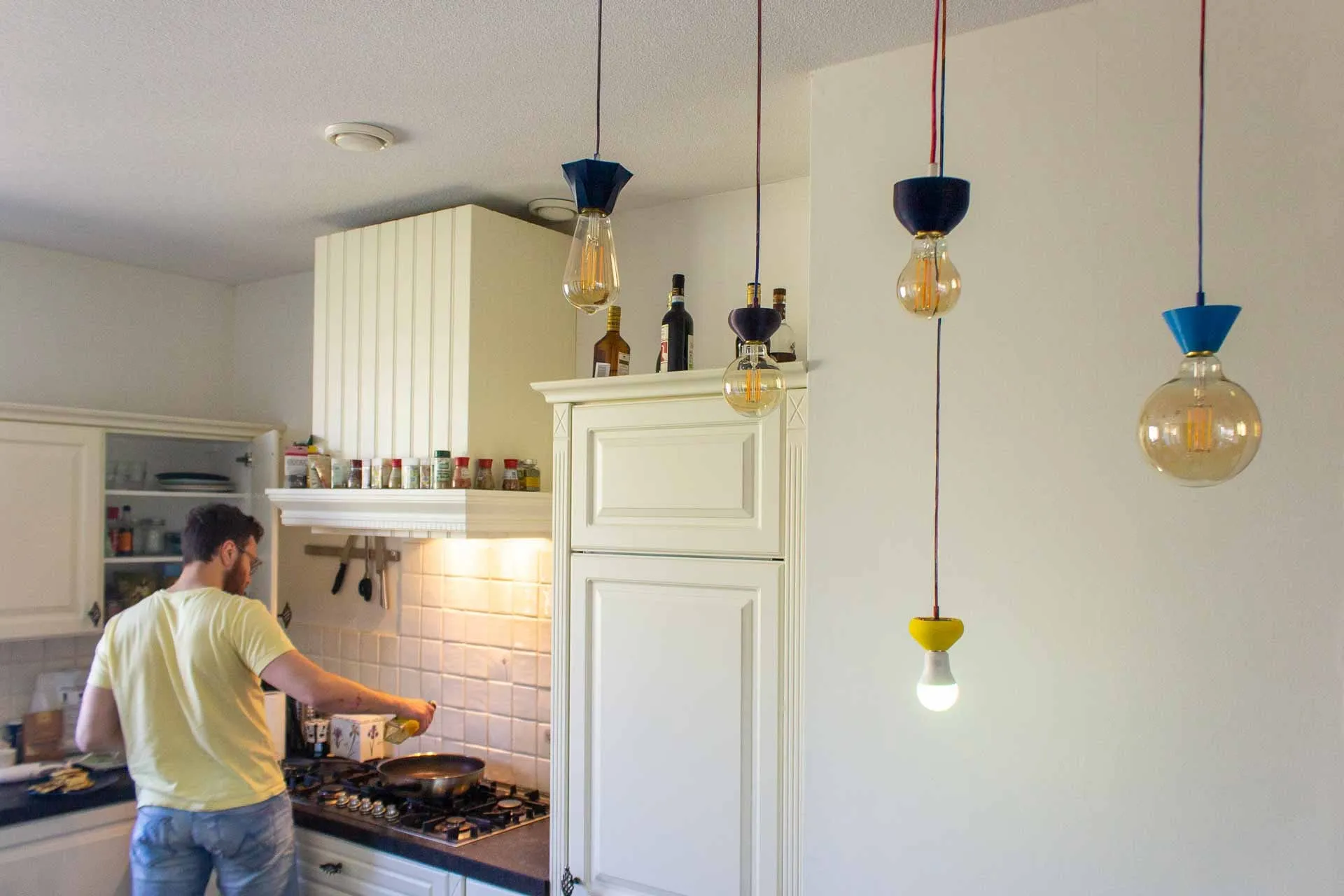
We hung five Simple Sockets at different heights from five ceiling hooks, the cables running across the ceiling into the shape of a tree, split from one supply with two connector blocks.
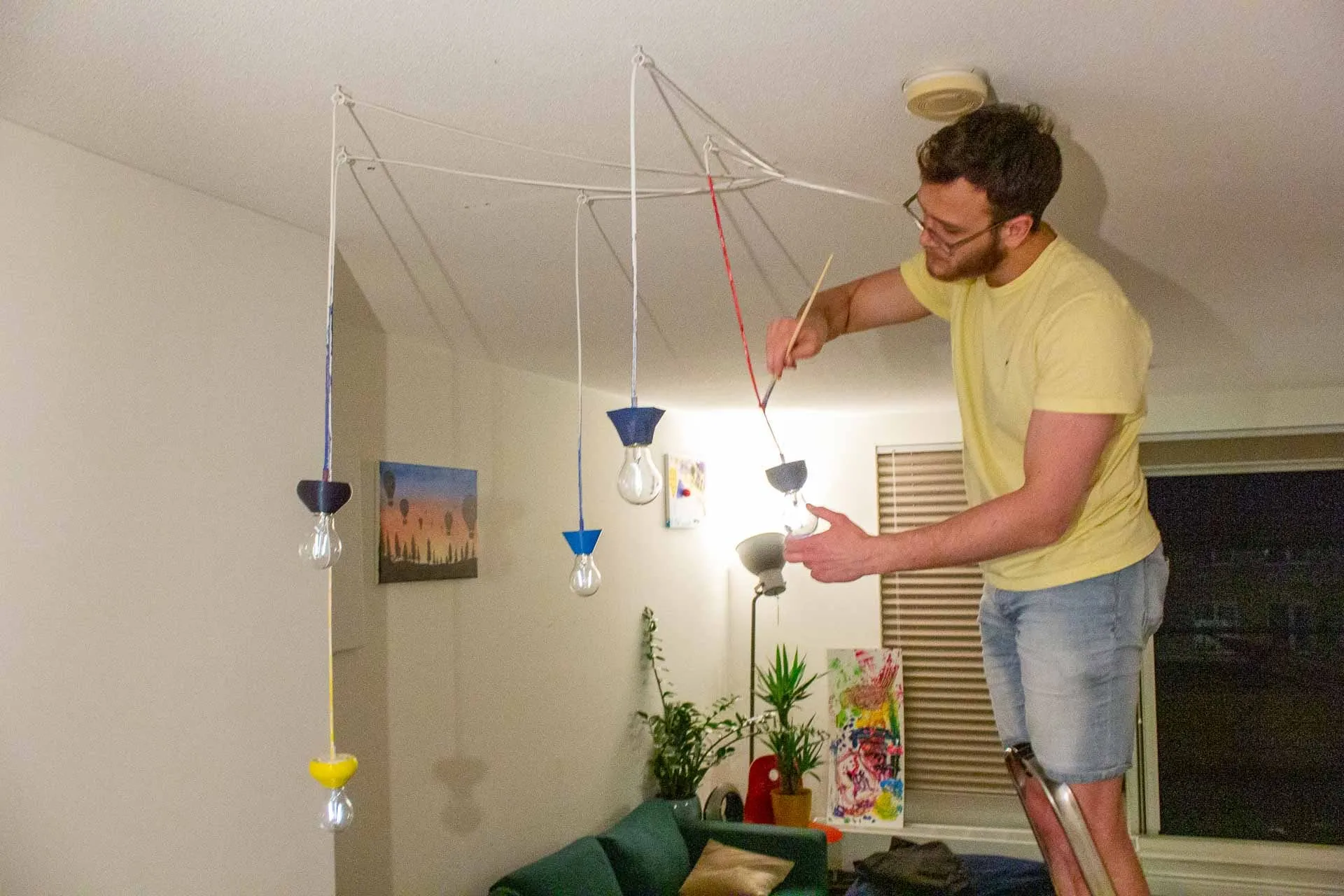
Then, at the end, Peter changed the plan: four covers in four shades of blue instead of white, and one blank one left to paint. On a normal fitting that is a reorder and another visit. Here it was a twist of each cover.
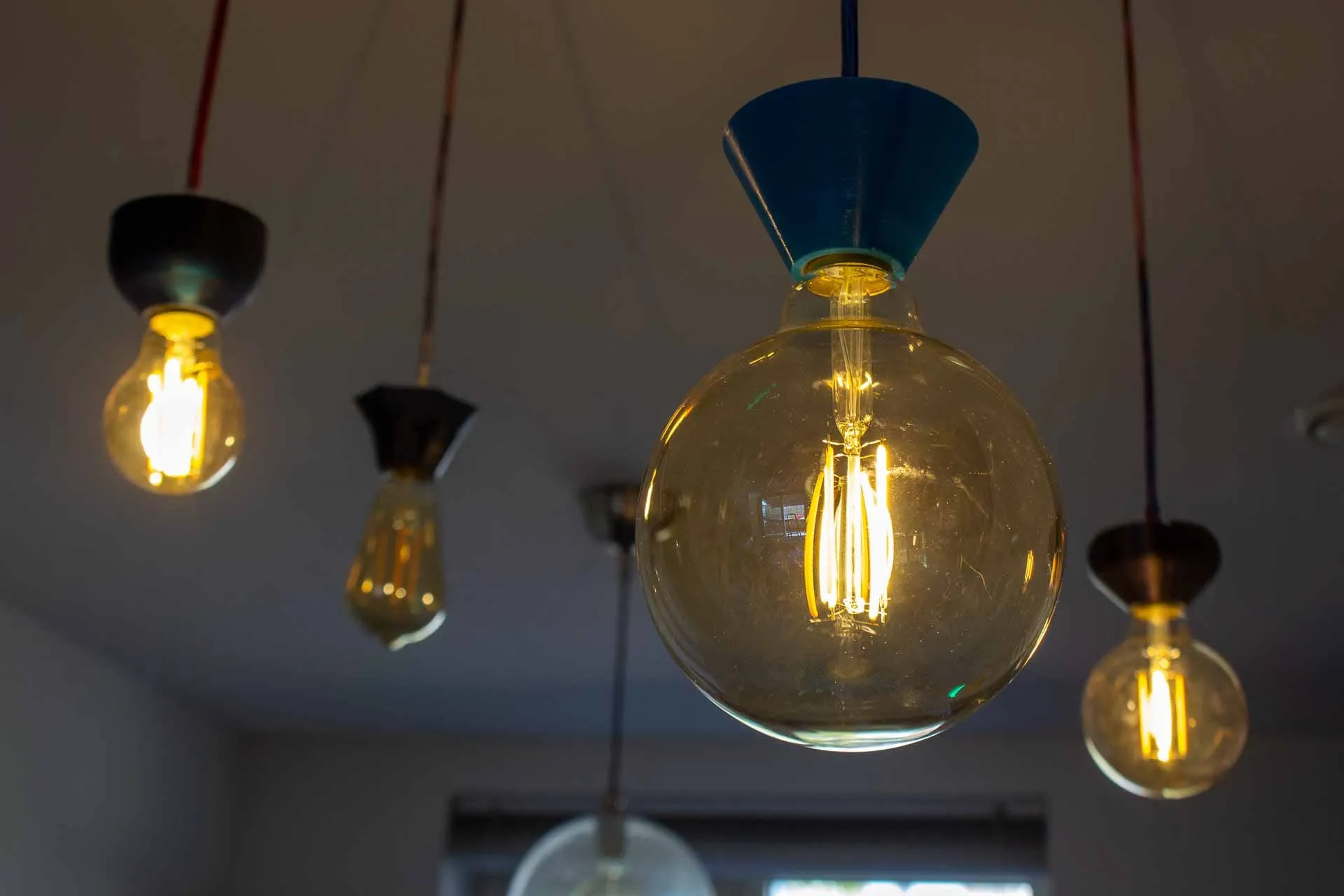
Later every bulb was swapped for a smart one, and the whole cluster now runs from a phone — with no change to the fittings at all.
Paint it, print it
The Paint edition came from the same thought: the cover is the part people want to make their own.
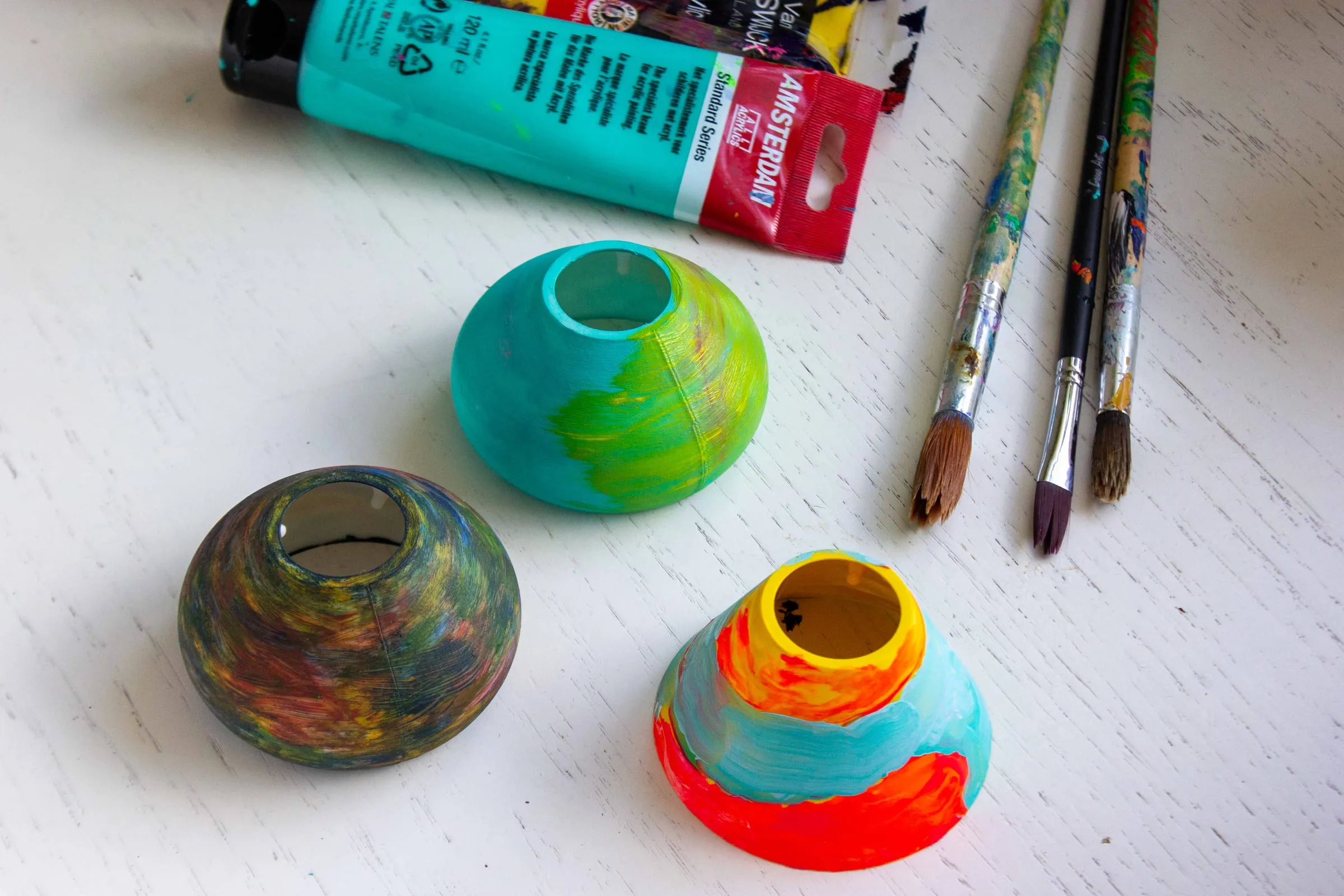
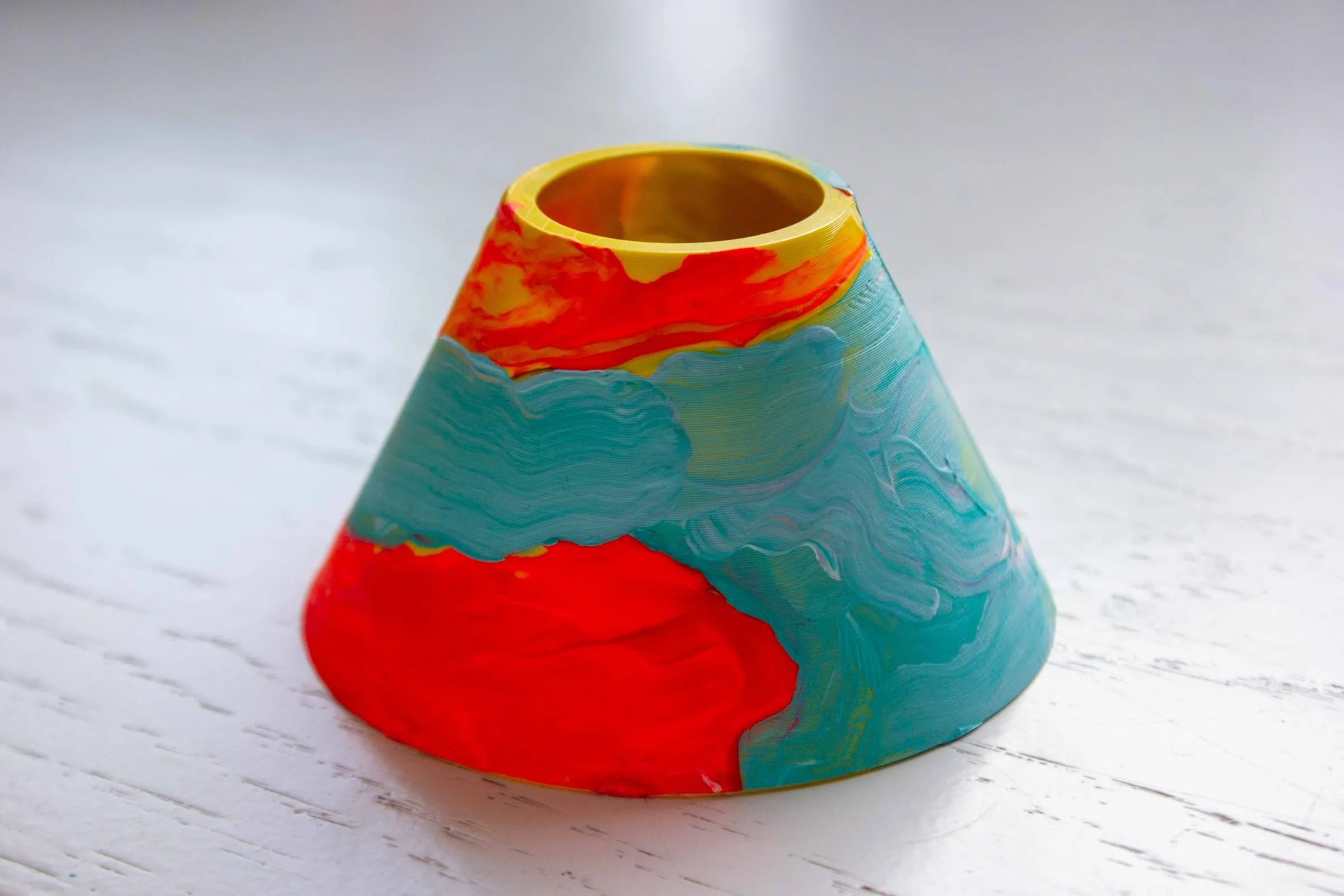
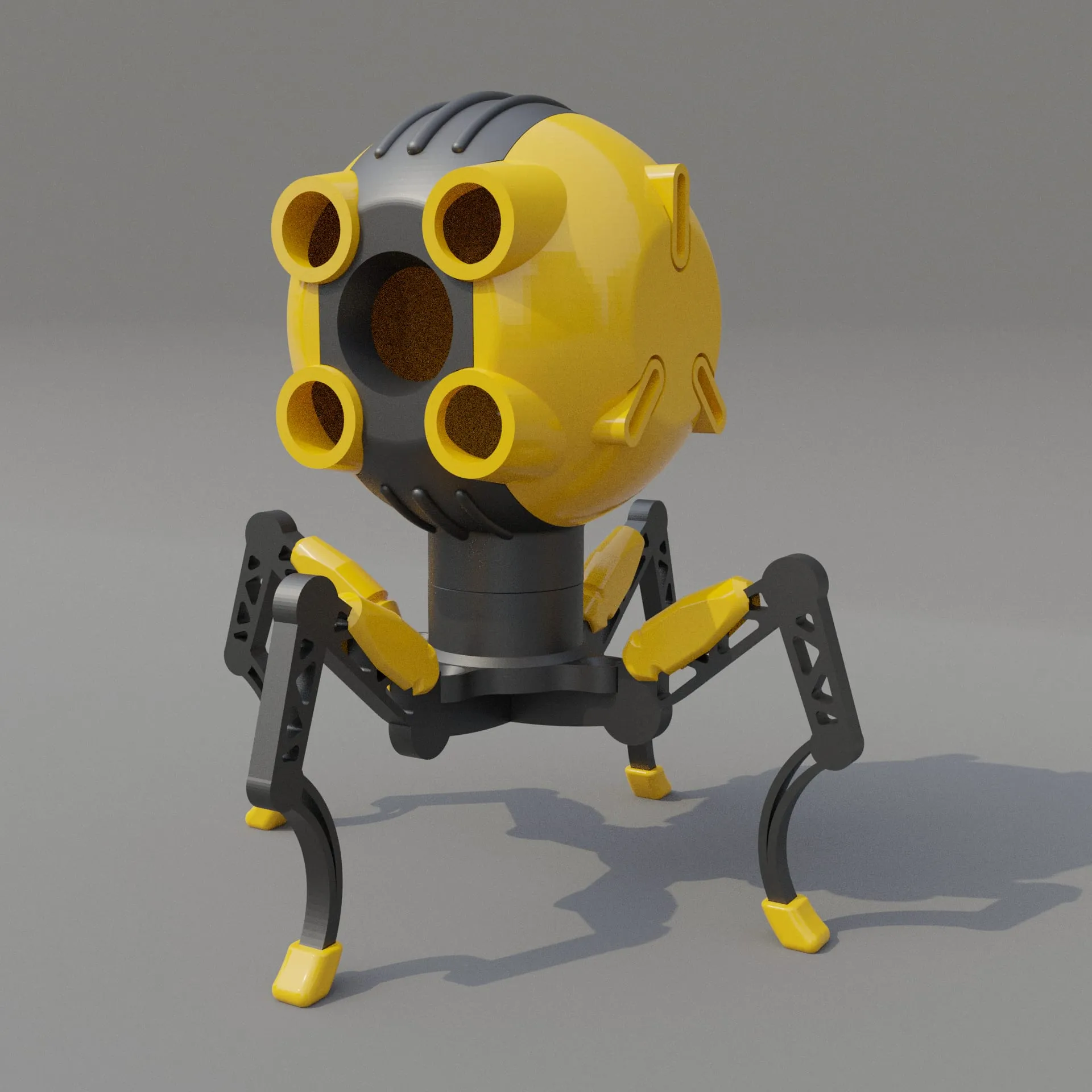
And in spring 2020, Zoli, a designer at the studio, made the COVID-19 Bot — a little robot that clips onto a Simple Socket. We released the 3D files free, so anyone with a printer could make one at home.
Endless ways to use it
Because the base never changes, the choices multiply. Eight shapes, any colour or filament, any E27 bulb from a bare filament globe to a smart bulb, on a table, a wall, a ceiling or hanging from its cable — and a cover you can paint, swap or print again when the room changes. One socket can be a reading light; five on different drops become a chandelier; a row along a wall becomes a light line.
That is how we pitched it to interior designers, with a free sample for each practising designer: not as one more lamp, but as a kit they could compose into whatever a room needed.
Where it stands
Simple Sockets sold through our own shop and went into homes like Peter’s. Production ended in 2023, but the design is complete: base, eight covers, accessories, packaging and instructions. It is also the clearest example of what we tell clients about product families — engineer the one part that has to be right, and let everything else be cheap to change.
- Product system
- Lighting
- 3D printing
- Modular design
Knowledge this took
- Modular product architecture — one base, many products
- Mains-voltage fitting design around a standard ceramic E27 holder
- Tool-free twist-lock mechanisms in printed plastic
- Material development with filled and biodegradable filaments
- Print-on-demand production with no stock
- Accessory, packaging and instruction design
- Selling to interior designers as a channel
So we can also build
- Product families where one core part does the work of a whole range
- Consumer products that must be safe on mains power but assembled at home
- Turning a one-off prototype into a catalogue you can actually sell
- Small-batch manufacture where stock and moulds would kill the margin
Something close to this but not quite it?
Got something like this in mind?
Ask Ola how we'd approach it, or go straight to a person.