The Wave
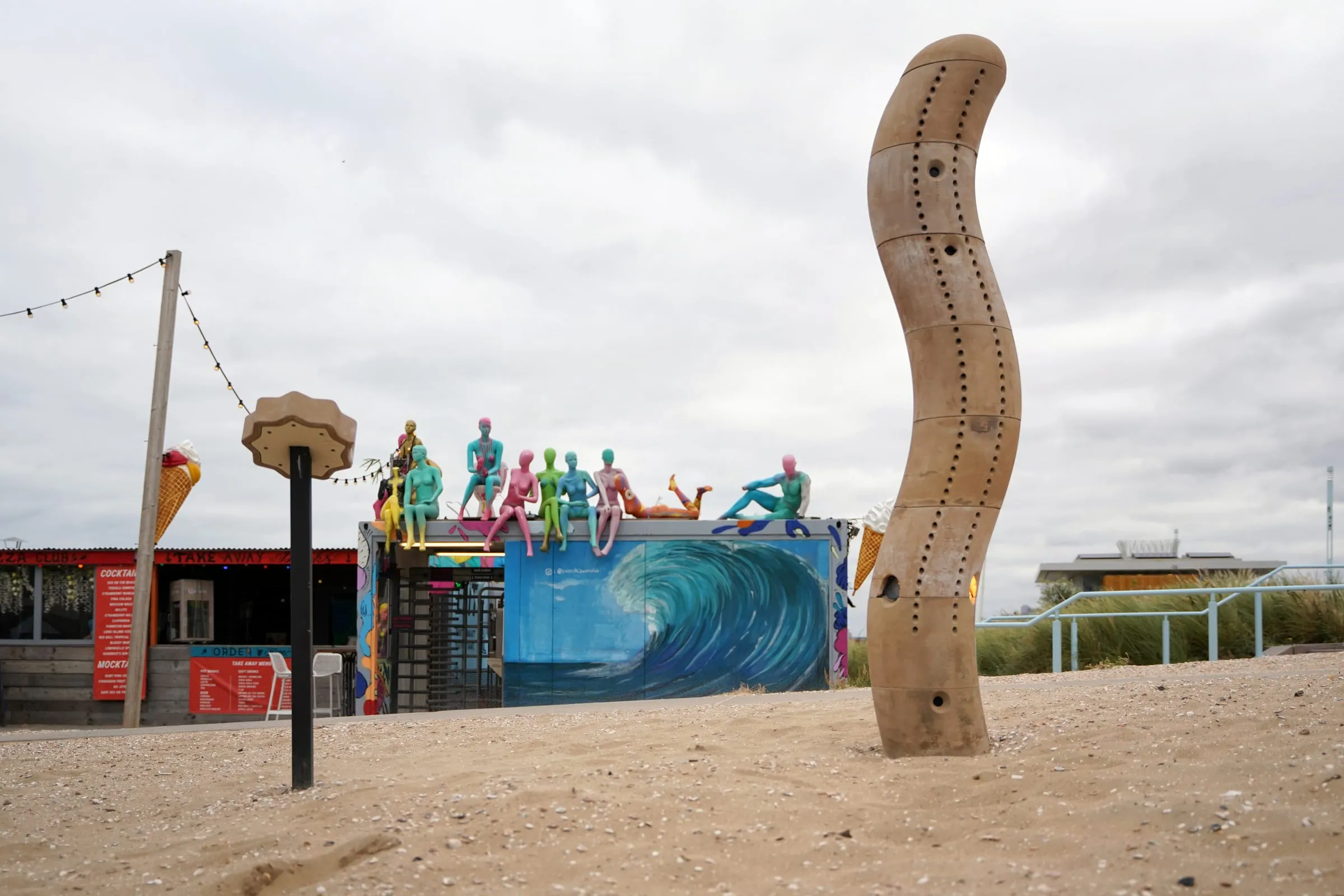
A 3D sand-printed sculpture on Scheveningen beach that turns exercise into a game, using motion sensors and no cameras at all.
- Client
- Municipality of The Hague
- Year
- 2022
- Status
- Completed — ran around 18 months in unsupervised public use
- 18 months
- Unsupervised public use
- 4
- Games at the control post
- 0
- Cameras, images or accounts
The Wave is the first installation in LightMoves, our product line of light-driven installations for public space.
What the Municipality needed
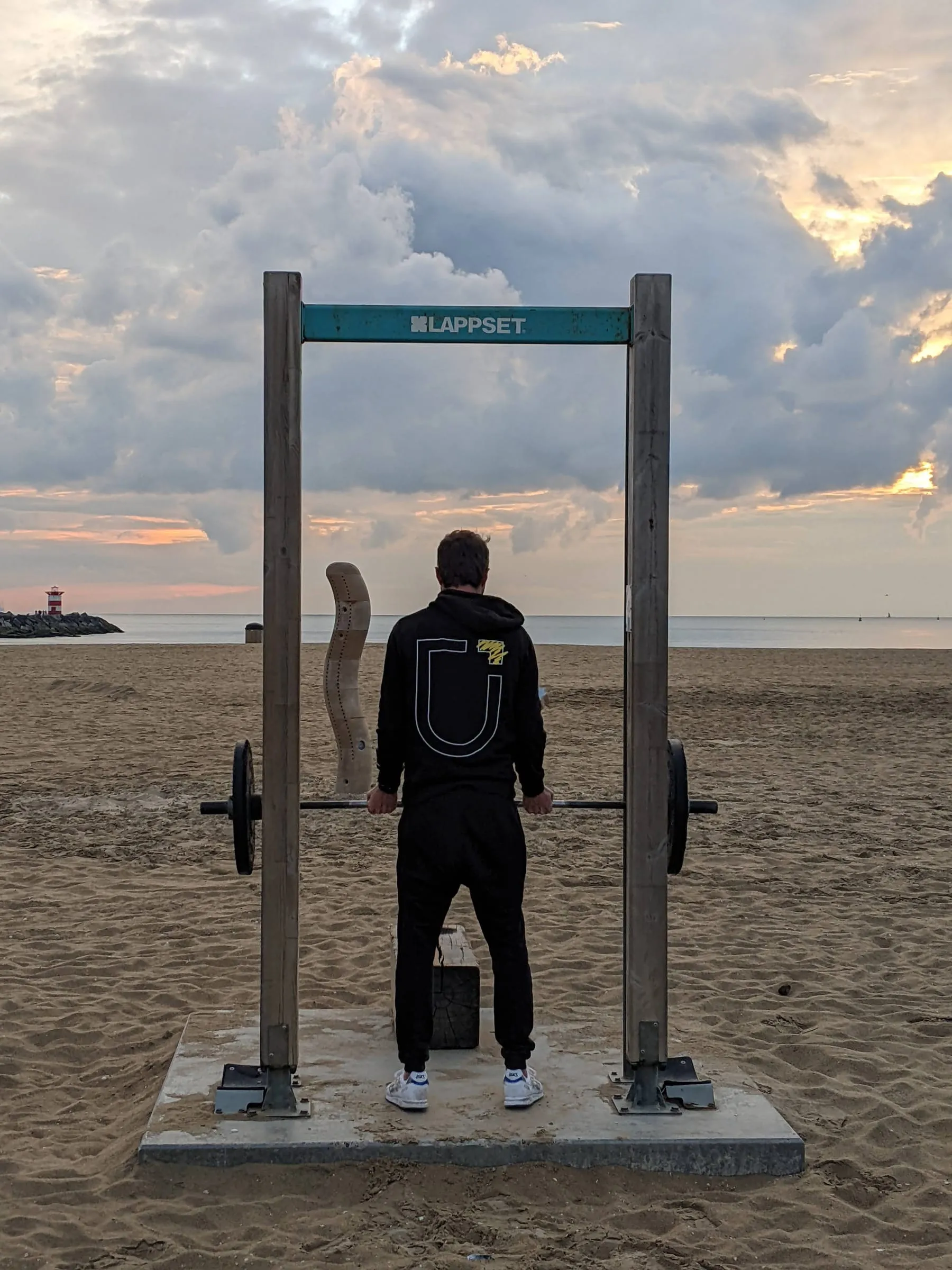
Public exercise equipment has a self-selection problem. It is usually built for people who are already fit and already confident, so the people who would benefit most walk straight past it.
The Municipality of The Hague, with Beach Management, wanted the opposite on Scheveningen Sports Beach: something a nine-year-old and a seventy-year-old would both walk up to without hesitating, regardless of skill, strength or age.
The answer was not a better pull-up bar. It was an object strange enough that people came over to find out what it was.
What made it hard
Two constraints shaped everything.
It had to sense people without watching them. The obvious way to build an interactive installation is a camera and some computer vision. On a public beach that is unacceptable — it turns a piece of play equipment into surveillance, and it makes the whole project a data-protection conversation instead of a sports one. So: three movement sensors, no cameras, and no image ever recorded.
It had to survive a beach. Salt air corrodes, sand gets into everything, water stands where you did not expect it, the temperature swings, and nobody is supervising it. That constraint drove more of the engineering than the interaction design did — and it is why the sculpture is a stack of segments rather than one piece, with the electronics reachable without dismantling the whole thing.
Getting the interaction right first
Before any of it was printed, the whole thing ran indoors as a rough column with an LED strip down the front — because latency, difficulty and whether a stranger understands what to do are things you can only find out by playing.
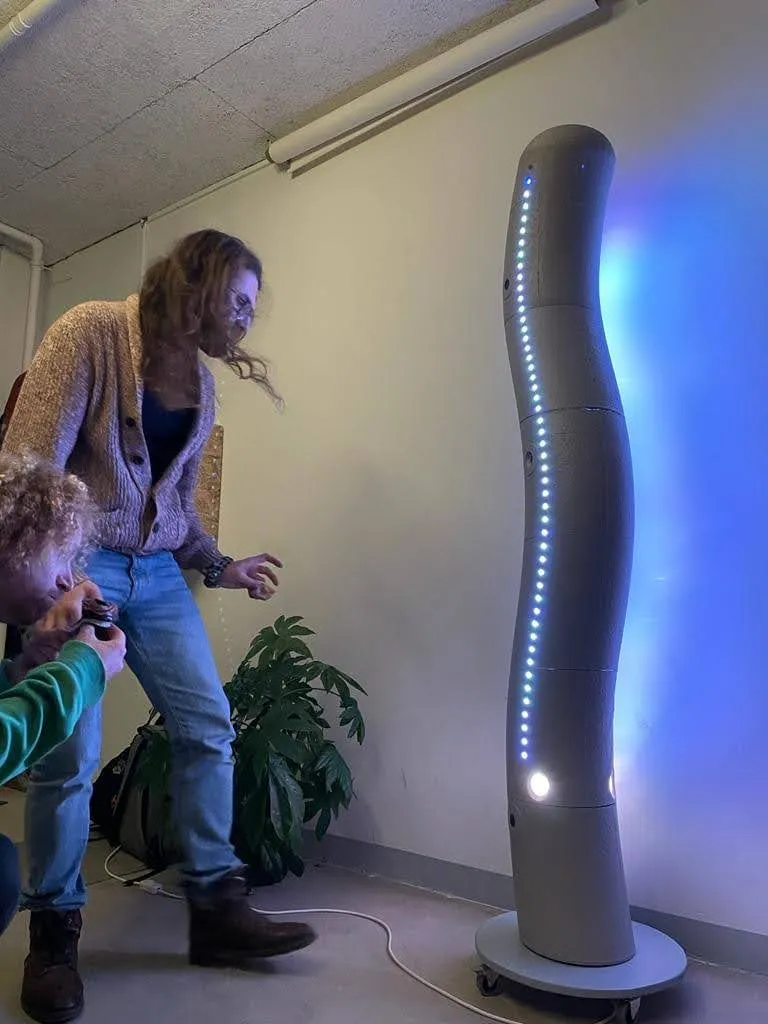
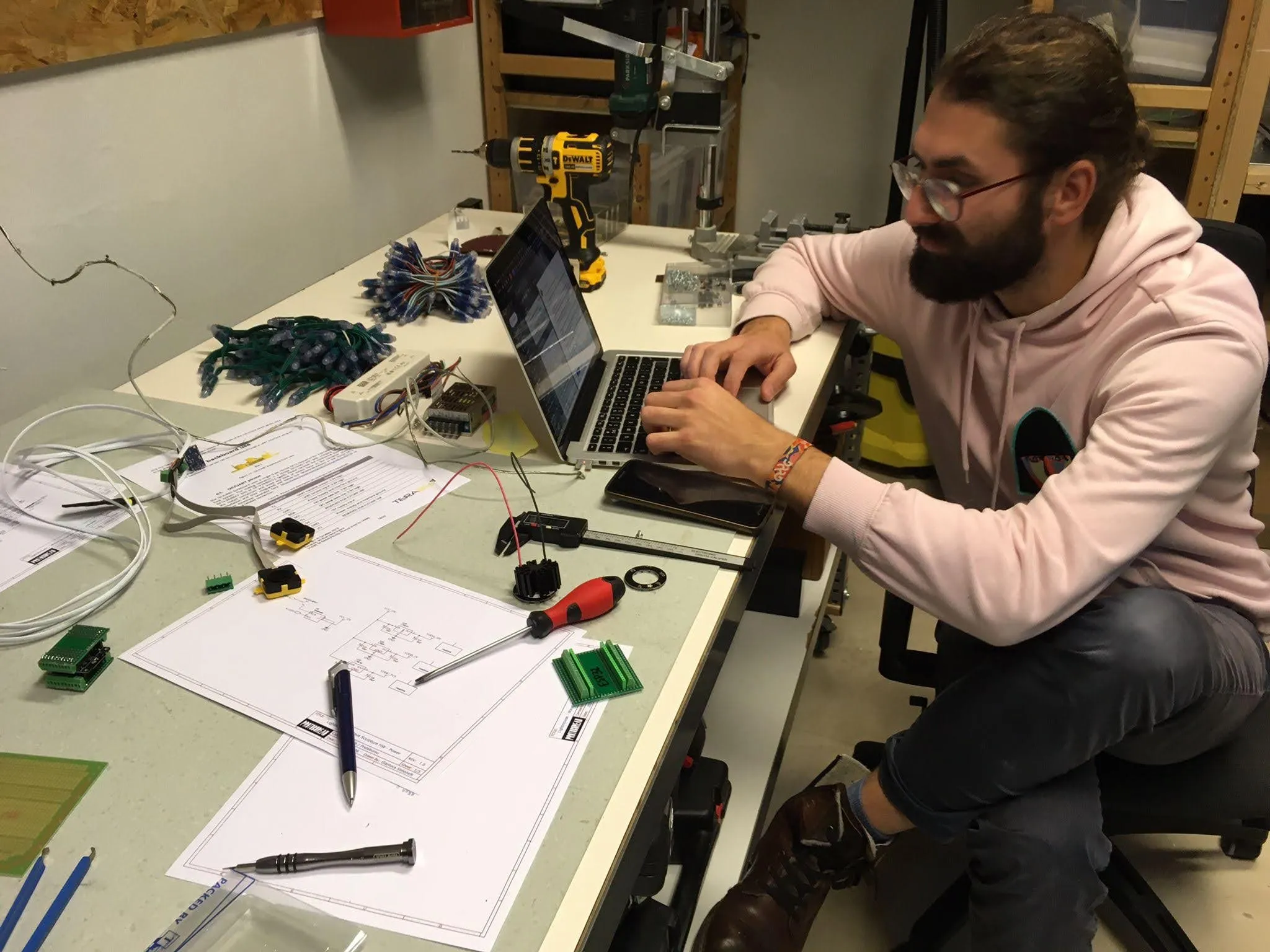
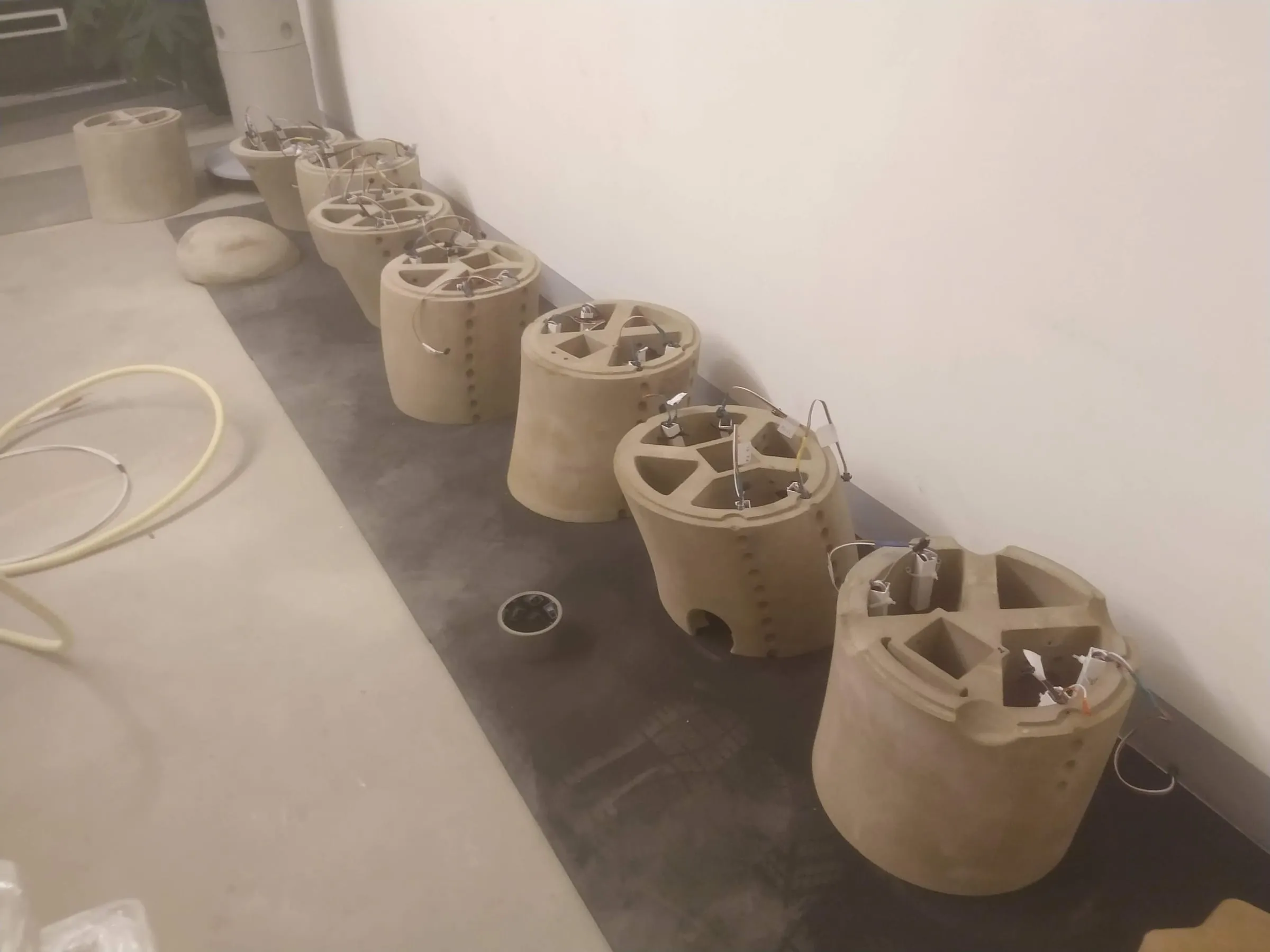
The electronics were built on the bench alongside it: sensor boards, LED modules, drivers and a stack of printed schematics.
How it was made
The Wave was 3D-printed in sand — a binder-jetting process that builds the form in layers of bonded sand, the way a printer lays down ink. It lets you make a one-off architectural shape with real weight and texture, rather than assembling something from standard parts that reads as municipal equipment.
It came out of the printer as a set of hollow segments, each one cured, wired and fitted with internal bracing before anything was stacked.
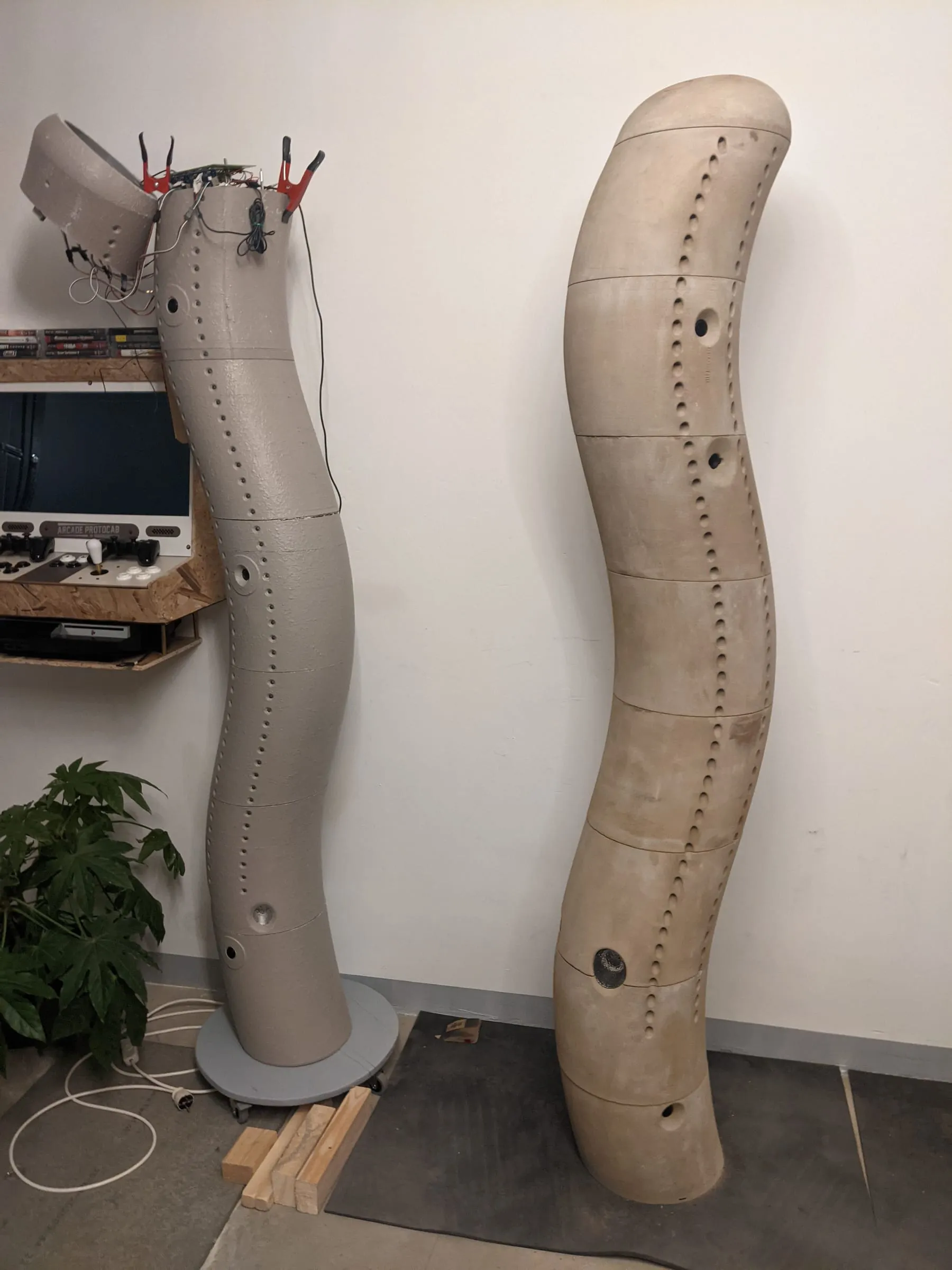
The grey prototype next to the finished print shows what the process bought: same geometry, completely different object.
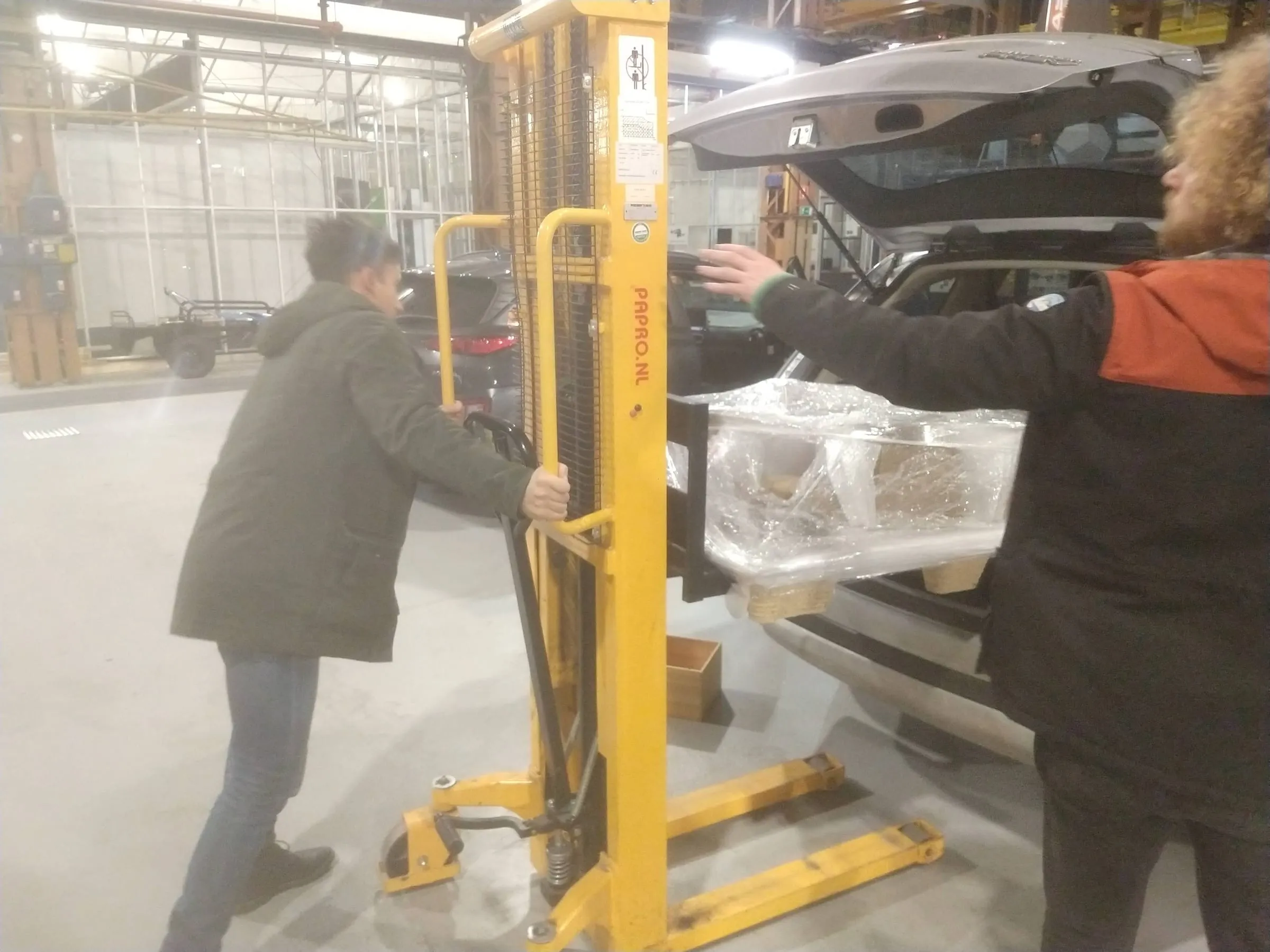
Then it was crated, moved, and stacked on site.
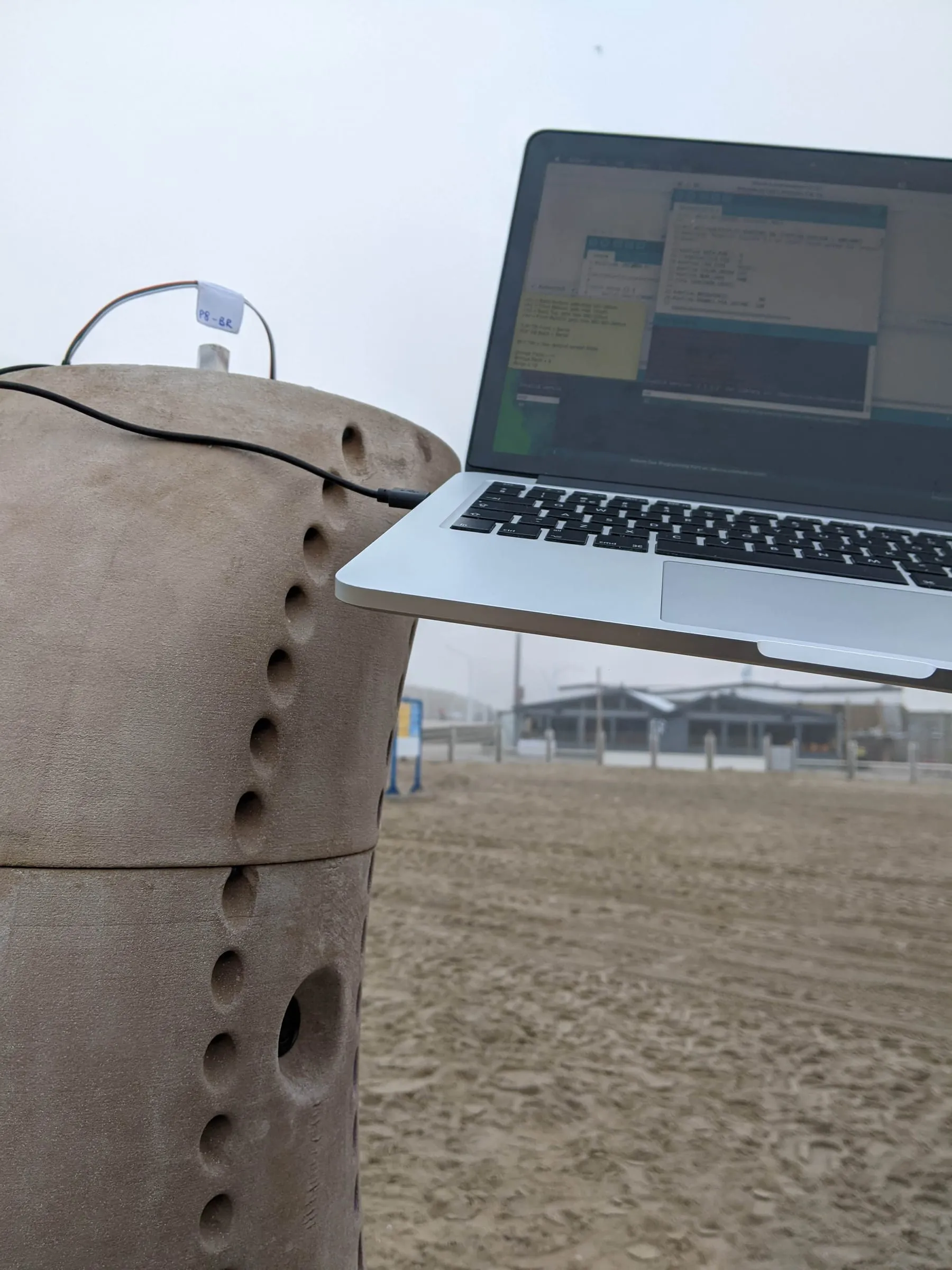
Commissioning happened where the thing actually lives, which for a fortnight meant a laptop balanced on a sculpture in the wind.
What you actually did with it
A companion post next to the sculpture carried the controls. It is sand-printed too, with four illuminated buttons and the instructions printed straight into the surface — no screen, because a screen on a beach is a maintenance problem, and no app, because downloading something is a barrier at the exact moment someone is curious.
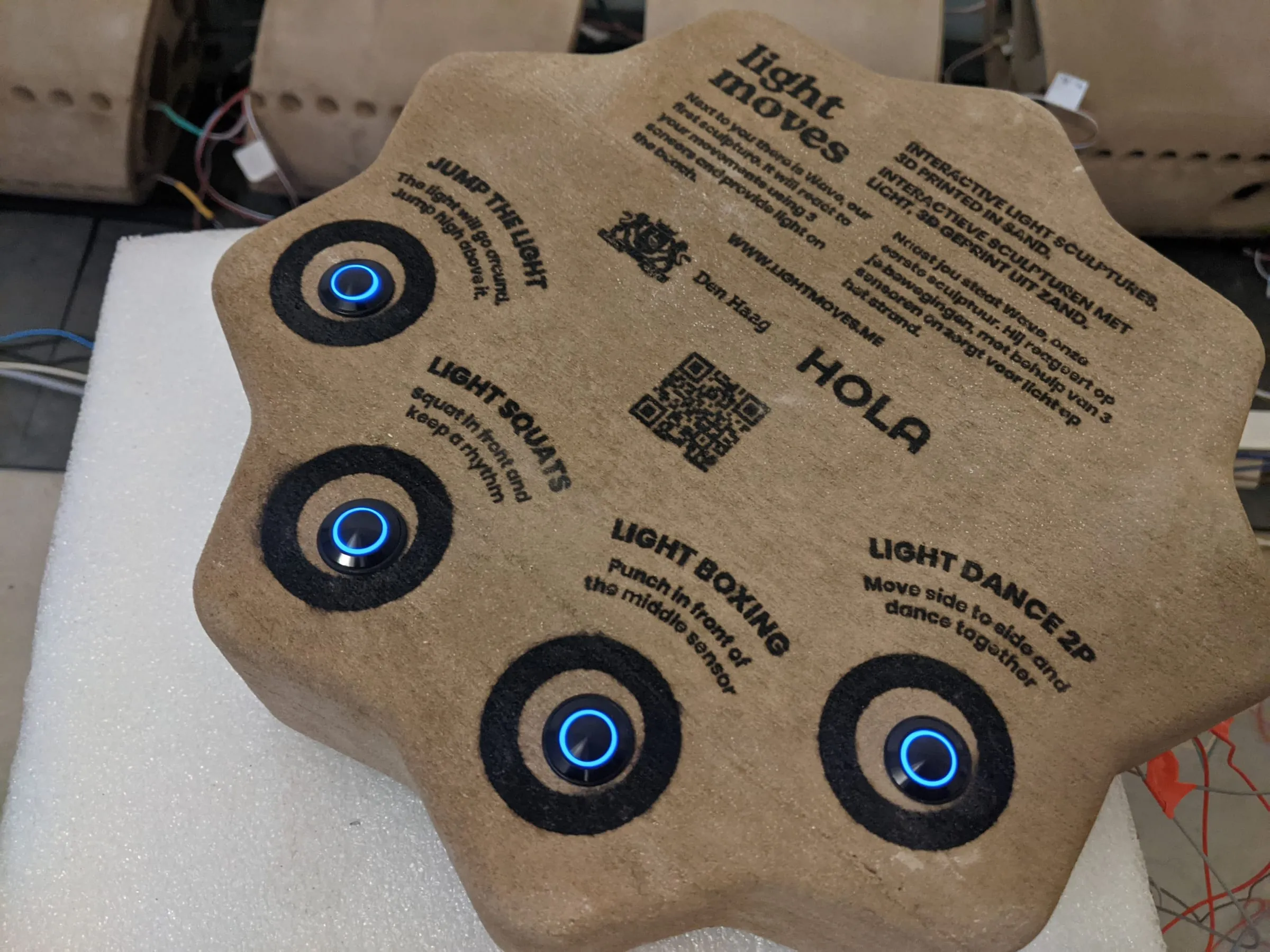
Four games, in English and Dutch:
- Jump the Light — the light travels around the sculpture and you jump above it
- Light Squats — squat in front of it and keep a rhythm
- Light Boxing — punch in front of the middle sensor
- Light Dance 2P — two people move side to side and dance together
No account, no app, no sign-up. You walked up, pressed a button, and it started. Because it reads movement rather than identity, it behaved the same for whoever turned up, and every interaction stayed anonymous by construction.
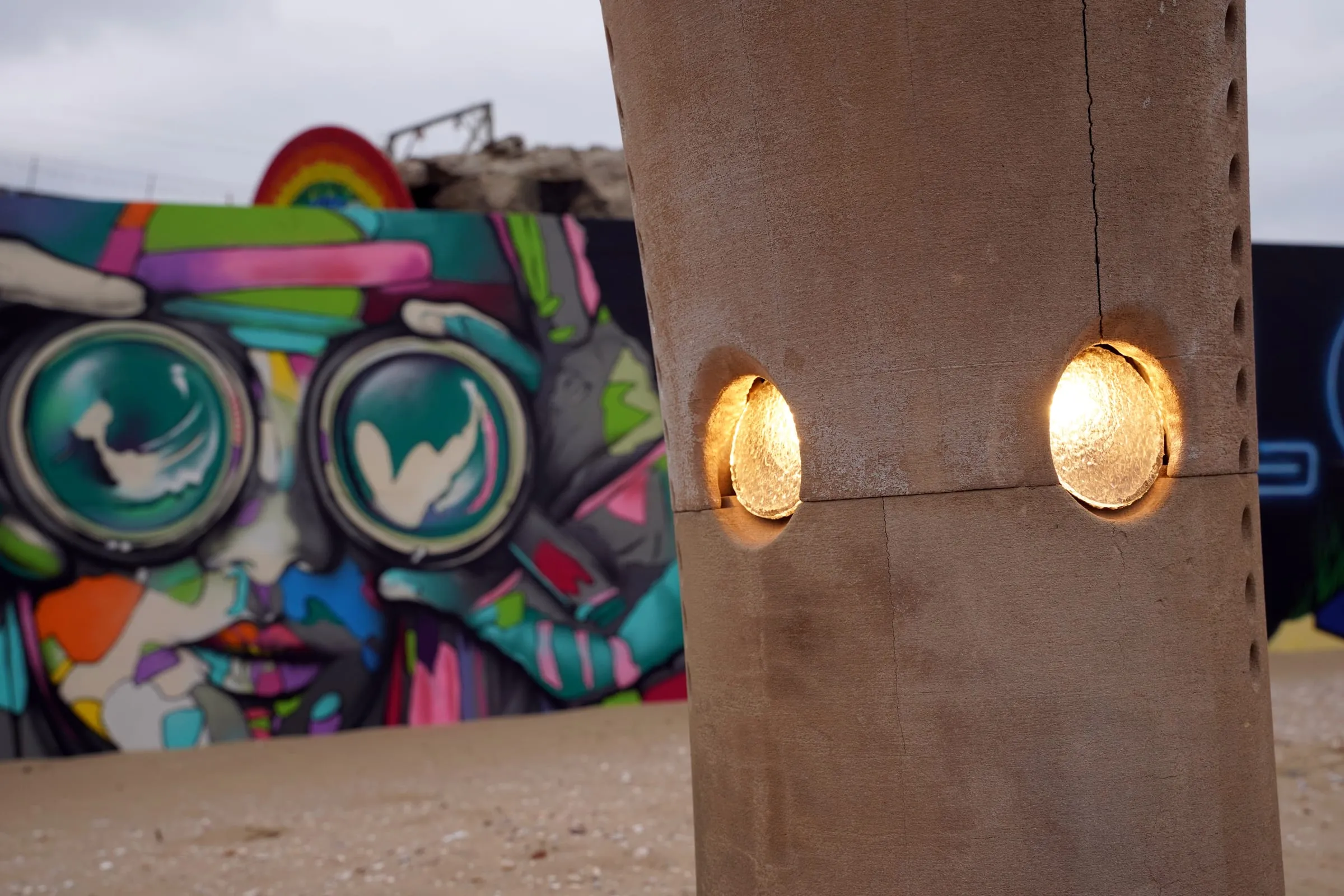
After dark it does the other half of its job — being visible from a distance and inviting rather than instructing.
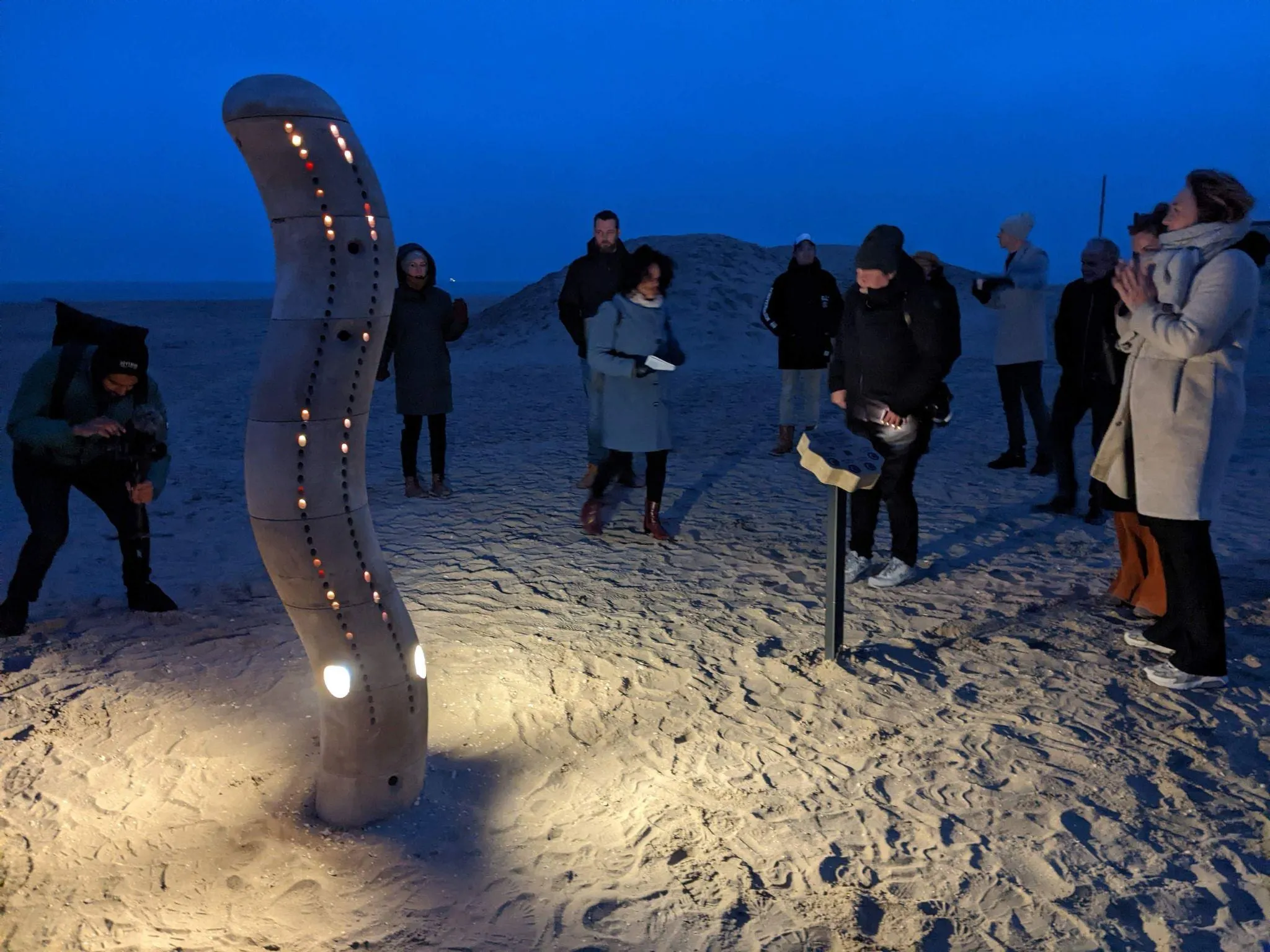
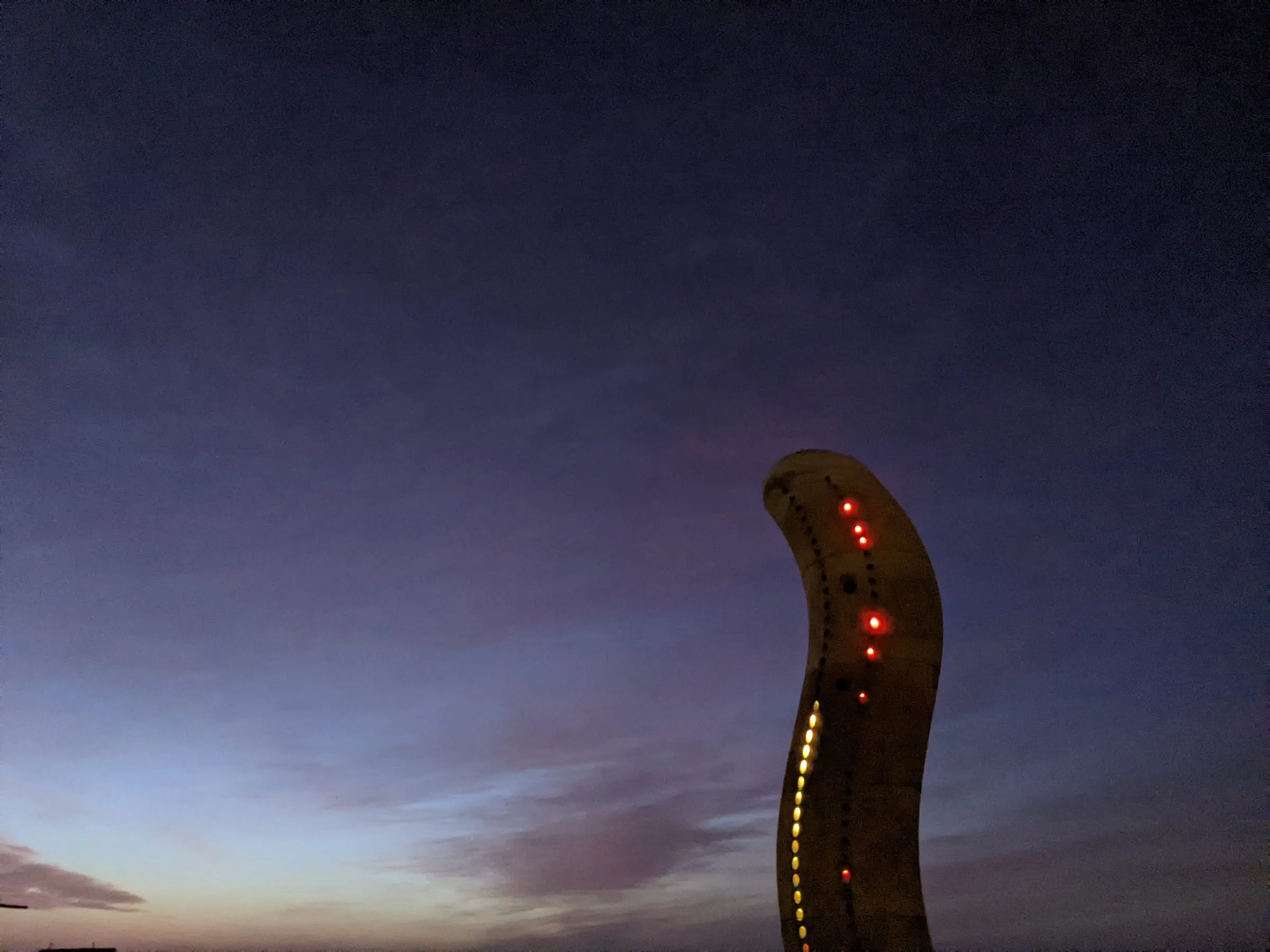
Because it was built in segments and lifted into place rather than cast into a foundation, it could be moved: partway through its run it was relocated along the beach to Oostduinen, by the entrance to the Pier.
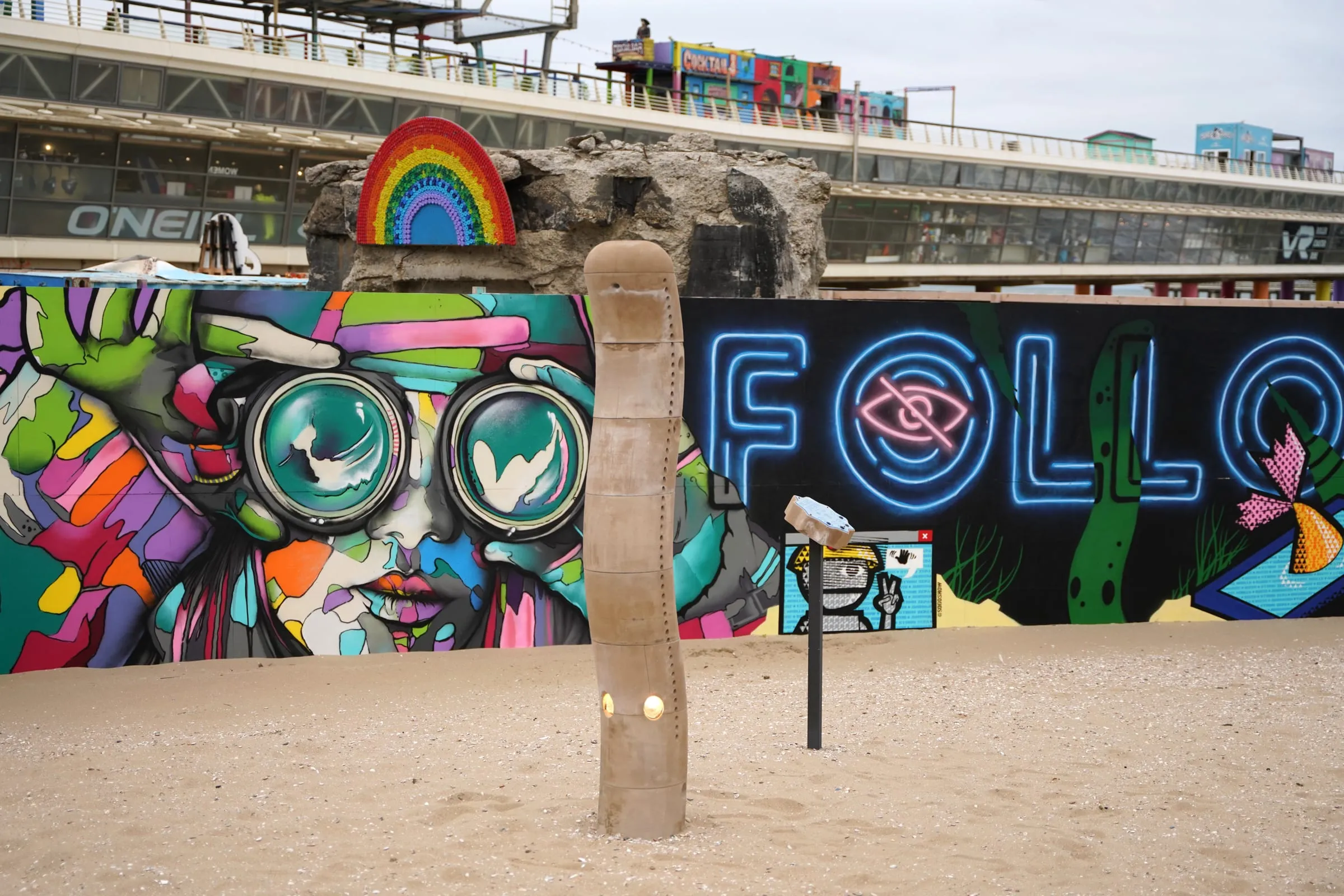
Where it stands
The Wave ran for roughly eighteen months in unsupervised public use, then came down at the end of its run as planned.
What it demonstrated did not come down with it. It settled the question everything since has been built on: that a durable, sensor-driven, camera-free installation holds up to real public use — not for a staffed weekend event, but for a year and a half on an open beach in Dutch weather.
That proof is the direct foundation for CityGems — the same sensing, the same outdoor engineering and the same position on cameras, spread across a whole city instead of one stretch of sand.
- Public installation
- Sensors
- Privacy by design
- 3D sand printing
Knowledge this took
- 3D sand printing at architectural scale
- Motion sensing without cameras
- Privacy-by-design for public space
- Outdoor electronics — salt air, sand ingress, temperature swing
- Unsupervised public durability
- Designing an interaction a stranger understands without instructions
- Working with municipal stakeholders and beach management
So we can also build
- Interactive public installations for parks, plazas and waterfronts
- Anonymous people-sensing where cameras are unacceptable
- Any electronics that must live outdoors and unattended
- Play and exercise equipment that adapts to who is using it
- Sculptural forms printed in sand, stone or concrete at building scale
Something close to this but not quite it?
Got something like this in mind?
Ask Ola how we'd approach it, or go straight to a person.