CHIME
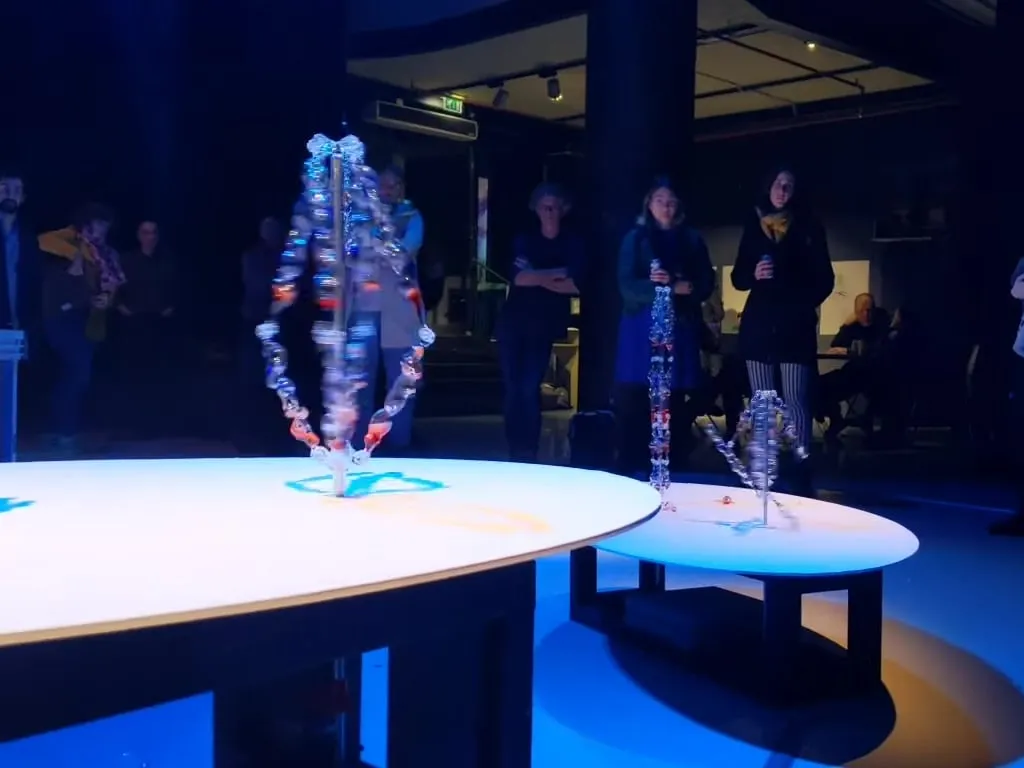
A kinetic glass sculpture that sings and sometimes shatters, driven by sound below the range you can hear.
- Client
- Jeanine Verloop
- Year
- 2024
- Status
- Exhibited at TETEM Enschede, Sammlung Philara Düsseldorf, and Okmooy Foundation
- Services
- Hardware prototyping Software & MVPs
What Jeanine needed
Jeanine Verloop is a Rotterdam artist who works with scientific glassblowing and media archaeology. She had a piece in her head that nobody could tell her how to build: vertical strings of hand-blown borosilicate glass that would move — really move — in response to the sound in the room.
Not lighting that reacts to sound. Not a motor nudging the glass. The glass itself resonating, driven by frequencies below 50 Hz, at the edge where a material either sings or breaks.
She needed the half of the work that is not art: the electronics, the software, the frequency research, and someone willing to sit with the piece on-site until it behaved.
What made it hard
The whole project lives in a narrow band. Push too little and the glass sits there; push slightly too hard and it destroys itself. That band is different for every piece Jeanine blows, because every piece has its own mass, wall thickness and geometry — so there is no single “correct” setting to find and lock in.
Below 50 Hz you also stop working with sound and start working with force. The energy has to move from a speaker into a rigid mounting into a fragile object without the mounting soaking it all up, and without the whole rig walking across the floor.
What we did
We ran vibration tests as an experiment, not a build: sweep the frequency range against a given glass string, watch what actually moves, record where the response peaks, note where it starts to crack.
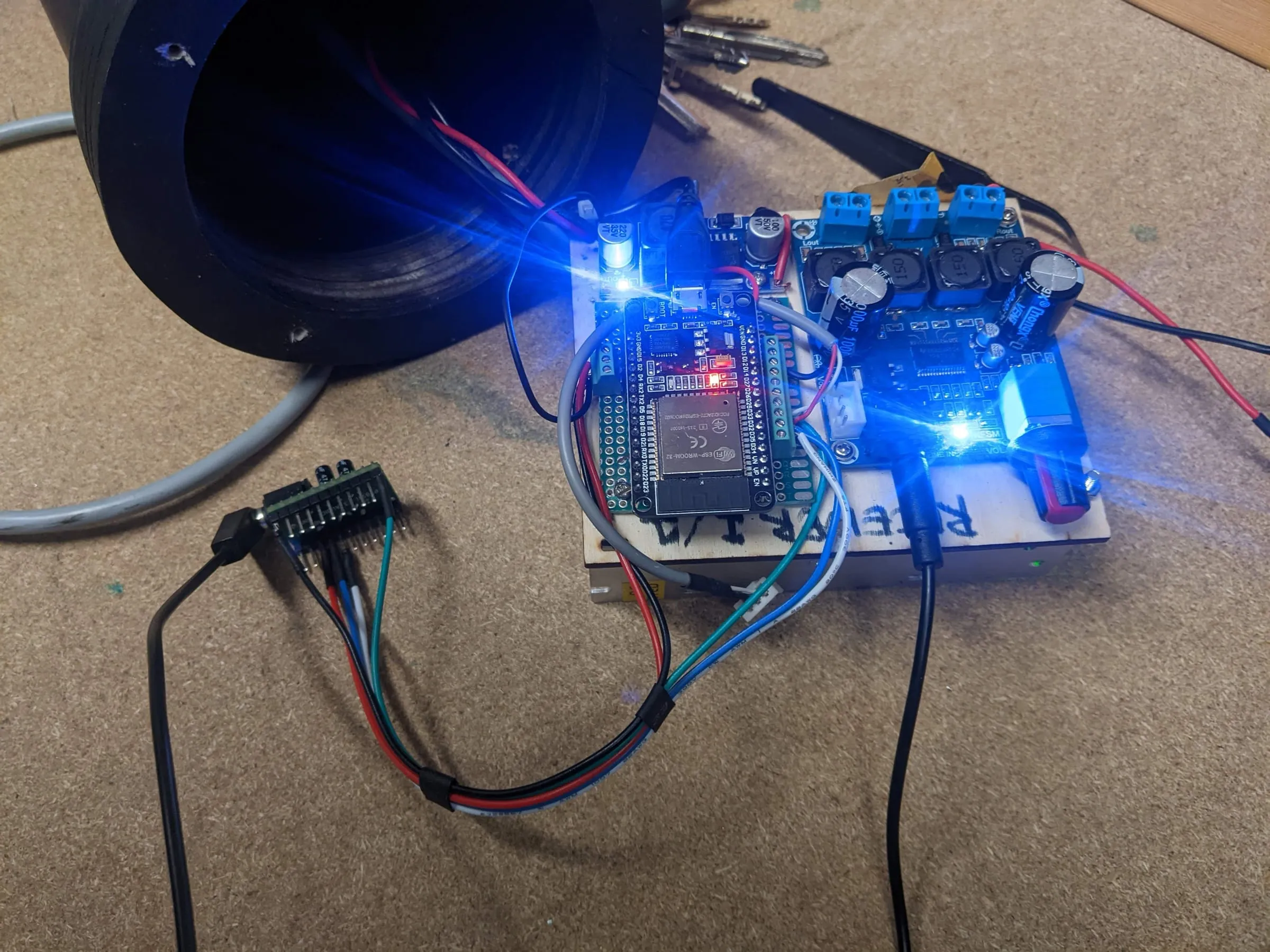
The tests told us what the coupling needed to be, which fed the hardware: custom PCBs, amplification sized to the transducers, and mounting that transmits energy into the glass rather than absorbing it.
On the software side, ambient sound in the room is analysed and mapped into sub-50 Hz drive signals. Jeanine’s own concept applies chaos mathematics to that mapping, so the piece never repeats itself and never settles.
Installing it
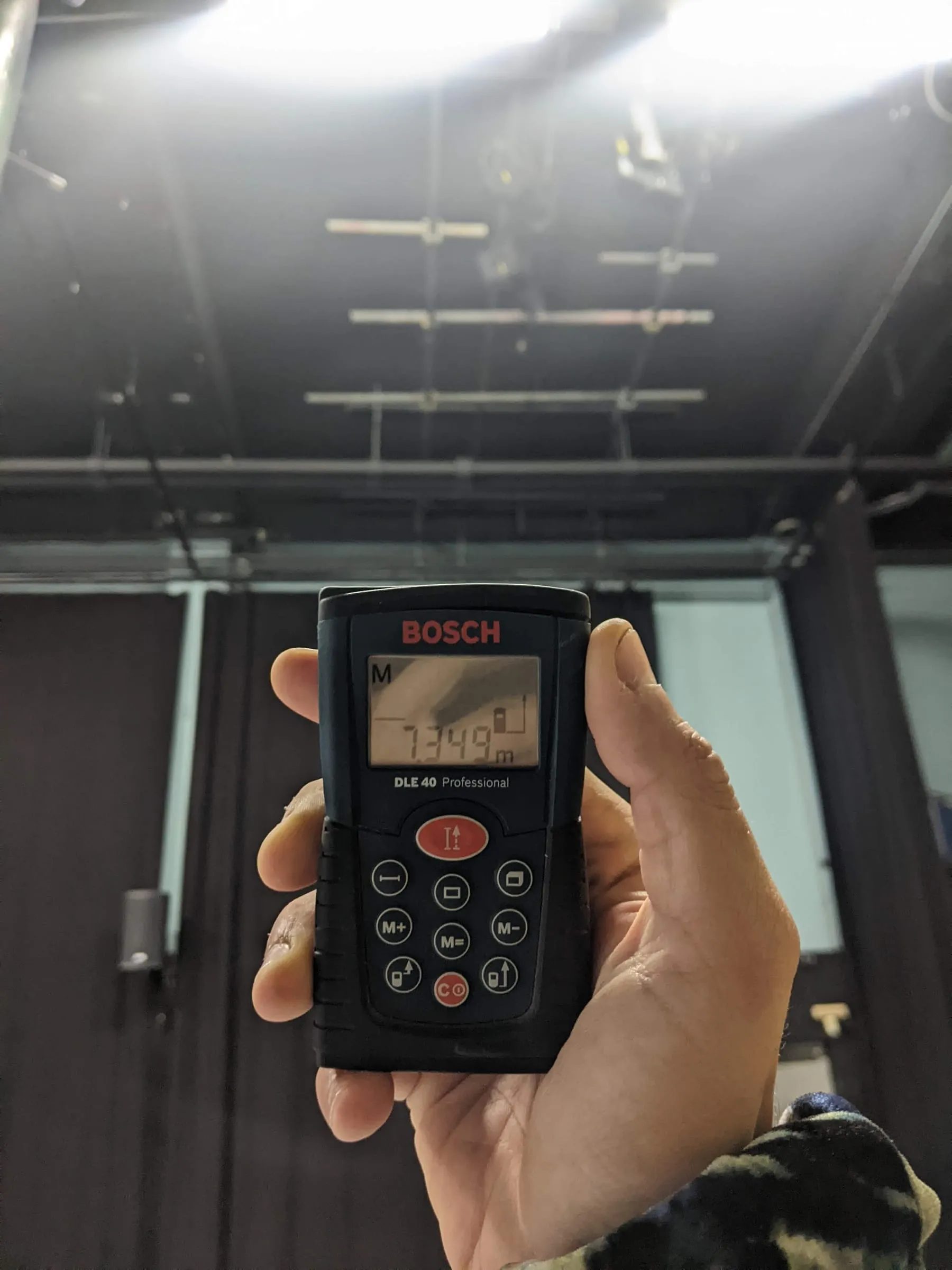
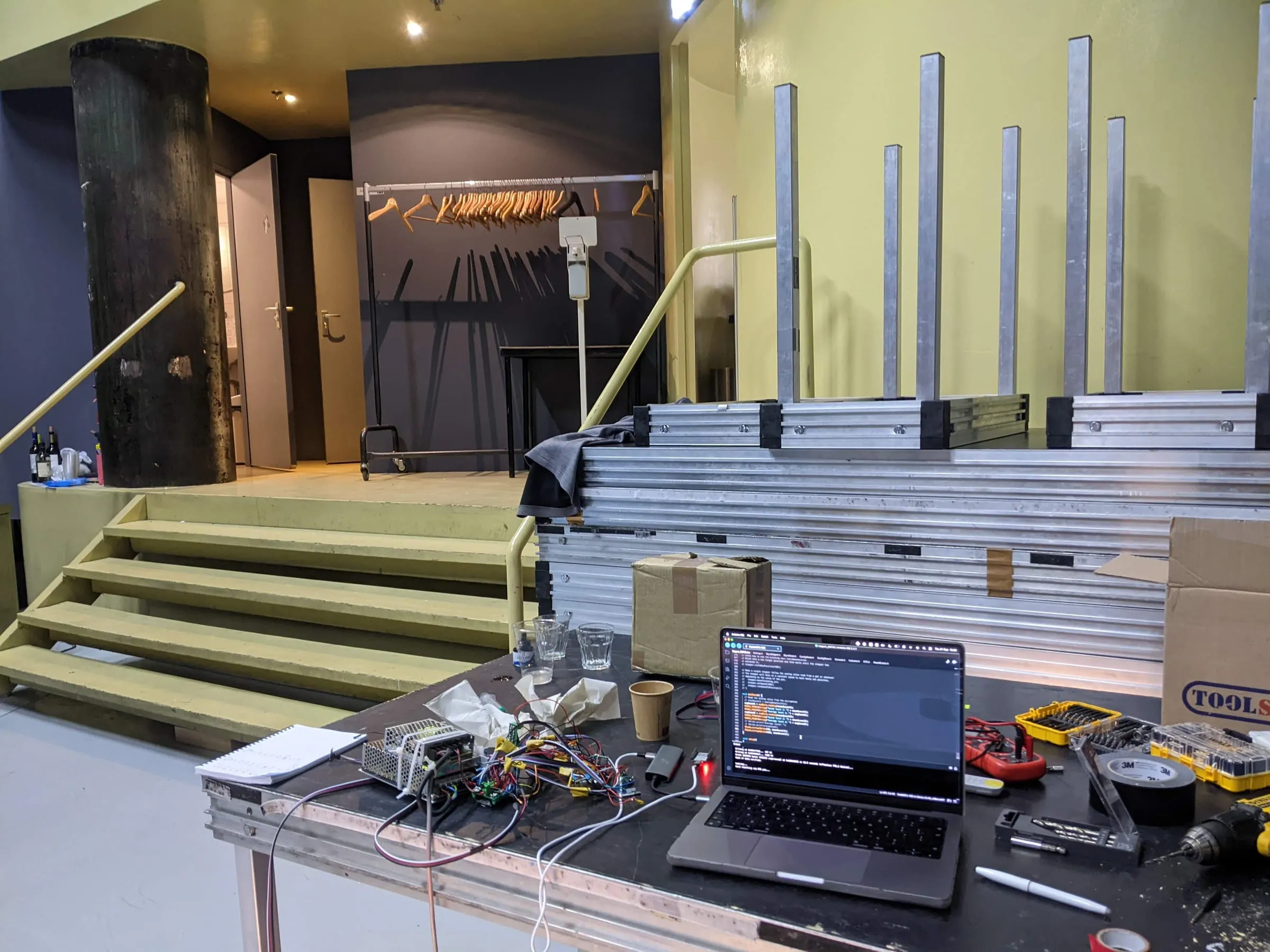
A gallery is not a workshop. Every room has its own acoustics, its own floor, its own noise, and the glass responds to all of it — so calibration happens on-site, with the actual piece, in the actual space.
Where it went
CHIME has shown as a solo exhibition at TETEM in Enschede, in the group show Melting Sands at Sammlung Philara in Düsseldorf, and at the Okmooy Foundation. A film of the work, shot at 1,000 frames per second to catch movements the eye cannot see, premiered at International Film Festival Rotterdam.
The breakage stayed in. When a spiral finally goes at its resonant frequency it changes the sound and the shape of the whole piece — which is the point.
- Kinetic sculpture
- Custom PCB
- Resonance
- Installation
Knowledge this took
- Resonant frequency analysis
- Custom PCB design and audio amplification
- Transducer and speaker coupling to fragile materials
- Real-time audio DSP and signal generation
- On-site installation, rigging and calibration
- Working to sub-50 Hz tolerances
So we can also build
- Vibration and shaker rigs for materials testing
- Haptic and low-frequency feedback in products
- Any installation where sound has to physically move something
- Instrumentation for fragile or high-value objects
Something close to this but not quite it?
Got something like this in mind?
Ask Ola how we'd approach it, or go straight to a person.