The Reaction Panel
The bench rig where the light-and-movement interaction gets designed, before any of it goes outdoors — and which turned into a product of its own.
- Client
- LightMoves
- Year
- 2024
- Status
- In use as a development tool; being developed into a product under the working name Interval
- Services
- Hardware prototyping Software & MVPs
Why it exists
The Wave and CityGems both hang on the same question: when a person moves, what should the light do, and how quickly?
That question is cheap to answer on a bench and expensive to answer on a beach. So it gets answered on a bench.
What it is
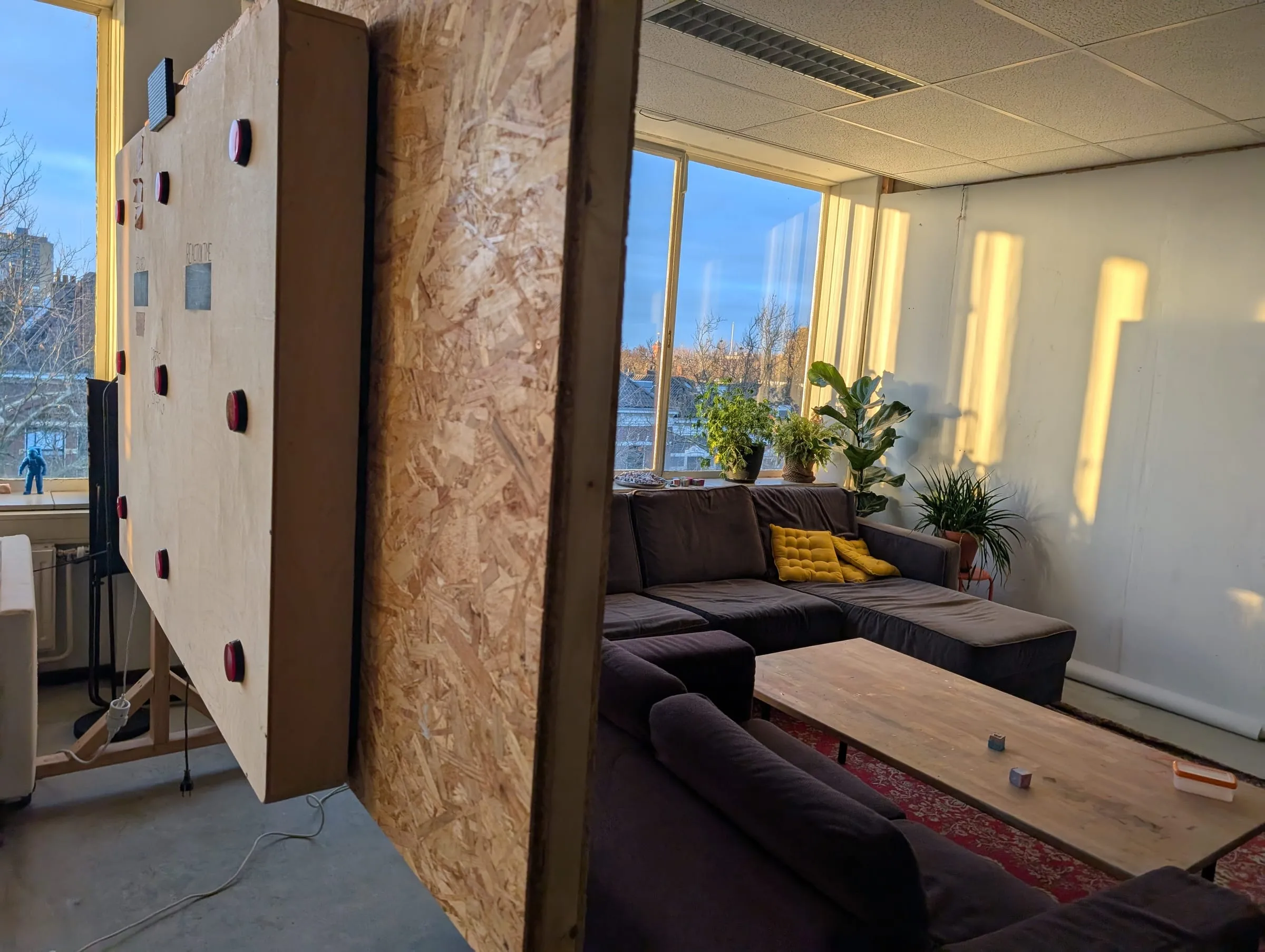
A panel of lit targets wired to the same class of sensors and drivers the real installations use. It does nothing a finished product does — no weatherproof enclosure, no mounting, no network — which is the point. It isolates the interaction so it can be tuned in minutes rather than in a site visit.
What it is for
The things you cannot judge from a specification:
- Latency. Feedback that arrives 200ms late feels broken even though every component is working. You find the threshold by playing with it.
- Difficulty. A game that is too easy is boring and too hard is humiliating. Both drive people away from a public installation.
- Legibility. Whether someone walking past understands what to do without a sign or an instruction.
Then people kept playing with it
Not to test it — just because it was there and it was fun. A rig built purely to answer a question about somebody else’s product turned out to be the most played-with object in the workshop.
That is now a product in its own right: a wall-mounted panel of lit targets for the places people are already standing still — station platforms, sports halls, physio waiting rooms, school corridors. A round lasts between thirty seconds and four minutes, which is the length of a wait, and walking away mid-game costs nothing.
The interaction, the timing and the sensing are proven. The product — the enclosure, the mounting, and the vandal- and cleaning-resistance a public indoor space demands — is scoped and not yet built. It is running under the working name Interval on the LightMoves site, alongside The Wave and CityGems.
Why it is on the site
Because clients rarely budget for it, and it is often the highest-value week in a project. Building the rough rig first is what stops a beautiful, weatherproof, correctly-engineered installation being unsatisfying to use — and occasionally the rig is better than the thing it was built to de-risk.
- Prototyping
- Interaction design
- Sensors
- Test rig
Knowledge this took
- Building a test rig to answer one question quickly
- Sensor timing and latency tuning
- Light and sound feedback design
- Iterating interaction before committing to an enclosure
So we can also build
- Rigs and jigs that let a team test an idea before building the product
- Interaction prototyping for physical, non-screen products
- Latency-sensitive sensing and feedback
- De-risking the expensive part of a build by faking it first
Something close to this but not quite it?
Got something like this in mind?
Ask Ola how we'd approach it, or go straight to a person.