Wake-Up Lamp
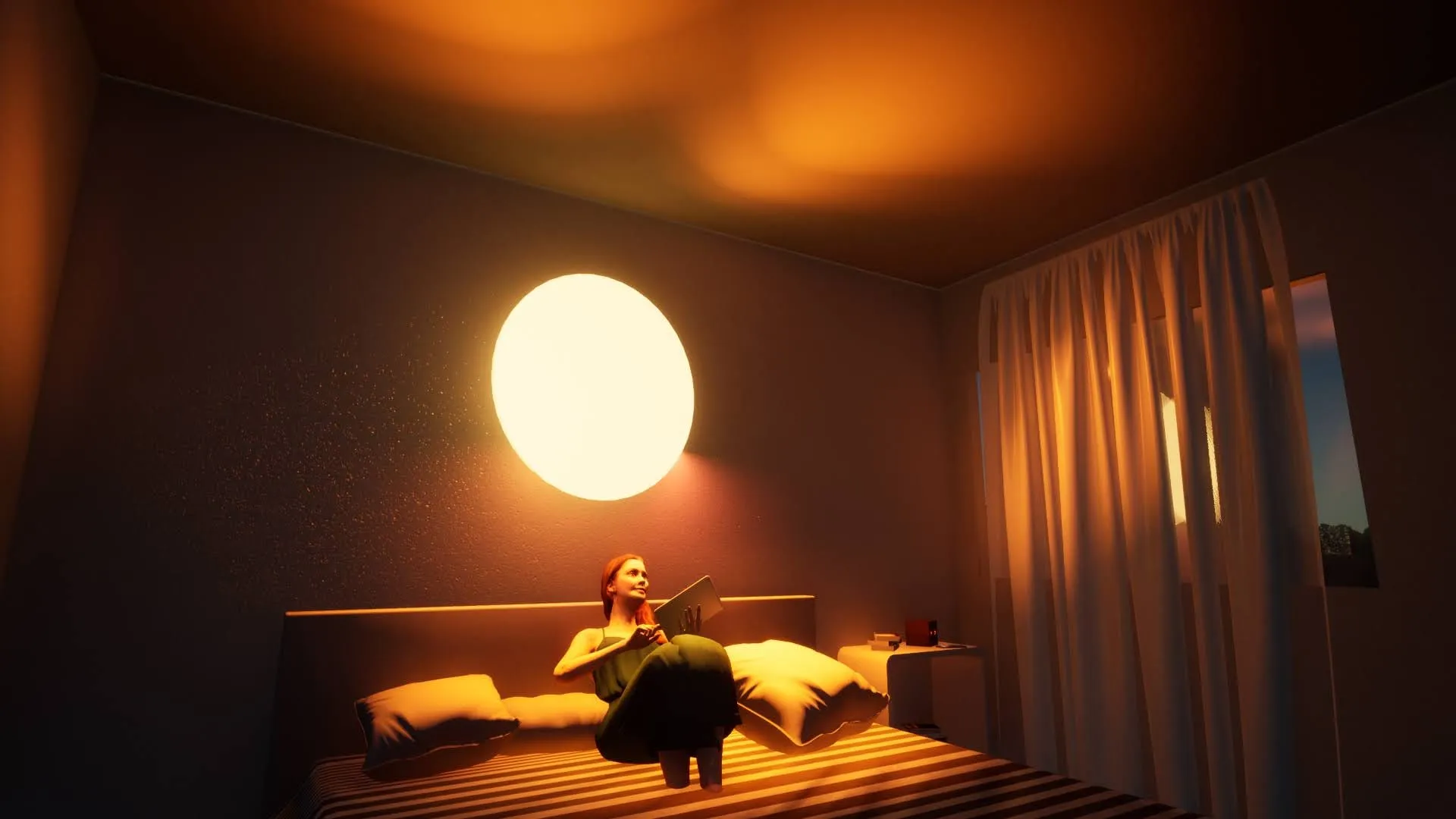
Three years of research into replicating sunlight indoors, so that waking up in a dark Dutch winter feels like waking up.
- Client
- Self-initiated research
- Year
- 2023
- Status
- Research ongoing — much of it unpublished
- Services
- Hardware prototyping Concept to market
- 3 years
- Of continuous research
- 2
- Thesis projects supervised
Why we started
In a Dutch winter you get up in the dark and go home in the dark. Commercial wake-up lights exist, and most of them are a dim orange LED behind a plastic dome that ramps up on a timer. They do not feel like the sun, because they are not trying very hard to.
We wanted to know what it would actually take to replicate the sun indoors — its spectrum, its intensity, the way it arrives — for waking up well and for general wellbeing.
What makes it hard
Sunlight is not one colour. It shifts across the spectrum as it rises, it is enormously brighter than any domestic lamp, and it arrives as a large soft source rather than a point. Matching any one of those is straightforward. Matching them together, at a size and price that belongs in a bedroom, is not.
Then the harder half: knowing whether it worked. The measurement is subjective and slow. Someone has to sleep under it, repeatedly, and report back — which means the research runs in weeks, not afternoons.
How the work ran
It ran for three years, with a lot of people involved and two interns — Andres and Razvan — doing their theses on it.
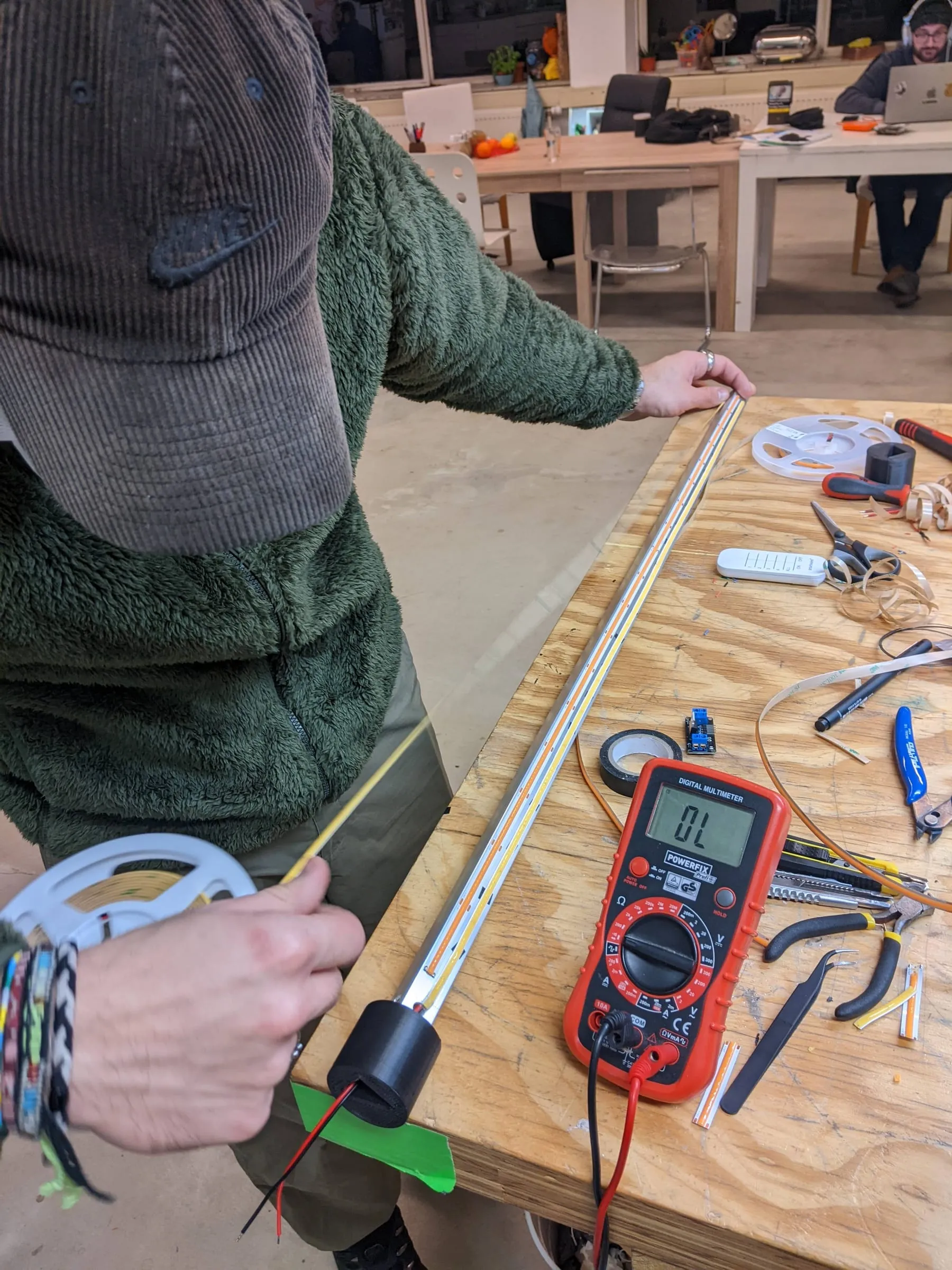
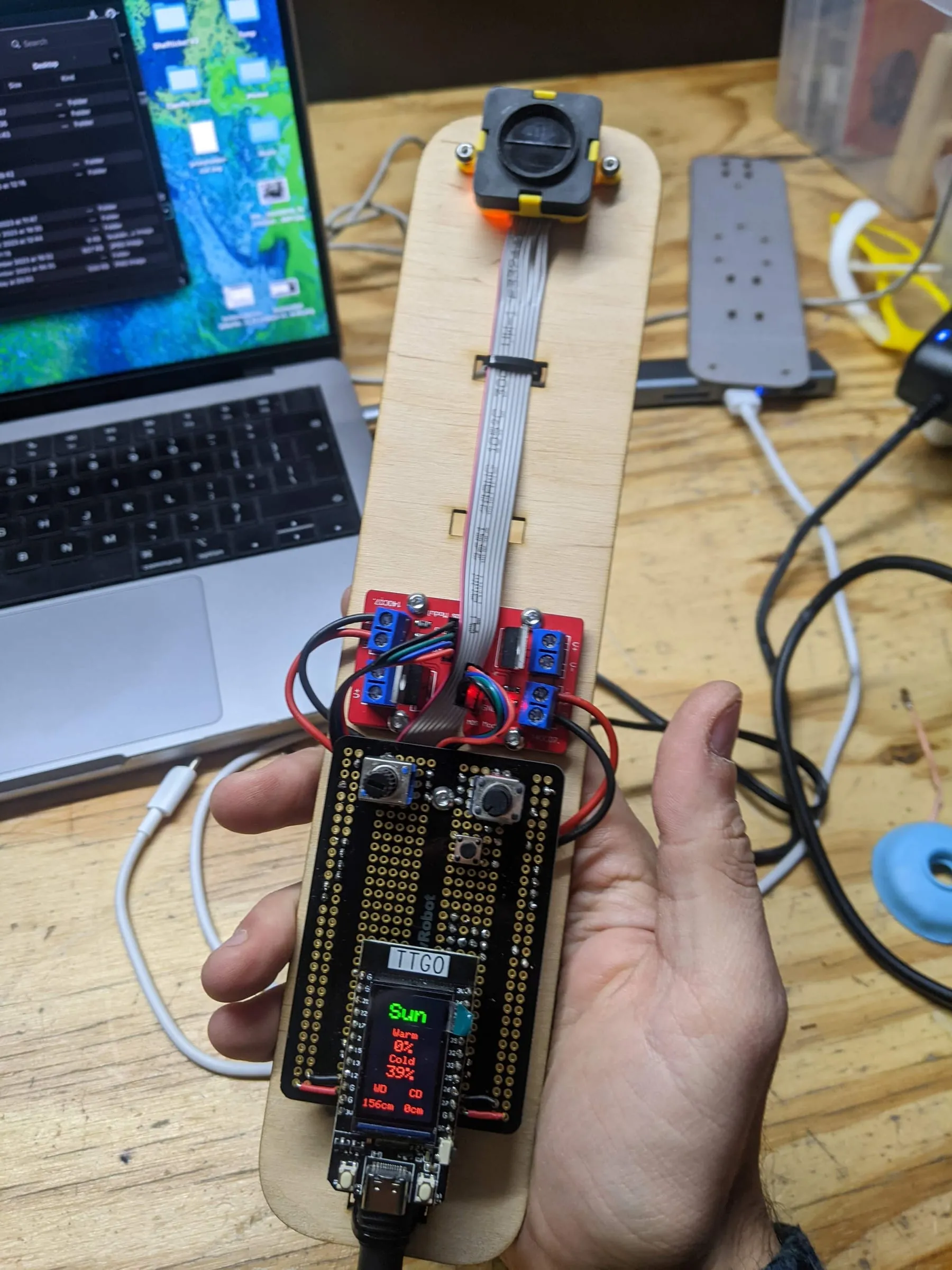
Bench work on the LEDs and drive electronics:
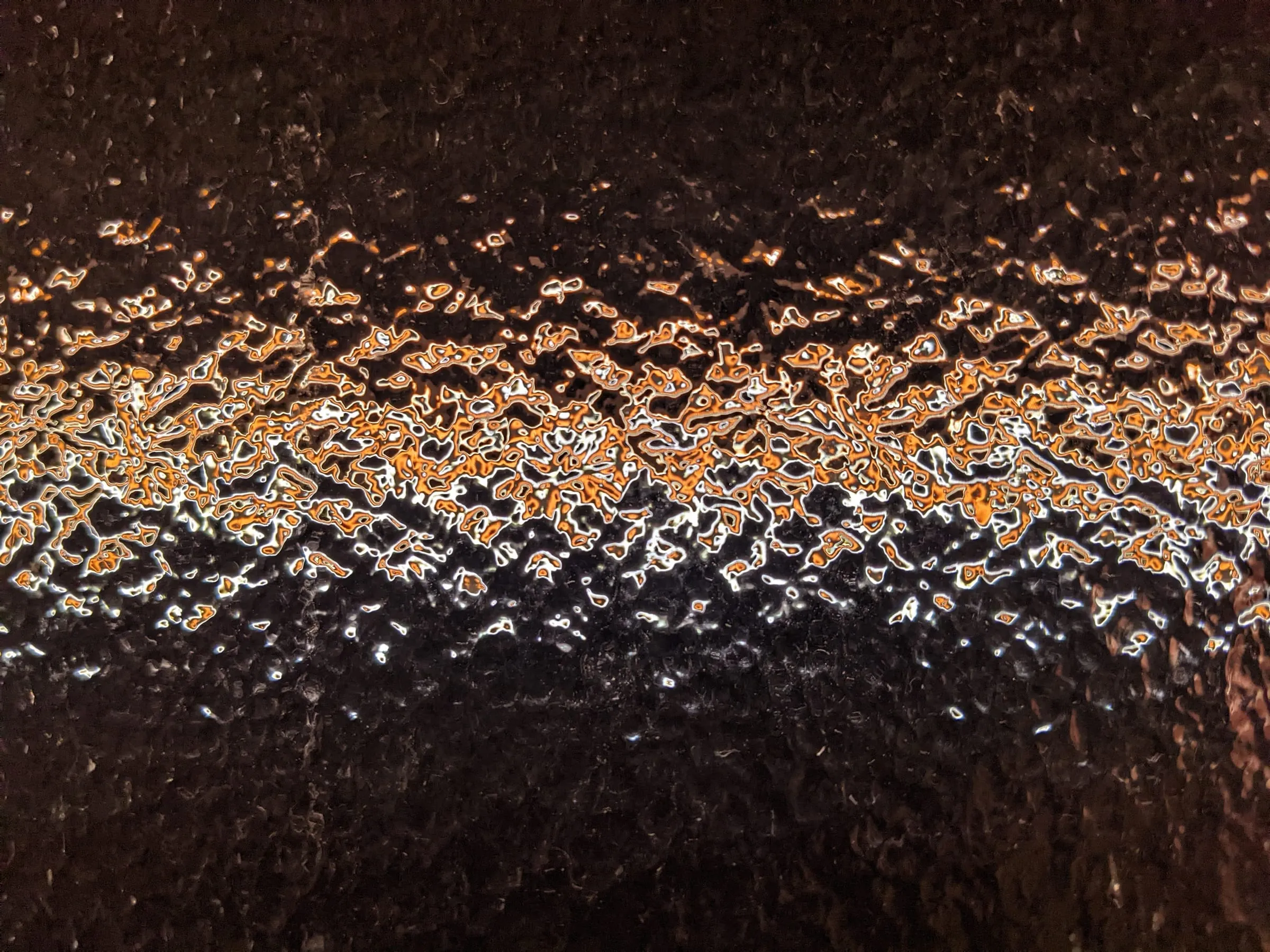
A large part of the effort went into diffusion — the difference between a lamp that glares and one that reads as daylight is mostly in the material sitting in front of the light.
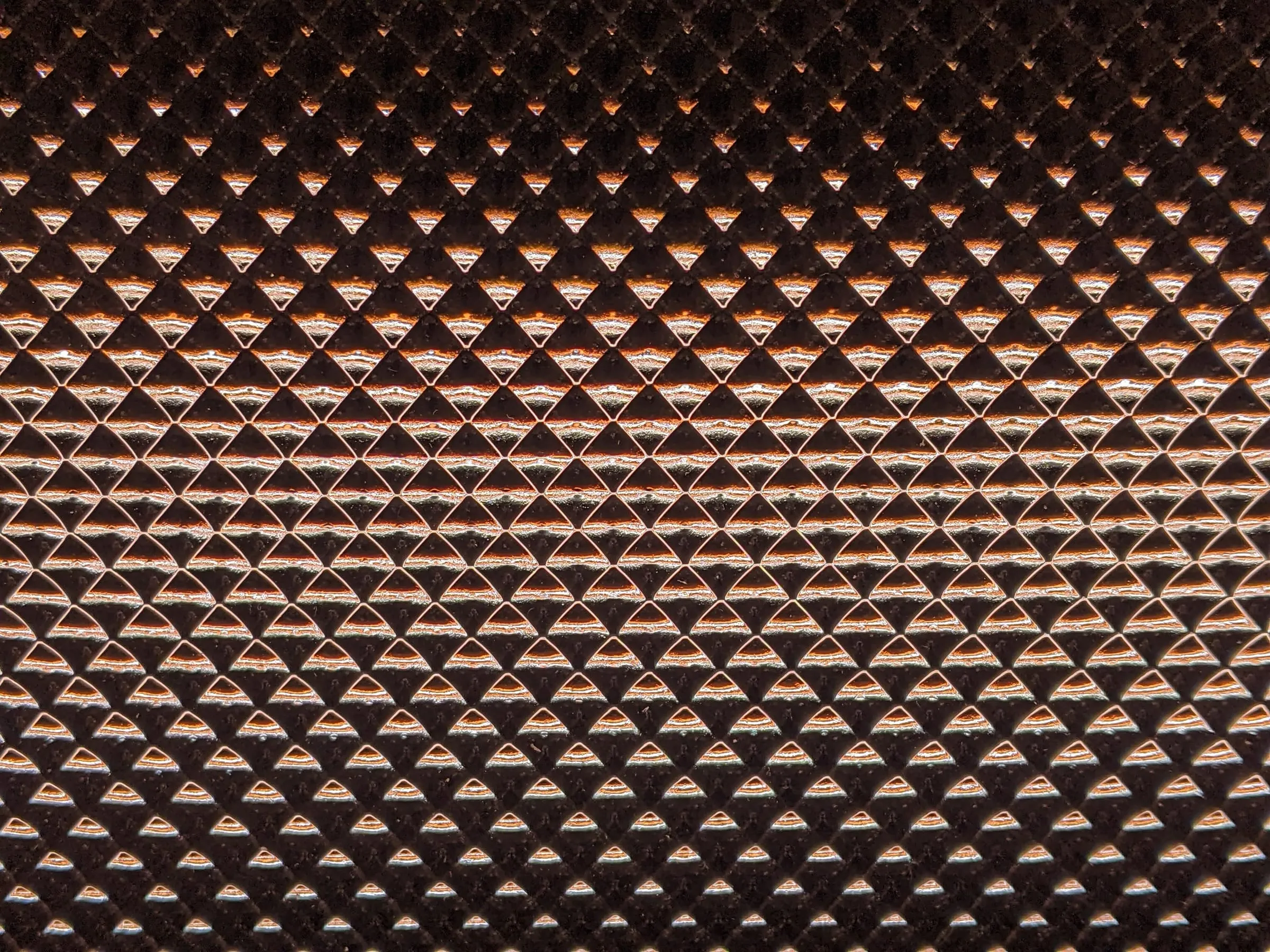
Then prototypes, in rooms, with people actually sleeping under them.
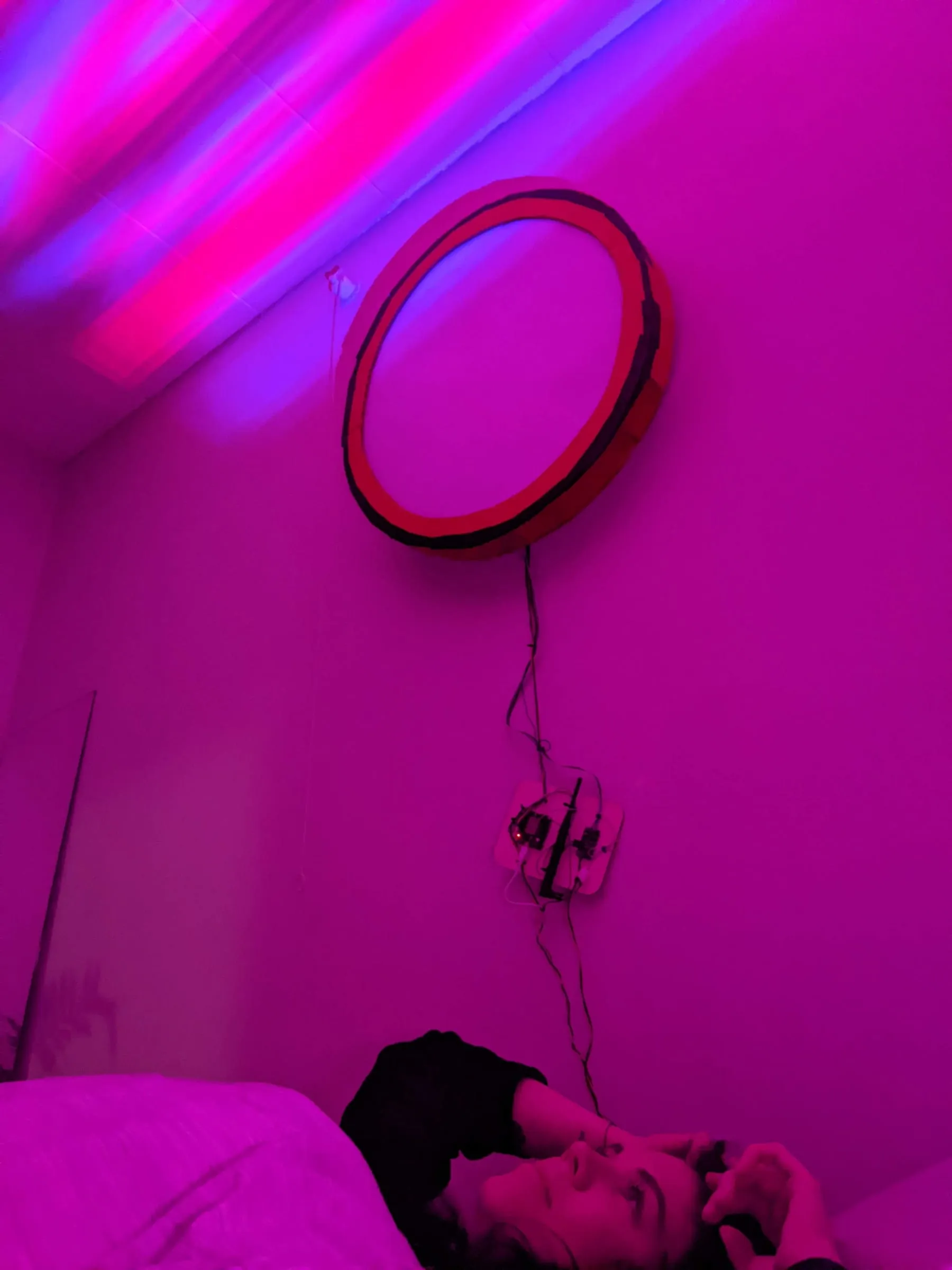
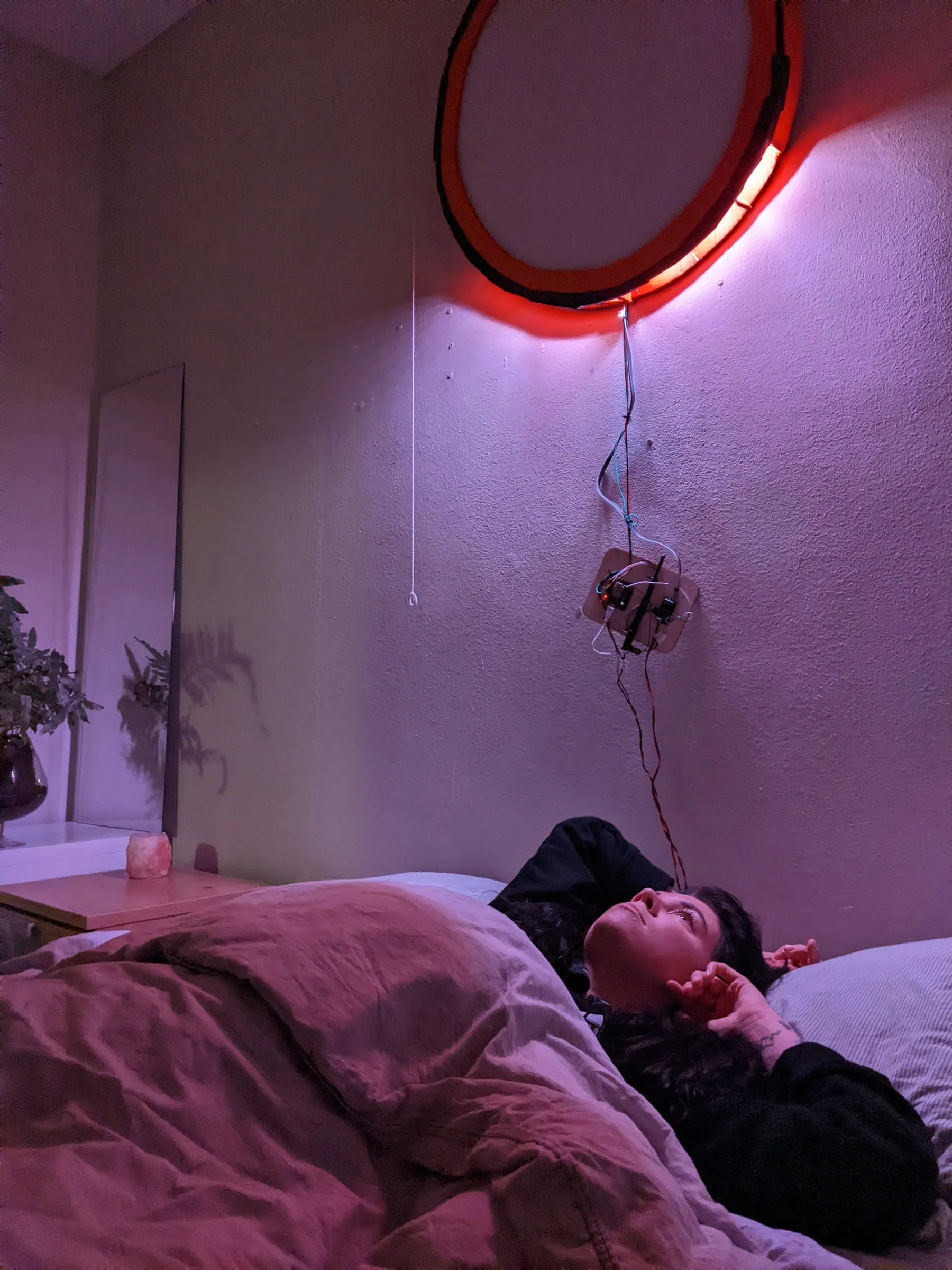
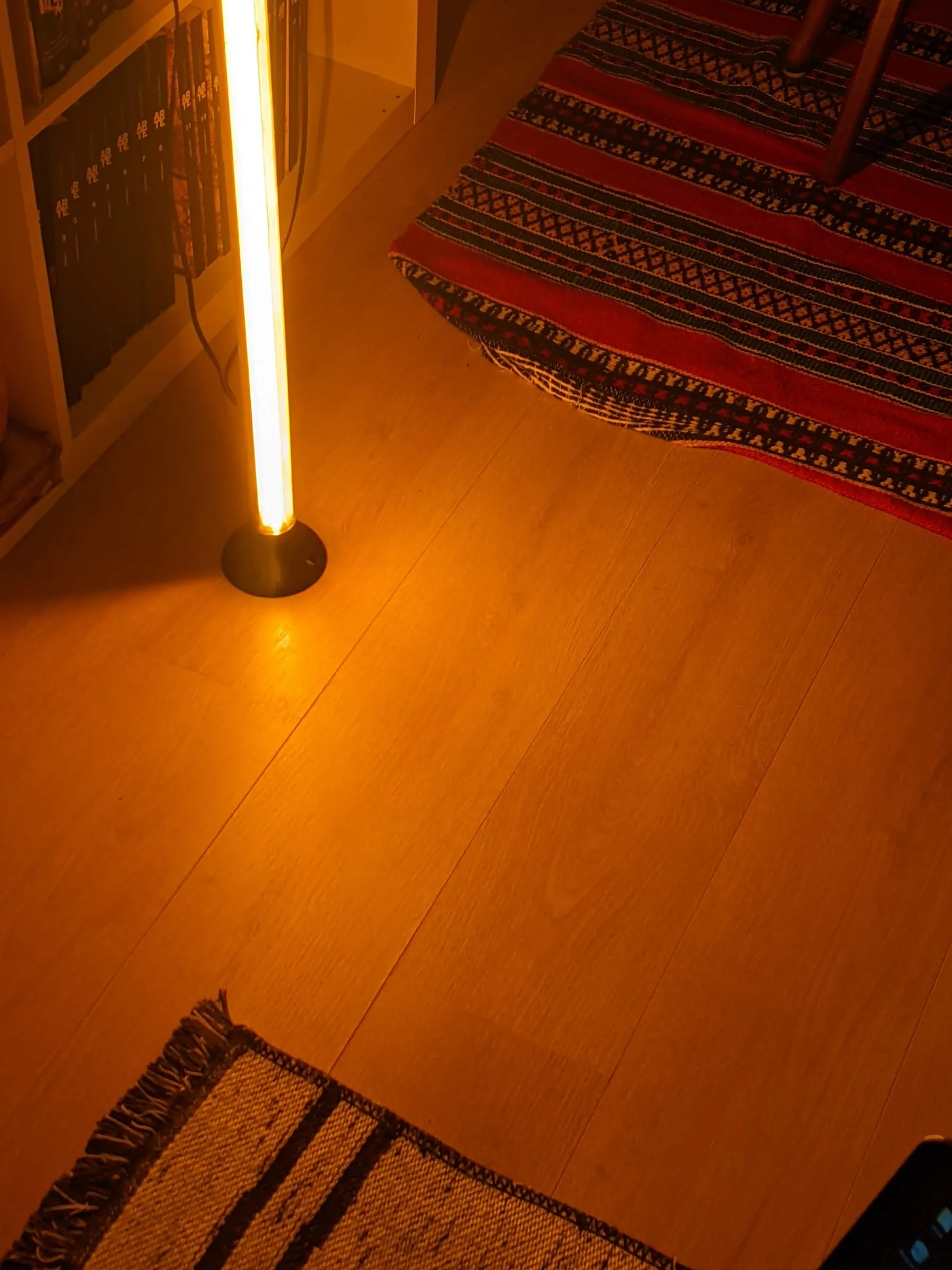
Later forms moved away from the ring toward a tall column of soft light.
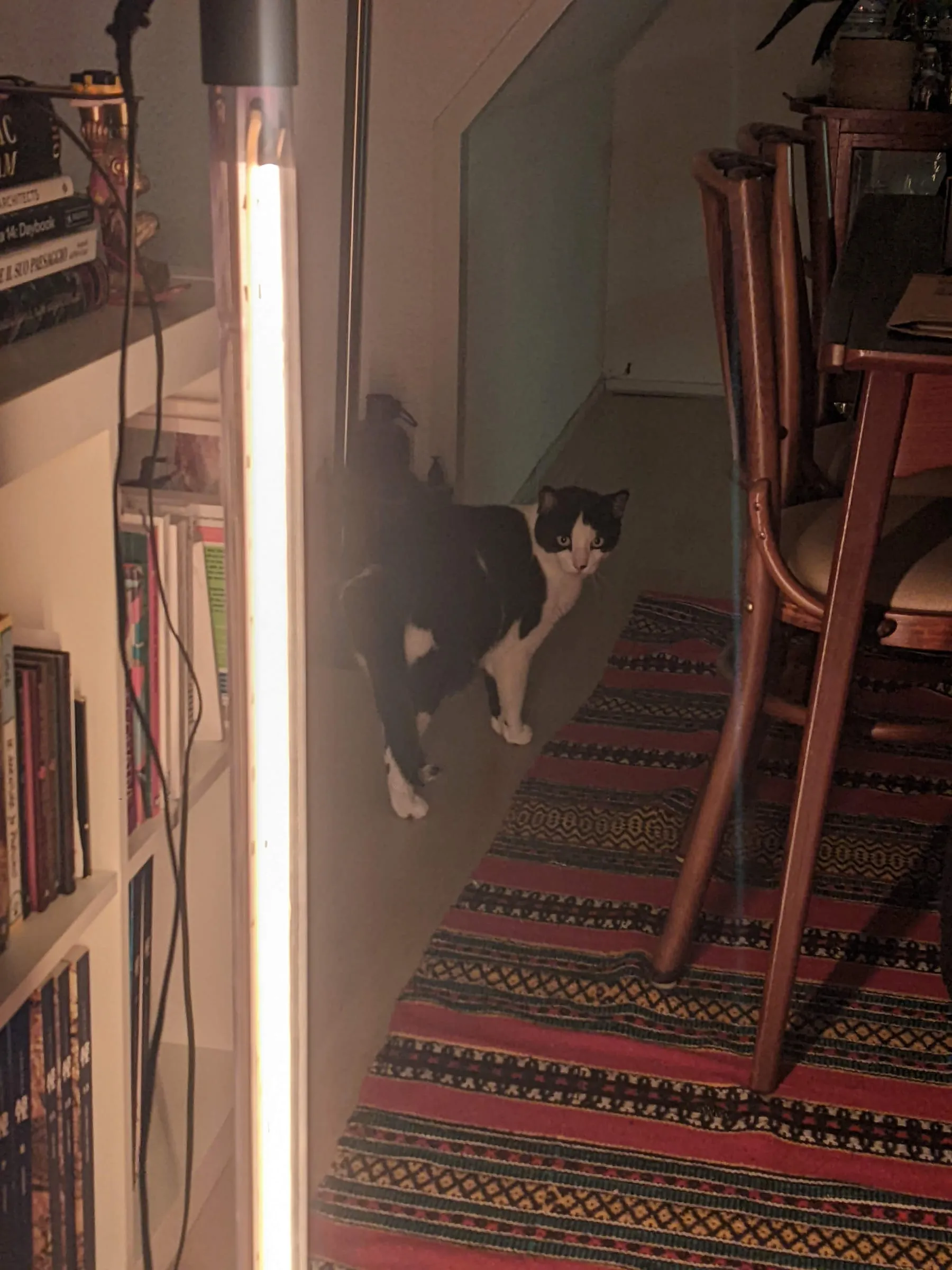
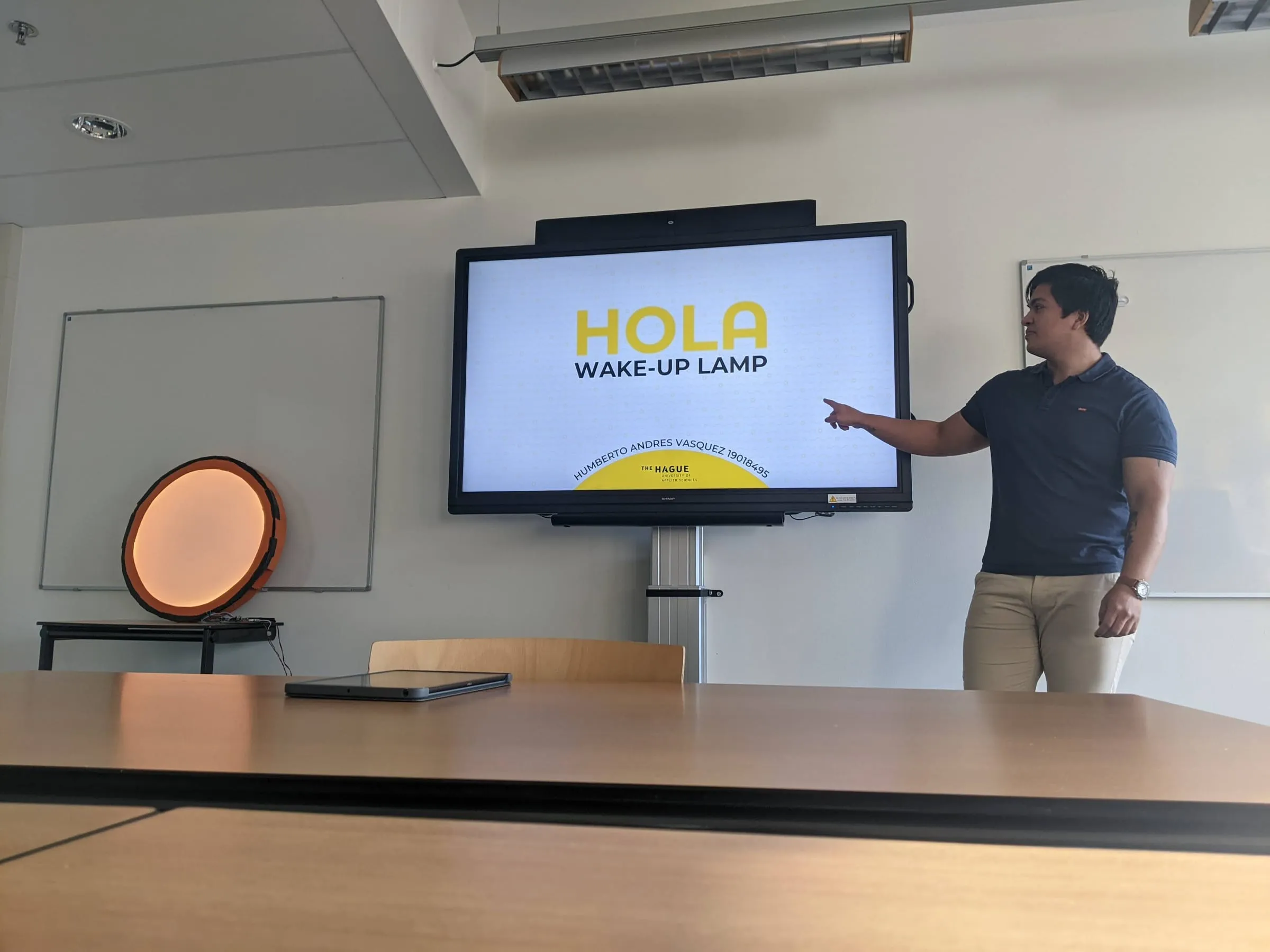
Findings were presented and reviewed along the way rather than saved for an ending.
Where it stands
Ongoing, and much of the research has never been presented publicly.
If this is your field and you want to talk about what we found — including the parts that did not work — get in touch. We are happy to share it with people who have a reason to ask.
- Applied research
- Light quality
- Human factors
- Long-term R&D
Knowledge this took
- Spectral matching — replicating daylight indoors
- LED selection, driving and colour mixing
- Diffuser material research and optical texture
- Human-factors testing on sleep and waking
- Supervising thesis-level research
So we can also build
- Lighting products where the quality of light is the product
- Wellbeing and human-factors hardware that needs real testing
- Long-horizon R&D programmes rather than one-off builds
- Research partnerships with universities and interns
Something close to this but not quite it?
Got something like this in mind?
Ask Ola how we'd approach it, or go straight to a person.