JG Ligatures
Working out how to actually manufacture 3D-printed saxophone ligatures, in enough colours and fits to sell as a range.
- Client
- JG Ligatures
- Year
- 2024
- Status
- In production and sold internationally
- Services
- Hardware prototyping Concept to market
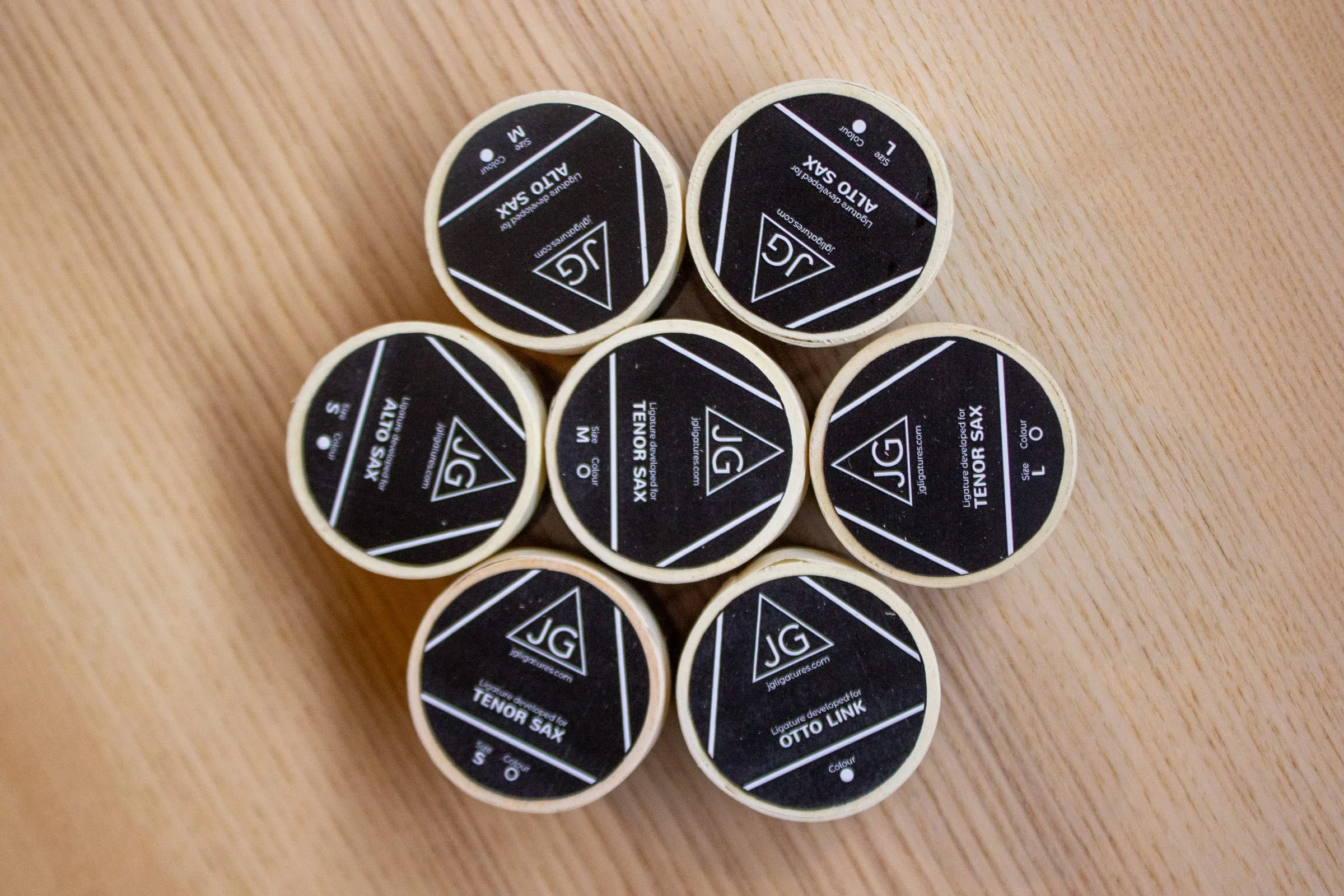
What Josep needed
Josep I Garcés makes custom ligatures — the clamp that holds the reed onto a saxophone mouthpiece — near Rotterdam. Players are particular about them, because the ligature affects how the reed vibrates and therefore how the instrument sounds.
He had designs that worked, including models cut specifically for metal Otto Link mouthpieces. What he needed was a way to make them consistently, in volume, in different fits and colours.
What makes it hard
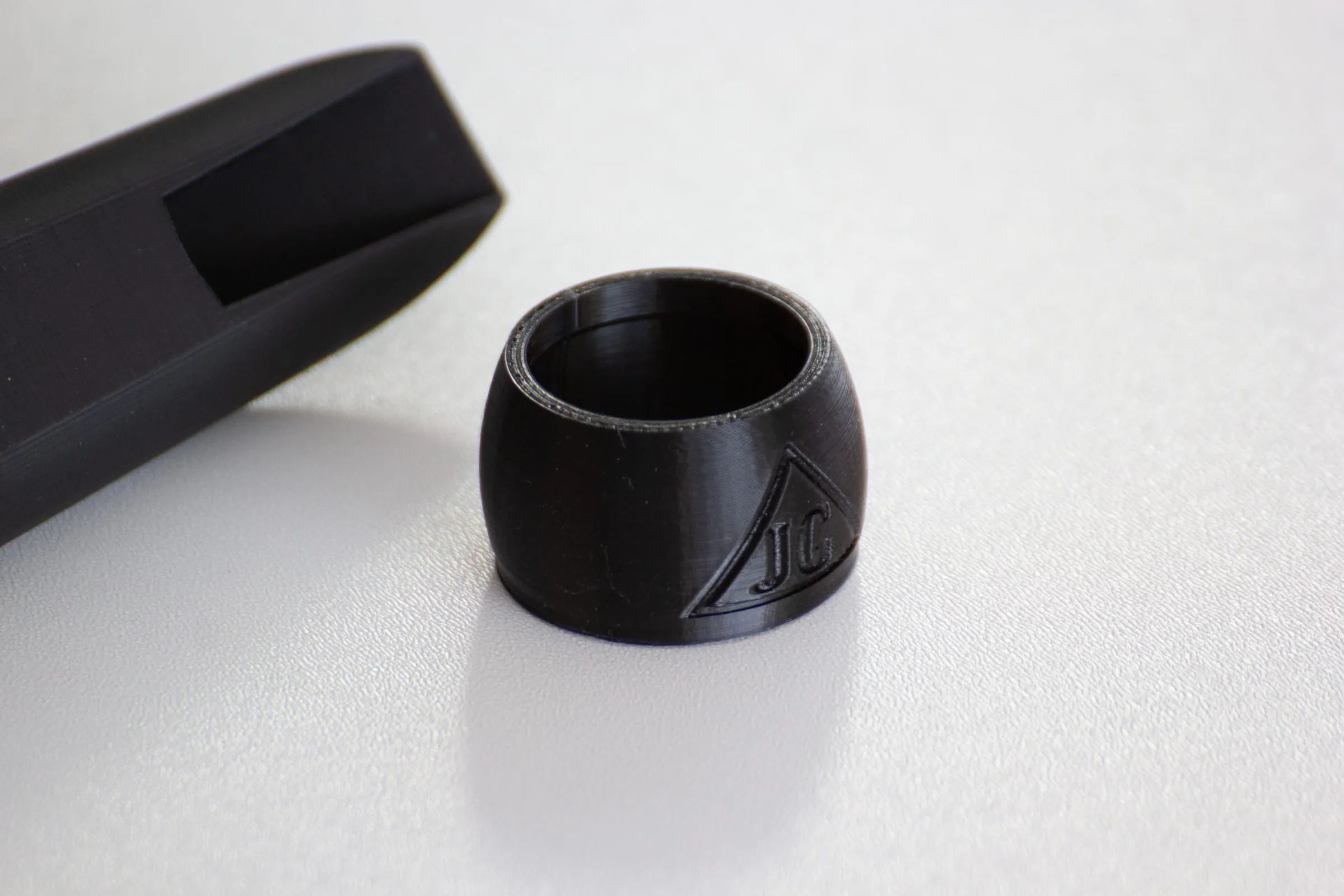
A ligature has to fit a mouthpiece closely and clamp evenly. That is a tolerance problem, and 3D printing is not naturally good at tolerances: the same file printed at a different orientation, or on a different day, comes out slightly different.
The material has to survive being handled, tightened and knocked about in a gig bag, and it has to look like a product rather than a print.
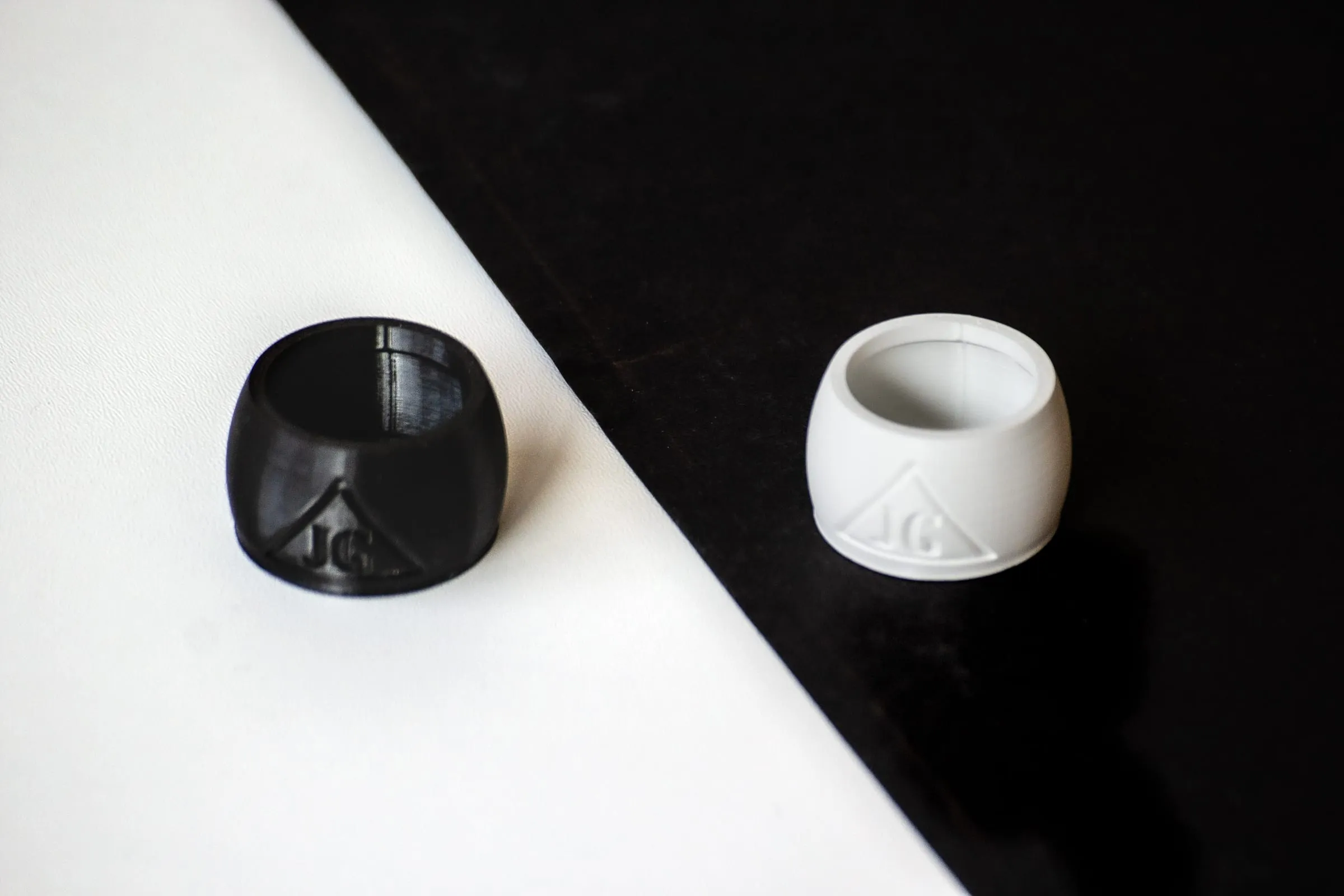
And there is no volume that justifies injection moulding. Every mouthpiece model needs its own fit, so the range is many variants of small quantity — exactly the case where tooling makes no sense and additive does, provided the process is under control.
What we did
We developed the manufacturing method: how the parts are printed, oriented and finished so that every unit fits and looks the same, and so the range can be extended to a new mouthpiece without reinventing the process.
Where it stands
In production, sold to musicians internationally.
- Design for manufacture
- 3D printing
- Musical instruments
- Small-batch production
Knowledge this took
- Developing a repeatable additive manufacturing method
- Print orientation, tolerance and finish for parts that must fit precisely
- Small-batch production without injection-mould tooling
- Variant management — many fits, many colours, one process
So we can also build
- Turning a hand-made part into something repeatably manufacturable
- Small-batch production for products that will never justify tooling
- Custom-fit accessories where every unit is slightly different
- Additive manufacturing as a production method, not just prototyping
Something close to this but not quite it?
Got something like this in mind?
Ask Ola how we'd approach it, or go straight to a person.