Vaib
An AI stage-lighting designer that learns the actual rig in the room and writes a full show for it.
- Client
- Internal product
- Year
- 2024
- Status
- In testing at live events
- Services
- AI implementation Software & MVPs
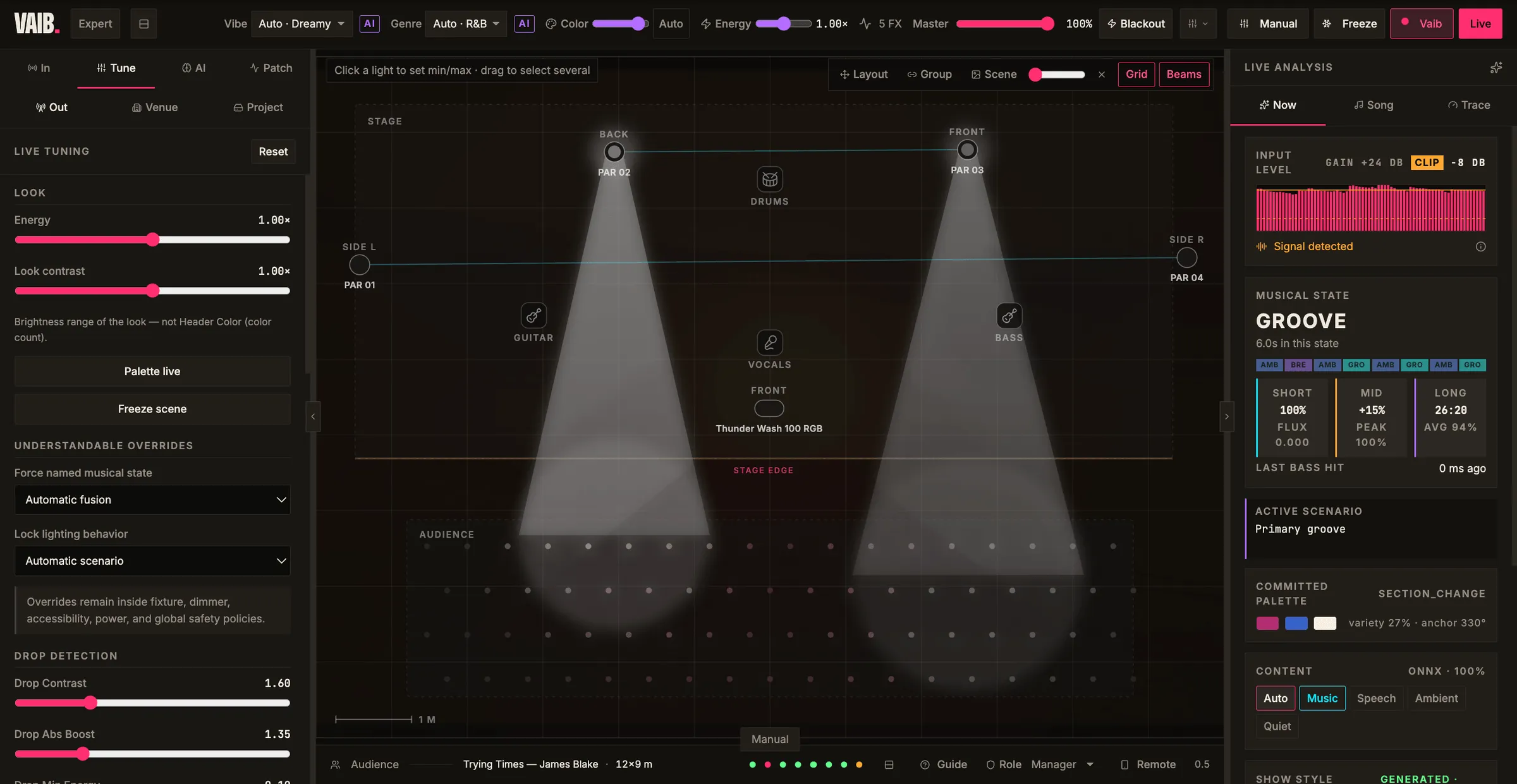
The problem
Programming stage lighting is slow, expensive, and gatekept by a small number of specialists. A touring show can lose days to it. A smaller venue simply goes without, and the show is worse for it.
Most software in this space still thinks in DMX values, channels and cues — the vocabulary of the machine, not of the person trying to light a song.
What makes it hard
Generating something that looks like a lighting design is easy. Generating one that the rig in the room can physically execute is not.
Every venue has a different set of fixtures. Each fixture can do particular things: how far it moves, how fast, what colours it can actually reach, whether it can strobe. A design that ignores those limits is worthless — worse than worthless, because someone has to notice and fix it before the doors open.
So the hard part is not generation. It is constraint: the output has to be bounded by a live model of the specific hardware present, not by a generic notion of “stage lighting”.
What we did
Vaib learns the properties of the actual fixtures in a rig, and combines that with training on hundreds of concerts to produce a lighting design that suits the music — and that the rig can perform.
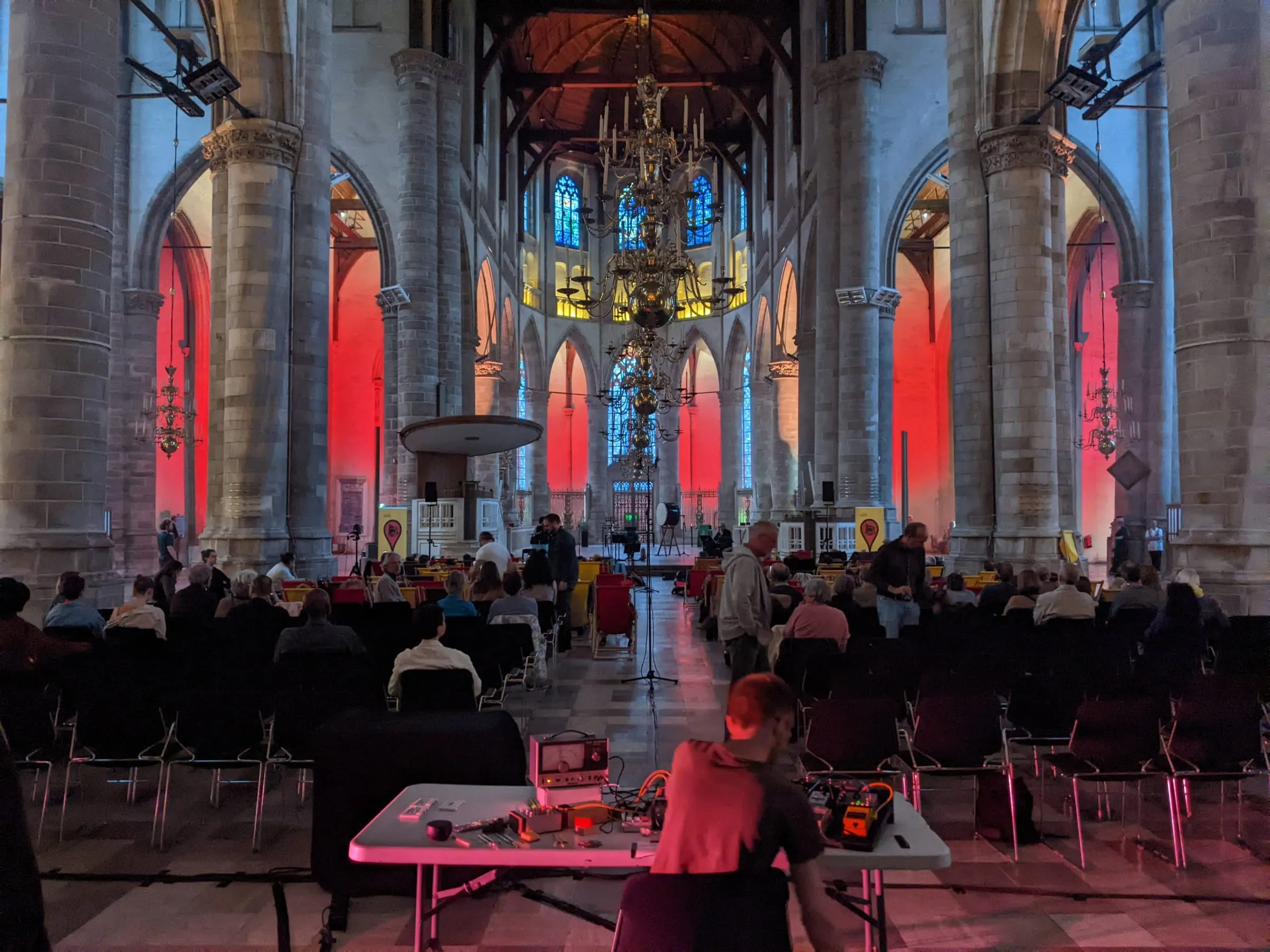
Testing happens where it matters. Lighting only reveals itself in a real room with real acoustics, real sightlines and a real audience.
Where it stands
In testing at live events. It is the clearest example of how we approach AI: the model is the easy part, and the value is in bounding it with reality.
- AI
- Live events
- Lighting design
- Product
Knowledge this took
- Modelling physical hardware as a constraint for a generative system
- Training on domain data — hundreds of concerts
- DMX and lighting-desk integration
- Real-time output under live conditions
- Evaluating a system whose output is subjective
So we can also build
- AI that produces output a machine must physically execute
- Generative systems bounded by real-world constraints, not just prompts
- Automating specialist work that is currently gatekept by a few experts
- Applied AI in live, unforgiving environments
Something close to this but not quite it?
Got something like this in mind?
Ask Ola how we'd approach it, or go straight to a person.