Ambionic soft grippers
Testing a soft robotic hand on a real arm, then engineering Kripper — a gripper cut from a single kirigami shell that wraps around a tomato instead of squeezing it.
Visit am-bionic.com- Client
- Ambionic
- Year
- 2026
- Status
- In development — grasp testing done, compact gripper module in design
What Ambionic is solving
Ambionic is a soft robotics company in Rotterdam. Their line is simple: grasp every shape and size — one end-effector that is soft enough for something delicate and strong enough for a production line.
The problem is real. Robot arms, cameras and controllers are now commodities; the part at the end of the arm is not. Picking up a tomato without bruising it, then a pepper, then a bunch of grapes, still mostly means human hands. Suction cups lose their seal on wet or curved skin, and air-driven soft fingers need compressors, valves and tubing, and are tuned for one size of fruit.
Grasp testing on a real arm
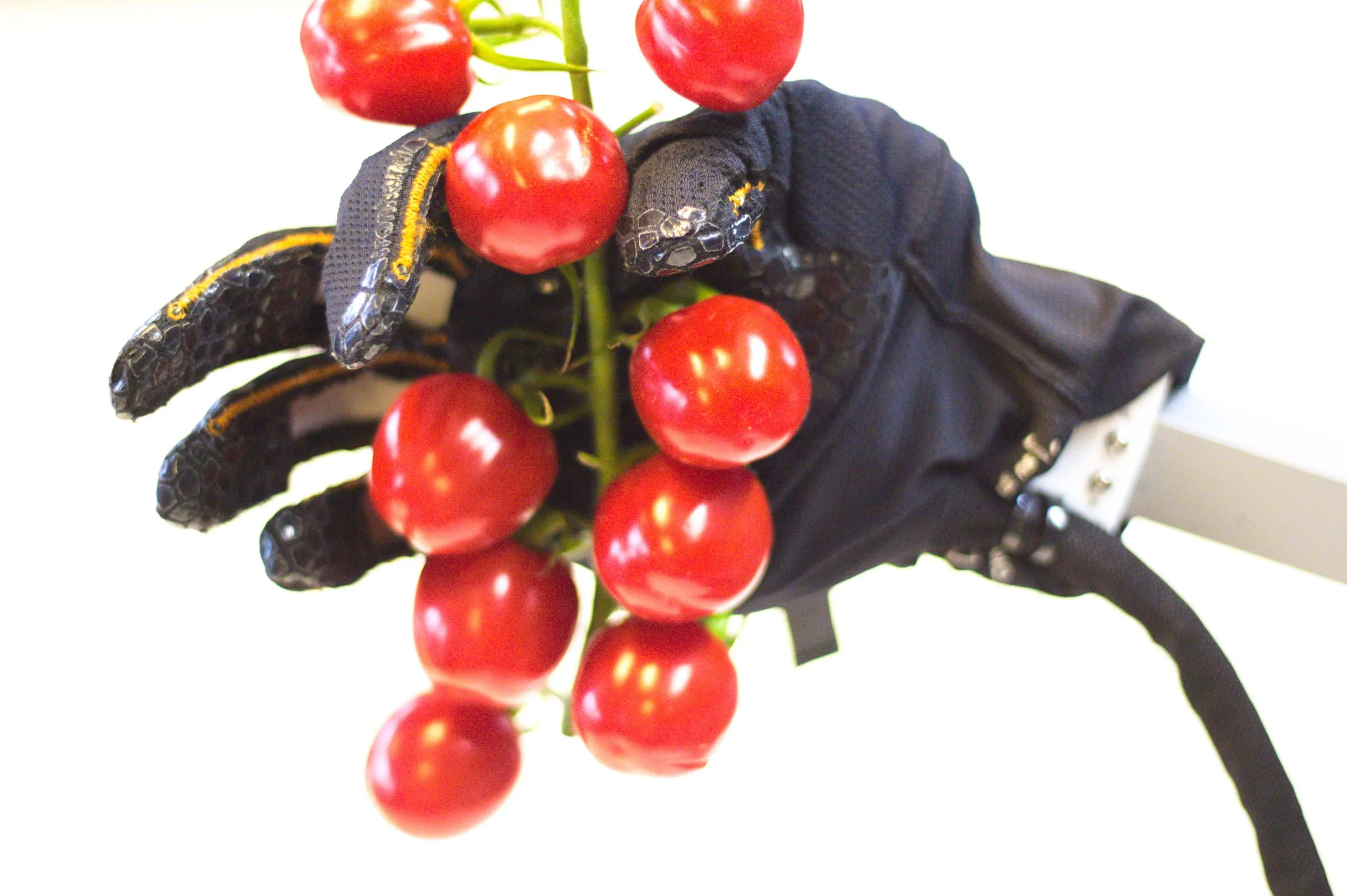
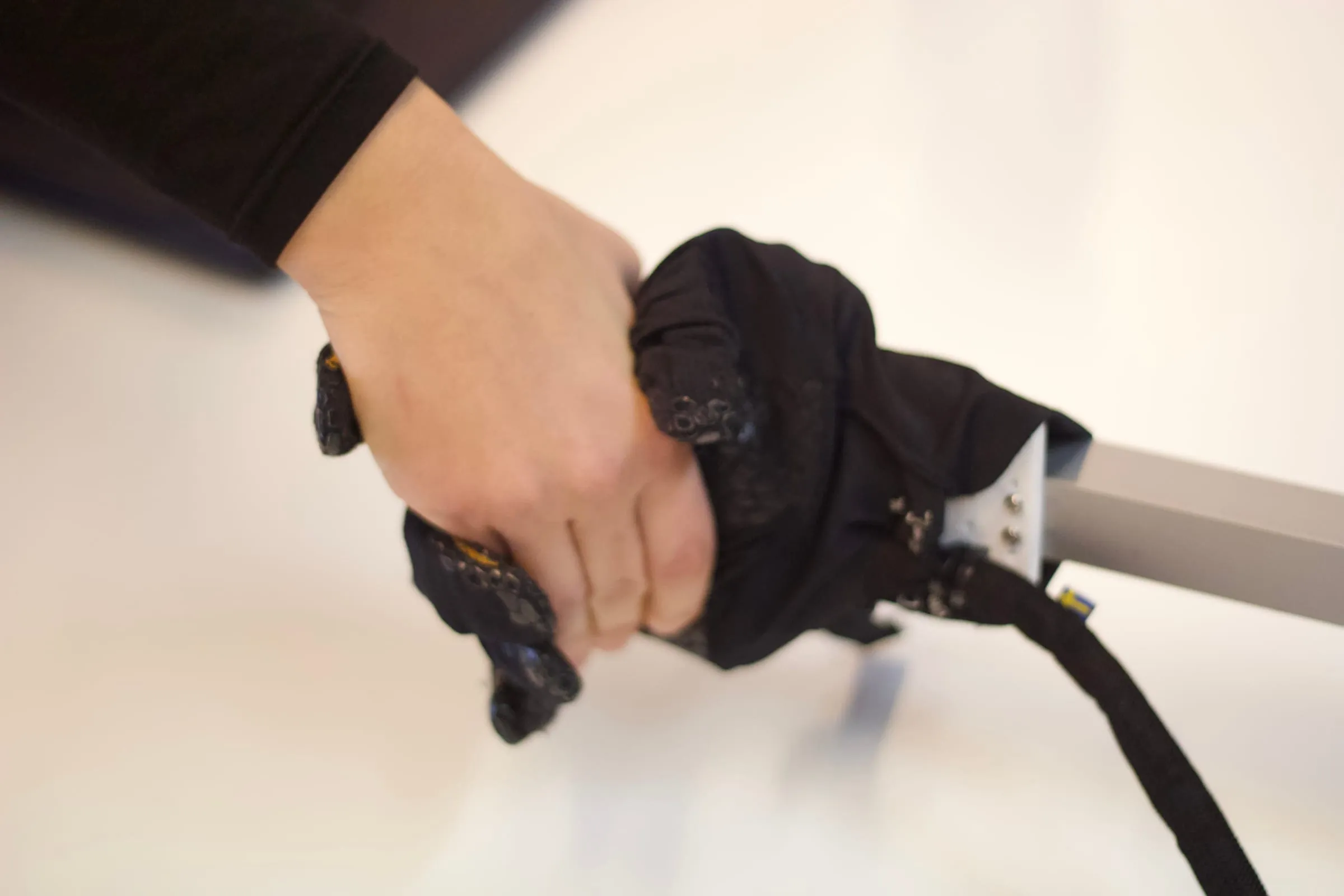
Before designing anything new, the question was what a soft hand can actually hold. So we mounted a soft robotic hand on an arm and tested it against the objects that break grippers: a full truss of cherry tomatoes, a single ripe tomato, the flat edge of a table-tennis bat, and a human hand.
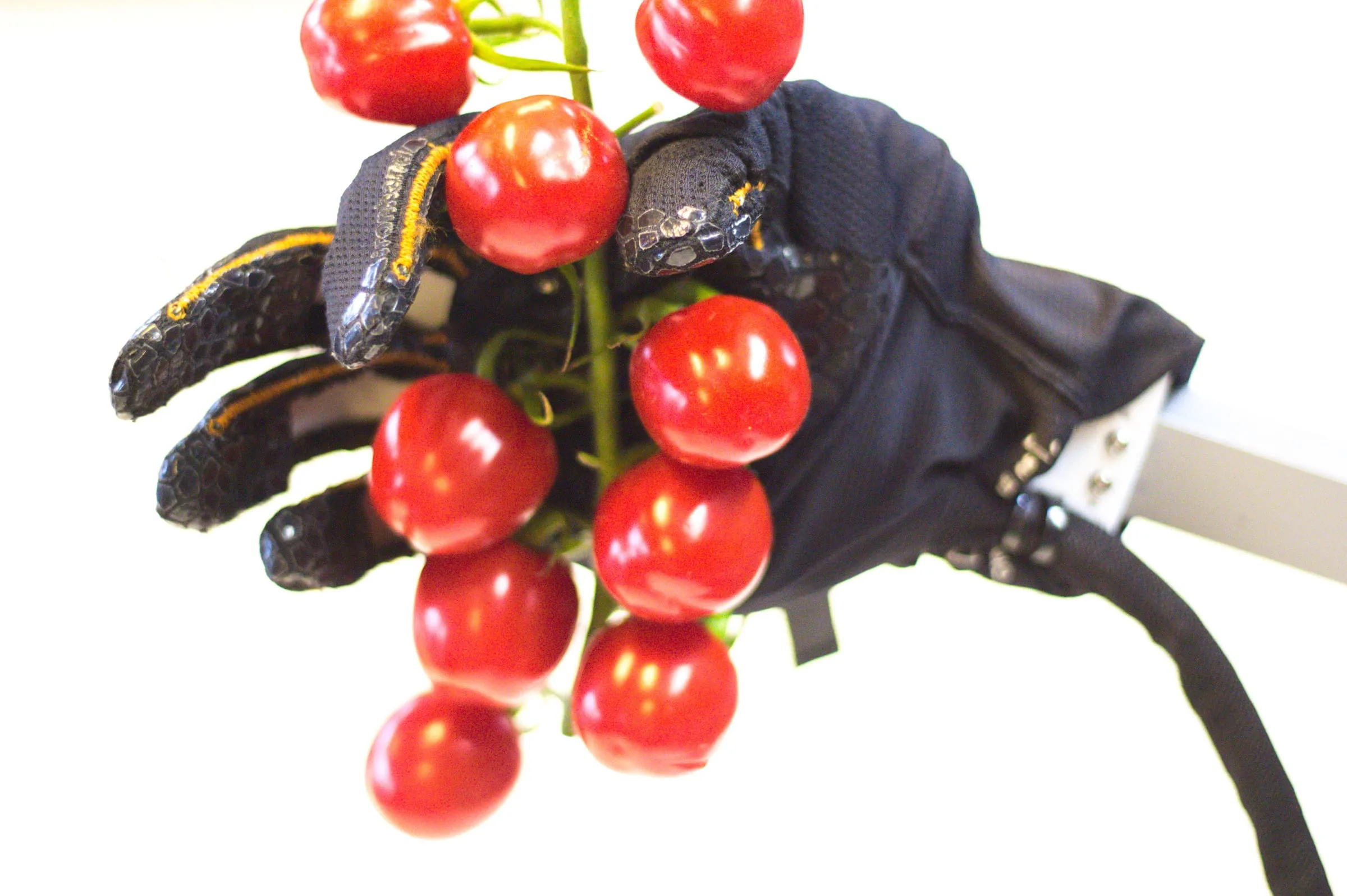
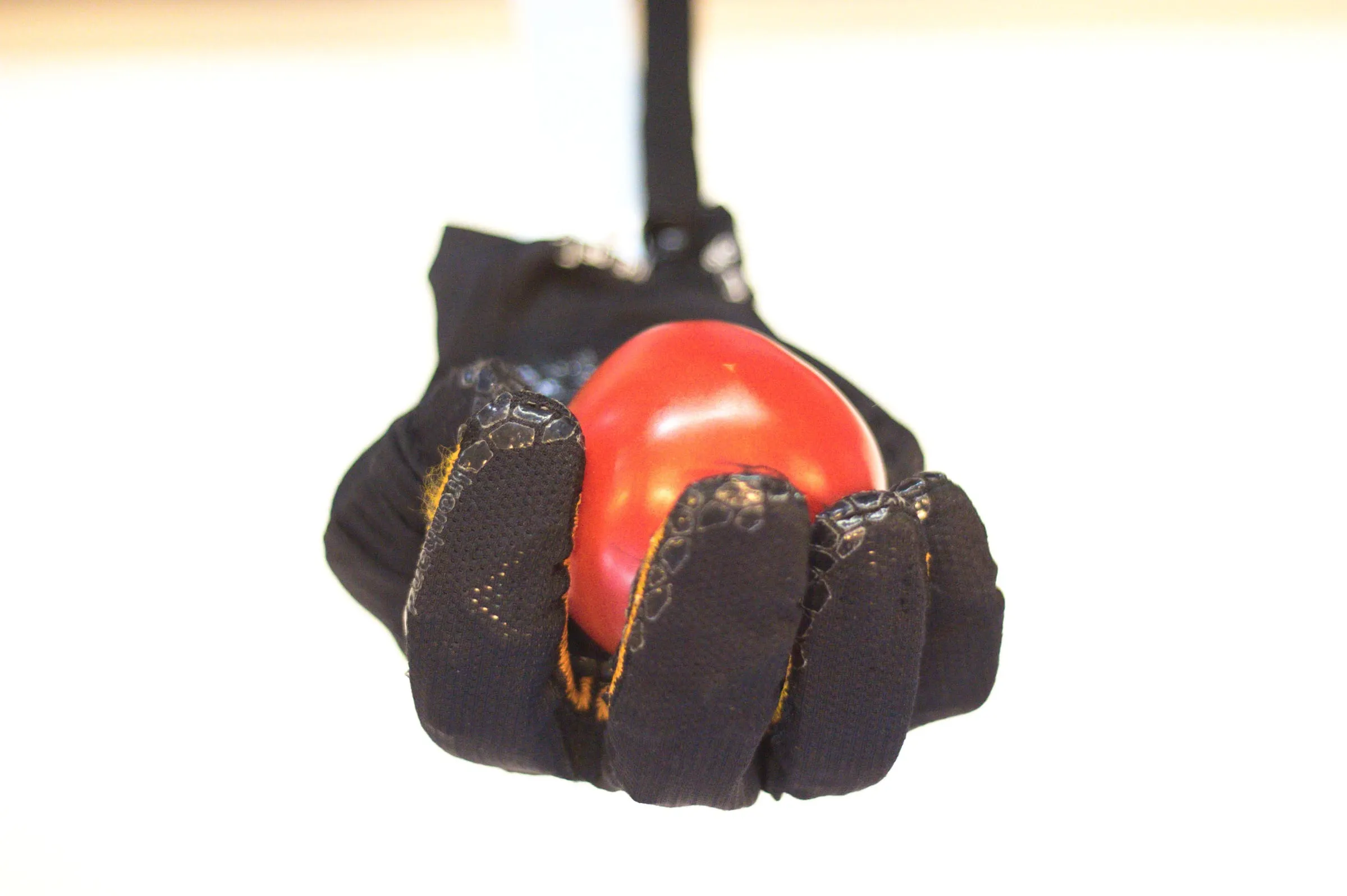
The truss is the hard one — a dozen round objects of different sizes, on a stem that must not snap, held by the whole hand at once.
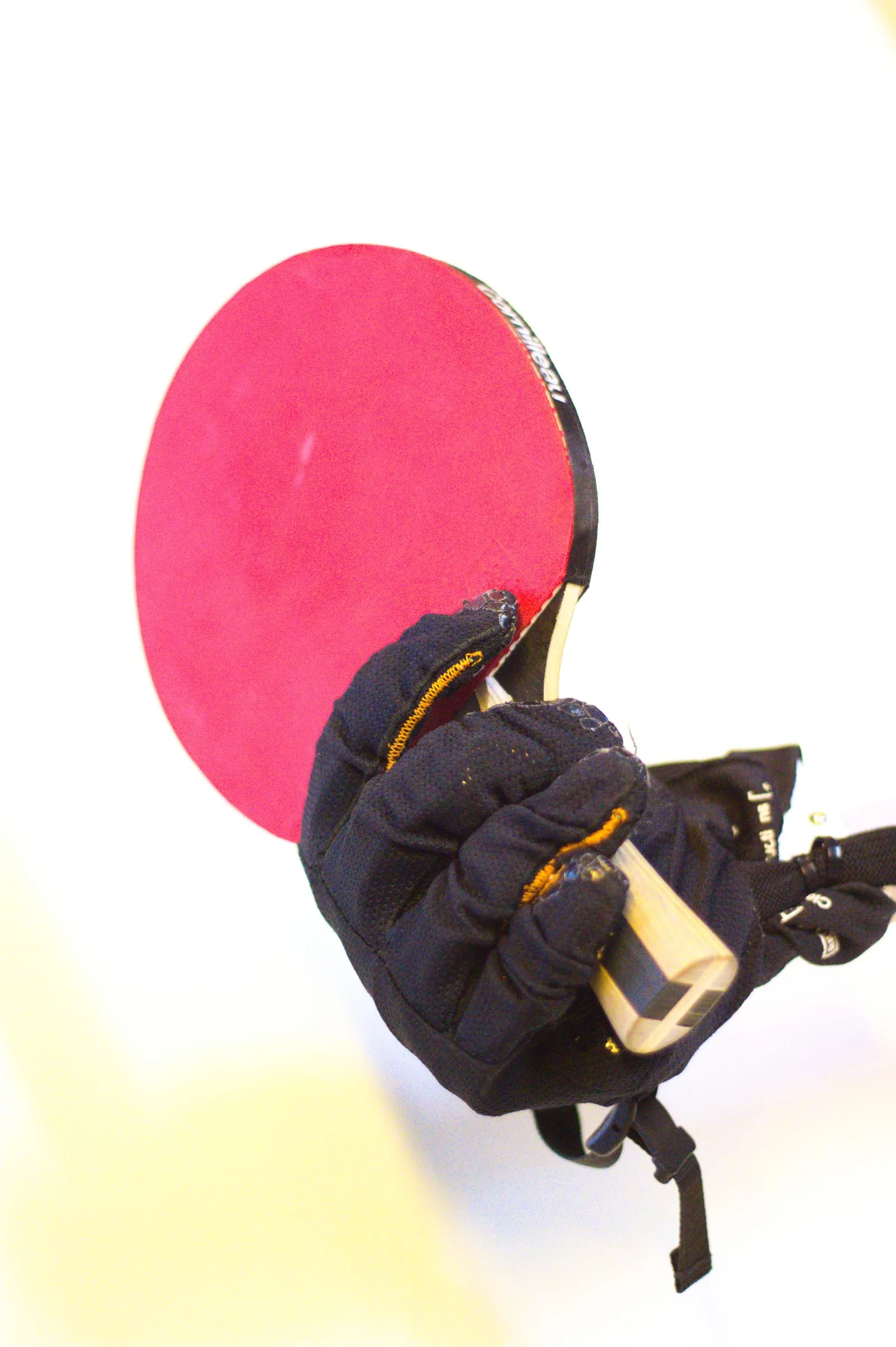
The bat tests the opposite: something thin and flat that a soft hand can only hold by its edge. The handshake tests the thing that matters most around people — a grip that is firm without being dangerous.
Kripper: a gripper cut from one sheet
What came next is Kripper, a two-finger gripper built on kirigami — thin flexible shells, cut and folded so that the pattern of cuts defines the motion. There are no hinges, joints or bearings. Pull on it once, and the whole shell deforms in three dimensions into an envelope around the object.
That changes how it holds things. It does not pinch: it wraps, and the shell gives where the fruit pushes back. One shell covers a range of sizes and shapes without changing tools, and because it is a single part with no moving joints, it is easy to clean and cheap to replace — which is what food handling demands.
Making it a module a line can use
Our part is turning the mechanism into something you bolt on. In the lab the gripper ran off a 3D-printer’s stepper and control board. A production line needs a self-contained unit: power and data in, gripper out.
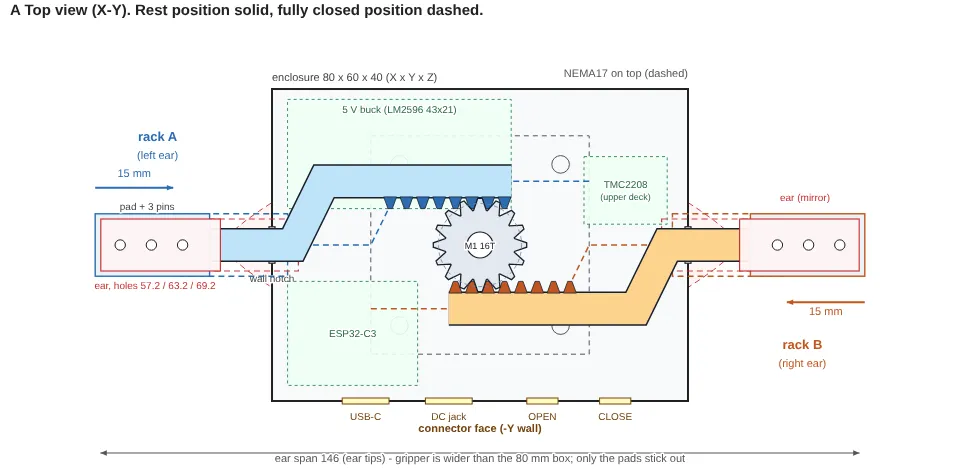
- One motor, both fingers. A single pinion drives two opposing racks, one per finger, so they open and close symmetrically and self-centre. No second motor and no electronics to keep two motors in sync.
- Force without a load cell. A Trinamic stepper driver reports how hard the motor is working from its own coil current. Combined with a camera looking into the gap between the fingers, the controller can tell first contact with something soft from a firm grip on something rigid, and stop before it crushes.
- Current capped in hardware. The motor can deliver several times the force that bruises a ripe tomato, so the driver’s current is limited below what the motor can do, and the fine control happens in software.
- One cable in. It runs on the 24 V already present in most production-line cabinets, and takes its commands over RS-485, so a PLC can trigger and query it without depending on Wi-Fi. On the bench, it takes a USB cable or a phone dashboard instead.
- Small enough to put anywhere. Motor, driver, controller and regulation sit in one housing a few centimetres across, mountable on a robot arm, a gantry or a printer carriage.
The same electronics are meant to carry over unchanged across a family of gripper sizes, so a bigger shell does not mean a new design.
The website
We also designed and built am-bionic.com — a short, quiet site built around the three things a buyer of end-effectors wants to hear: fully flexible, smart, repeatable.
Where it stands
The grasp testing is done. Kripper is in development with Ambionic, and the compact drive module is in design.
- Soft robotics
- Food automation
- Mechatronics
- Embedded
Knowledge this took
- Grasp testing with real produce on a robot arm
- Kirigami and compliant-shell mechanisms
- Stepper drive design — rack and pinion, torque and force budgets
- Embedded control on ESP32 with Trinamic drivers
- Load sensing from motor current instead of a load cell
- Industrial interfaces — 24 V supply, RS-485, single-cable connection
- Technical writing for engineering and funding reviews
- Website design and build
So we can also build
- End-effectors and grippers for fragile or irregular objects
- Turning a lab mechanism into a bolt-on module a line can adopt
- Motor-driven products that must sense force without extra sensors
- Retrofitting automation onto existing arms, gantries and 3D-printer frames
Something close to this but not quite it?
Got something like this in mind?
Ask Ola how we'd approach it, or go straight to a person.